Jaina Style Figurines: Masterpieces of Ancient Maya Art
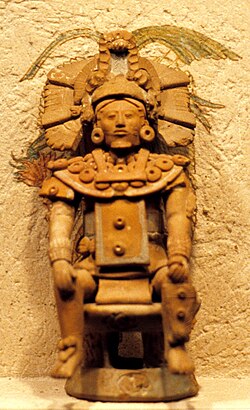
Among the most exquisite remnants of the ancient Americas are the Jaina-style figurines. Named after Jaina Island, where they were found in abundance, these ceramic figures are actually more prevalent at inland Maya sites, such as the Usumacinta River delta. These works of art provide an unprecedented ethnographic window into the physical appearance, social hierarchies, and daily lives of the late Classic Maya elite.
Crafted primarily from orange clay and originally adorned with blue and ochre pigments, these figurines typically range from 10 to 25 inches (25–65 cm) in height. While some are solid, the majority are hollow and often incorporate whistles or clay pellets that create a rattle-like sound. To this day, the specific purpose of these acoustic features remains a mystery to archaeologists.
Key Facts
- Origin: Found on Jaina Island and inland sites like the Usumacinta River delta.
- Material: Orange clay painted with ochres and blues.
- Dimensions: Generally between 10 and 25 inches (25–65 cm) tall.
- Function: Primarily used as burial accompaniments.
- Production: Many molded figures are linked to workshops in Jonuta.
- Features: Often include internal whistles or rattles.
Social Insight and Portraiture
The Jaina figurines are celebrated for their naturalism and delicate detail. They serve as a visual record of Maya social stratification, utilizing specific markers to denote class. Details such as scarification (the practice of creating intentional marks on the skin), intricate clothing, and elaborate jewelry signify the high social status of the subjects.
Because of their idiosyncratic details, some researchers view these figures as genuine essays in portraiture, capturing specific ages, expressions, and individual personalities. However, identifying the exact subjects is challenging. There is no consistent correlation between the figurine and the burial it accompanies; for instance, female figurines are often found in male graves, and adult figurines frequently accompany child burials.
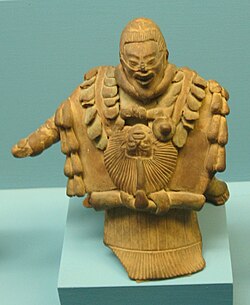
Beyond individual portraits, some figurines represent deities or reference ancient myths and legends. Others may be depictions of immediate or distant ancestors, though this theory remains tied to the unresolved question of the figurines' overall function as grave goods.
Chronological Phases of Production
In 1975, researcher Christopher Corson proposed three distinct phases to categorize the evolution of these figurines based on their craftsmanship and production methods.
Phase I (AD 600 – 800)
This era represents the pinnacle of craftsmanship. Almost all Phase I figurines were hand-modeled, with pigments applied after the clay had dried. These pieces are characterized by a high degree of uniqueness and artistic detail.
Phase II (AD 800 – 1000)
The second phase saw a shift toward the use of molds to increase productivity. While artists often enhanced these molded figures with thin clay strips, incisions, or additional adornments, the transition resulted in a loss of the innovation and idiosyncrasy found in Phase I.
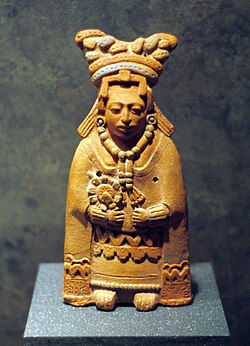
Campeche Phase (AD 1000 – 1200)
During this final phase, molded production became the standard. Many figurines were whitewashed and frequently depicted a standing woman with upraised arms. This specific figure, often identified as the goddess Xochiquetzal (and sometimes mistakenly as Ix Chel), became so dominant that it outnumbered all other subjects, suggesting a shift in burial ideology or the influence of imported beliefs.
Summary of Jaina Style Phases
| Phase | Approximate Date | Primary Method | Key Characteristics |
|---|---|---|---|
| Phase I | AD 600 – 800 | Hand-modeled | High craftsmanship, unique, naturalistic |
| Phase II | AD 800 – 1000 | Molded | Increased production, less idiosyncratic |
| Campeche | AD 1000 – 1200 | Predominantly Molded | Whitewashed, frequent female deity motifs |
Frequently Asked Questions
Were the figurines actually made on Jaina Island?
It is unlikely. Due to space constraints on the island, most figurines were likely produced elsewhere and brought to the island specifically as burial accompaniments. Many molded figures have been traced back to workshops in Jonuta.
What do the whistles and rattles inside the figurines signify?
The exact function of the whistles and clay pellets is currently unknown, though they are common features in hollow figurines.
How can you tell the social status of a figure?
Social status is indicated through detailed depictions of jewelry, specific styles of clothing, and facial marks resulting from scarification.
Do the figurines represent the people they were buried with?
Not necessarily. Research shows that the sex of the figurine often does not match the sex of the deceased, and adult figurines are frequently found in child burials, making direct correlation difficult.
Who is the woman frequently depicted in the Campeche phase?
She is most commonly identified as the goddess Xochiquetzal, though she has been mistakenly identified as Ix Chel in some contexts.