Itaipu Dam: A Binational Engineering Marvel of South America
The Itaipu Dam (Central Hidroeléctrica Itaipú Binacional) stands as one of the most significant achievements in global civil engineering. Located on the border between Brazil and Paraguay, this massive hydroelectric facility harnesses the power of the Paraná River to provide sustainable energy to millions. Its name, derived from the Guarani language, means "the sounding stone," named after an island that once existed near the construction site.
As of 2020, Itaipu produced the second-largest amount of electricity of any hydroelectric plant in the world, surpassed only by China's Three Gorges Dam. Beyond its power output, it is a symbol of international cooperation, managed jointly by the governments of Brazil and Paraguay.
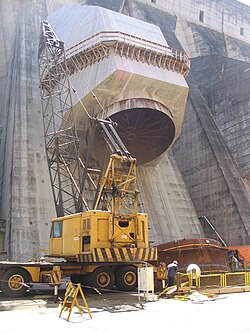
Key Facts
- Location: Border of Brazil (Foz do Iguaçu) and Paraguay (Hernandarias).
- Installed Capacity: 14 GW provided by 20 Francis-type turbines.
- Construction Cost: US$19.6 billion (approximately $60.7 billion in today's value).
- Dam Height: 196 meters (equivalent to a 65-story building).
- Global Standing: One of the seven modern Wonders of the World (elected by the American Society of Civil Engineers in 1994).
Technical Specifications and Infrastructure
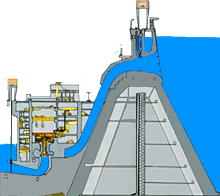
The Itaipu Dam is not a single structure but a combination of four distinct sections: an earth fill dam, a rock fill dam, a concrete buttress main dam, and a concrete wing dam. This hybrid design allows it to manage the immense pressure of the Itaipu Reservoir, which is the 45th largest reservoir globally.
The facility utilizes 20 Francis-type turbines, each with a rated nominal power of 700 MW. Interestingly, the plant operates on two different electrical frequencies: ten units generate at 50 Hz for Paraguay and ten at 60 Hz for Brazil. Because Paraguay's internal demand is lower than its production capacity, much of its energy is exported to Brazil via two 600 kV HVDC (High Voltage Direct Current) lines spanning approximately 800 kilometers to reach the São Paulo and Rio de Janeiro regions.
Reservoir and Spillway Capacity
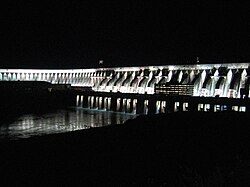
The reservoir covers a surface area of 1,350 square kilometers. The dam's spillway is a feat of engineering in its own right, with a length of 483 meters and a maximum flow capacity of 62,200 cubic meters per second. To put this in perspective, the spillway's maximum flow is 40 times the average flow of the nearby Iguaçu Falls.

Historical Development
Diplomatic Foundations
The project began with the "Ata do Iguaçu" (Iguaçu Act) signed on July 22, 1966, expressing mutual interest in exploiting the Paraná River's resources. This led to the formal Itaipu Treaty in 1973. While the project was initially contested by Argentina, the 1979 Acordo Tripartite established agreed-upon river levels, fostering regional integration between Brazil, Paraguay, and Argentina.
Construction Milestones
Construction officially began in January 1975 after viability studies by ELC Electroconsult and IECO. A pivotal moment occurred on October 14, 1978, when the Paraná River was rerouted to allow the riverbed to dry for dam construction. The reservoir began filling on October 13, 1982, and the first generating unit became operational on May 5, 1984.
The plant reached its full 14 GW capacity in March 2007 with the activation of the final two generating units. Per treaty agreements, a maximum of 18 units may operate simultaneously, allowing two units to remain offline for essential maintenance.
Environmental and Social Impact
The scale of the project brought significant changes to the region. The creation of the reservoir resulted in the displacement of approximately 10,000 families living along the Paraná River. However, the dam is noted for its efficiency; it has the highest ratio of electricity production to flooded area among Brazil's major reservoirs. Furthermore, electricity produced by Itaipu is approximately 55% cheaper than that from other power plant types in the region.
Summary of Itaipu Dam Specifications
| Feature | Detail |
|---|---|
| Total Installed Capacity | 14 GW |
| Number of Turbines | 20 x 700 MW (Francis-type) |
| Dam Height | 196 m |
| Dam Length | 7,919 m |
| Reservoir Surface Area | 1,350 km² |
| Annual Generation (2020) | 76.382 TWh |
| Concrete Volume | Enough for 210 Maracanã stadiums |
Frequently Asked Questions
Why is the Itaipu Dam called "binational"?
It is called binational because it is jointly owned and operated by the governments of Brazil and Paraguay, situated exactly on the border between the two nations.
How does the dam handle different electrical frequencies?
The plant has 20 generators; ten are configured to produce 50 Hz power for the Paraguayan grid, and ten produce 60 Hz power for the Brazilian grid.
What happened during the 2009 power failure?
On November 10, 2009, a storm likely damaged high-voltage transmission lines. While the dam itself was not damaged, the disruption caused massive blackouts affecting 50 million people across Brazil and Paraguay.
How does Itaipu compare to the Three Gorges Dam?
While the Three Gorges Dam has a higher installed capacity (22,500 MW), Itaipu has historically competed for the record of highest annual energy production, maintaining the second-highest average annual production from 2012 to 2021.
What is the environmental efficiency of the Itaipu reservoir?
Itaipu has the highest ratio of electricity production relative to the amount of land flooded compared to other large Brazilian reservoirs, making it highly efficient in terms of land use.