Israel National Football Team: History, Achievements, and Evolution
The Israel national football team, known by the nickname The Skyblue and Whites (התכולים-לבנים), represents the State of Israel in international competition. Managed by the Israel Football Association (IFA), the team has a unique history characterized by its movement between different continental confederations due to geopolitical complexities.
From its early days as a representative of Mandatory Palestine to its current status as a member of UEFA, the team has navigated a challenging path to establish itself on the global stage. With a legacy that includes a continental championship and a World Cup appearance, the team continues to strive for consistency in the modern era.
Key Facts
- Highest FIFA Ranking: 15th (November 2008).
- Major Honor: AFC Asian Cup Champions (1964).
- World Cup History: One appearance in 1970.
- Most Capped Player: Yossi Benayoun with 101 appearances.
- All-Time Top Scorer: Eran Zahavi with 35 goals.
- Current Head Coach: Ran Ben Shimon.
Historical Journey and Confederation Shifts
Early Years and the AFC Era
The team's roots date back to 1930, with the first international match played by Mandatory Palestine against Egypt in Cairo. Following the establishment of the State of Israel, the team played its first official match as an independent nation on September 26, 1948, against the US Olympic Team in New York, where Shmuel Ben-Dror scored the nation's first goal.
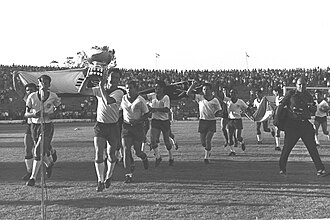
For two decades, Israel was a prominent member of the Asian Football Confederation (AFC). This era marked the pinnacle of their continental success, including winning the 1964 AFC Asian Cup.
Political Challenges and Exile
The team's tenure in Asia was marred by political tensions. In 1974, several Muslim and Arab countries, led by Kuwait, refused to play against Israel. This culminated in a vote that excluded Israel from AFC competitions. During the 1974 Asian Games, both North Korea and Kuwait refused to play second-round matches against the Israeli side.
Following their exclusion from the AFC, Israel entered a period of "exile," during which they played in the Oceania Football Confederation (OFC) between 1985 and 1989 before eventually finding a permanent home in UEFA (Europe) in 1991.
Major Tournament Performance
FIFA World Cup and Olympics
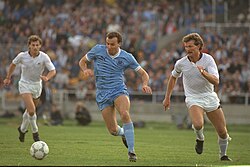
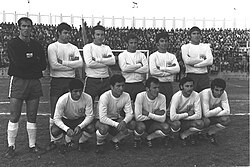
Israel's most significant global achievement was qualifying for the 1970 FIFA World Cup, where they reached the group stage. The team has also seen success in the Olympic Games, reaching the quarterfinals in both 1968 (finishing 5th) and 1976 (finishing 6th), notably facing powerhouses like Brazil.
Continental Success
While now competing in Europe, Israel's greatest trophy remains the 1964 AFC Asian Cup. They also secured a Silver Medal at the 1974 Asian Games. In recent years, the team has competed in the UEFA Nations League, achieving a first-place finish in League B during the 2022–23 season.
Team Infrastructure and Records
Home Stadiums
For decades, the Ramat Gan Stadium served as the primary home for the national team, hosting matches from 1954 until 2013. Today, the team utilizes various venues across the country, including the Bloomfield Stadium in Tel Aviv and Teddy Stadium in Jerusalem.
Legendary Players and Leadership
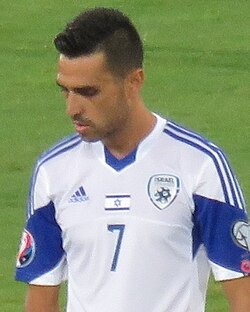
The team has been defined by several iconic figures. Yossi Benayoun holds the record for the most caps, symbolizing a generation of technical excellence. In terms of goal-scoring, Eran Zahavi stands as the most prolific striker in the team's history.

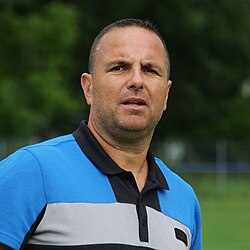
The current technical leadership is headed by Ran Ben Shimon, who took over as head coach in May 2024.
Summary of Team Statistics
| Category | Detail |
|---|---|
| FIFA Code | ISR |
| Current Ranking | 76 (as of July 20, 2026) |
| Biggest Win | 9–0 vs Chinese Taipei (1988) |
| Biggest Defeat | 1–7 vs Germany (2002) |
| Confederations | AFC, OFC, UEFA |
Frequently Asked Questions
Why does Israel play in UEFA instead of the AFC?
Israel was excluded from the Asian Football Confederation (AFC) in 1974 after several member nations refused to play against them for political reasons. After a period of playing in Oceania, they joined UEFA in 1991.
Who is the all-time leading goalscorer for Israel?
Eran Zahavi is the top scorer for the Israel national team, having netted 35 goals in 74 appearances.
What is Israel's best result in the FIFA World Cup?
Israel's best result is reaching the group stage of the 1970 FIFA World Cup.
Who holds the record for the most appearances?
Yossi Benayoun is the most capped player in the history of the team, with 101 appearances.
Which stadium was the team's primary home for the longest time?
The Ramat Gan Stadium was the primary home stadium from 1954 until 2013, hosting 137 matches.