Irish Americans: A History of Migration, Struggle, and Cultural Influence
The story of Irish Americans is one of the most defining narratives of the United States' immigrant experience. From the early colonial arrivals to the massive waves of the 19th century, people of Irish descent have shaped the political, social, and cultural landscape of America. Today, millions of Americans claim this heritage, reflecting a journey from marginalized outsiders to influential citizens.
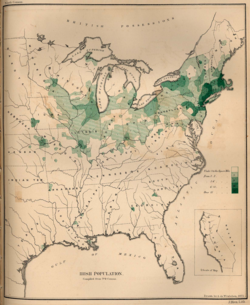
According to the 2020 census, approximately 38.6 million people claim full or partial Irish ancestry, while about 10.9 million identify as having full Irish ancestry. This vast diaspora is spread across every state, with particularly strong concentrations in the Northeast.
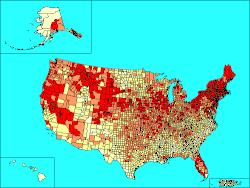
Key Facts

- Population: Over 38 million Americans claim full or partial Irish ancestry (2020 Census).
- Early Migration: The "Scotch-Irish" (Ulster Scots) arrived in significant numbers between the 17th and mid-19th centuries.
- Peak Immigration: The highest volume of immigration occurred between 1841 and 1860, totaling over 1.6 million people.
- Religion: The community is primarily divided between Catholicism and Protestantism.
- Political Impact: Irish Americans have reached the highest levels of government, including the U.S. Supreme Court and the Presidency.
Waves of Immigration
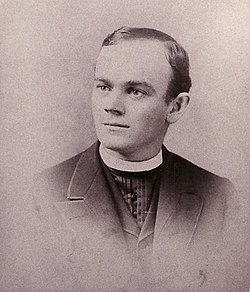
The Scotch-Irish and Early Settlers
Long before the mid-19th century, the Scotch-Irish—Protestants from the province of Ulster—settled in the American colonies. By 1790, they represented a significant portion of the population in states like Pennsylvania, Virginia, and North Carolina. These early settlers often established themselves in the backcountry, contributing to the frontier expansion of the early United States.
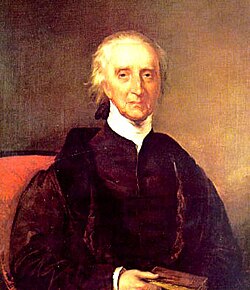
The Great Famine and the 19th Century Surge
The mid-19th century marked a turning point with the arrival of millions of Irish Catholics fleeing the Great Famine. Between 1841 and 1850, 780,719 immigrants arrived, followed by 914,119 between 1851 and 1860. This period saw a shift in the demographic profile of Irish immigrants, who often arrived with few resources and settled in urban centers like New York, Boston, and Philadelphia.
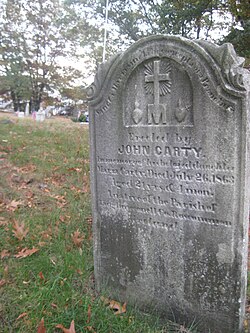
Immigration continued in waves through the early 20th century. While numbers fluctuated, the period between 1921 and 1930 saw another peak with 220,591 arrivals, before declining sharply during the 1930s.
Societal Challenges and Discrimination
Nativism and Stereotypes
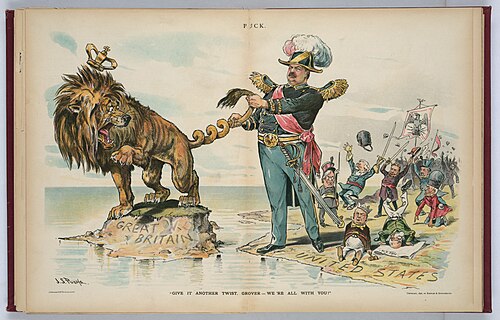
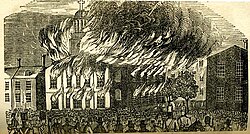
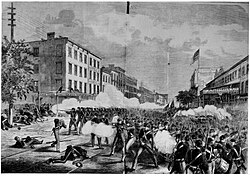
The influx of Irish Catholics triggered a backlash from Nativists—native-born Americans who opposed immigration for religious or political reasons. This hostility manifested in violent riots, such as the 1844 anti-Catholic riots in Philadelphia and the Orange riots of 1871 in New York City.
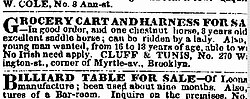
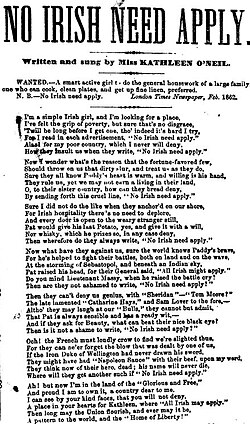
Discrimination was also systemic. The slogan "No Irish Need Apply" (NINA) appeared in job advertisements and songs, signaling the exclusion of Irish immigrants from many employment opportunities.
![1862 song that used the "No Irish Need Apply" slogan. It was copied from a similar London song.[273]](/images/5c/34/5c34d65a6ed335efad79fe2011f00c1fe55b6f88e271d29ff0b8b4a87cfafc87.jpg)
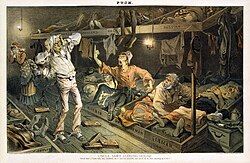
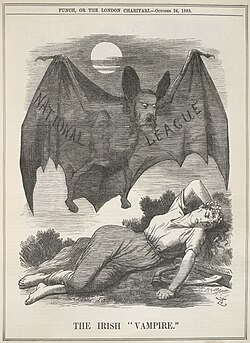
Cultural stereotypes further marginalized the community. Political cartoons of the era often depicted the Irish as drunken, violent, or uncivilized troublemakers compared to other immigrant groups.

Integration and Contribution
Military and Public Service
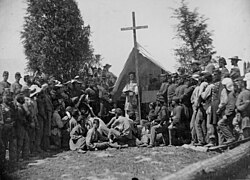
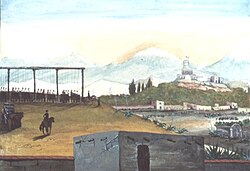
Military service became a primary vehicle for assimilation. During the American Civil War, the Irish served in large numbers, most notably in the 69th New York Volunteer Regiment. Other conflicts, such as the Mexican-American War, also saw Irish involvement, though sometimes in complex roles, such as the Saint Patrick's Battalion who joined the Mexican army.
Over time, Irish Americans moved into essential public service roles, becoming prominent in local government, teaching, and particularly in police and fire departments in major cities.
Politics and the Judiciary
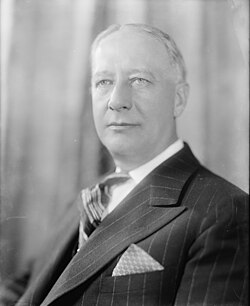
The political ascent of Irish Americans was gradual but decisive. Al Smith became the first Irish Catholic nominee of a major political party for President in 1928. The judiciary also saw significant Irish influence, with numerous justices serving on the U.S. Supreme Court, including William J. Brennan and Anthony Kennedy.
Cultural Legacy
Sports and Entertainment
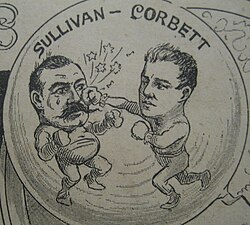
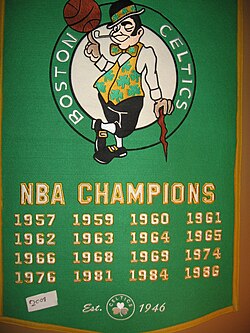
Irish Americans have left an indelible mark on American sports and entertainment. From the early days of boxing with stars like "Gentleman Jim" Corbett and John L. Sullivan to the founding of sports traditions, the influence is widespread. The Boston Celtics and the Philadelphia Phillies' tradition of wearing green on St. Patrick's Day are enduring symbols of this heritage.

In modern entertainment, the lineage continues through figures such as actor Tom Cruise, who descends from paternal Irish roots in County Dublin.
![Actor Tom Cruise descends from paternal Irish ("Cruise" and "O'Mara") lineage around County Dublin.[312][313]](/images/ea/20/ea208a38882159bbf4df046ce8a87a08d4f09aab8db1a7e35ea1202aa8924dc5.jpg)
Traditions and Identity
St. Patrick's Day has evolved from a religious feast into a massive cultural celebration. One of the most famous modern expressions of this is the dyeing of the Chicago River green.
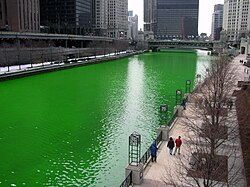
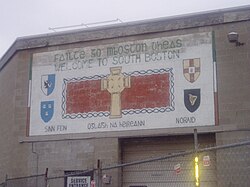
Today, the sense of heritage is maintained through murals, cultural institutes, and community organizations, ensuring that the history of the Irish diaspora remains visible in the American landscape.
Demographic Summary
| Period | Number of Immigrants | Period | Number of Immigrants |
|---|---|---|---|
| 1820–1830 | 54,338 | 1911–1920 | 146,181 |
| 1831–1840 | 207,381 | 1921–1930 | 220,591 |
| 1841–1850 | 780,719 | 1931–1940 | 13,167 |
| 1851–1860 | 914,119 | 1941–1950 | 26,967 |
| 1861–1870 | 435,778 | 1951–1960 | 57,332 |
| 1871–1880 | 436,871 | 1961–1970 | 37,461 |
| 1881–1890 | 655,482 | 1971–1975 | 6,559 |
| 1891–1900 | 388,416 | Total | 4,720,427 |
| 1901–1910 | 399,065 |
Frequently Asked Questions
Who were the Scotch-Irish?
The Scotch-Irish, also known as Ulster Scots, were Protestant settlers from the province of Ulster in Ireland who migrated to the American colonies primarily between the 17th and mid-19th centuries.
What was the "No Irish Need Apply" (NINA) phenomenon?
NINA refers to discriminatory job advertisements and social attitudes in the 19th century that explicitly excluded Irish immigrants from employment, reflecting the Nativist prejudices of the time.
How many people in the U.S. claim Irish ancestry?
According to the 2020 census, approximately 38,597,428 people claim full or partial Irish ancestry.
Which U.S. states have the highest percentage of Irish Americans?
Based on 2020 data, New Hampshire (20.58%), Massachusetts (19.71%), and Rhode Island (17.21%) are among the states with the highest percentages of the population claiming Irish ancestry.
Who was the first Irish Catholic to be nominated for President by a major party?
Al Smith was the first Irish Catholic nominee of a major political party for the U.S. Presidency in 1928.