Ion Pas: The Life of a Romanian Novelist and Politician
Ion Pas (born Ioan M. Pascu) was a multifaceted figure in 20th-century Romania, carving out a significant legacy as a novelist, translator, and influential left-wing politician. Born on October 6, 1895, in Bucharest to a family of small craftsmen, Pas rose from humble beginnings to hold some of the highest cultural and political offices in the country.
Despite attending primary school in the slums of his childhood neighborhood, Pas was largely self-taught. Before establishing himself in the arts, he gained practical experience in various trades, working as a mechanic, bookbinder, typesetter, and bricklayer's apprentice. This grounded upbringing deeply influenced his later literary focus on the marginalized and oppressed.
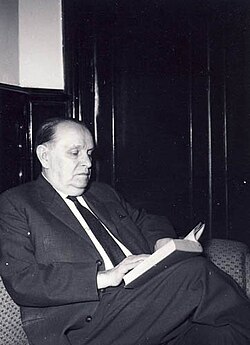
Key Facts
- Full Name: Ioan M. Pascu (known as Ion Pas).
- Lifespan: October 6, 1895 – May 20, 1974.
- Political Roles: Arts Minister (1946–1948) and Deputy Culture Minister (1955–1958).
- Literary Debut: The sketch "Barbu," published in 1910 in Dumineca magazine.
- Major Works: Novels including Lanțuri and Zilele vieții tale.
- Key Affiliations: Romanian Social Democratic Party (PSDR) and the Romanian Workers' Party.
Literary Career and Contributions
Ion Pas began his literary journey early, publishing his first book, Din lumea celor obidiți, in 1912. His commitment to the written word extended beyond his own creative writing; he was a prolific editor and contributor to numerous publications, including Constantin Costa-Foru's Revista copiilor și a tinerimii starting in 1913.
Prolific Writing and Publishing
Described by Leon Kalustian as possessing a "conscientious and hard-working spirit," Pas produced a vast body of work across several genres:
- Novels: Notable titles include Povestea unei fete (1927), Veșnicul învins (1931), and the multi-volume series Zilele vieții tale (1948–1950) and Lanțuri (1950–1954).
- Short Stories and Sketches: He wrote collections such as Lumea celor necăjiți (1924) and Taboluri în cărbune (1935).
- Memoirs: His later years were marked by reflective works like Aducere aminte (1972) and Evocări (1973).
Pas also founded and published several magazines, including Spre lumină (1912), Omul liber (1923–1925), and Șantier (1933–1937). His writing appeared in a wide array of prominent periodicals, from Adevărul and Dimineața to Scînteia and România Liberă.
Translation Work
As a translator, Pas brought the works of world-renowned authors into the Romanian language. His translations included the works of Fyodor Dostoyevsky, Leo Tolstoy, Victor Hugo, Charles Dickens, Émile Zola, and Maxim Gorky, among others.
Political Ascent and Public Service
A lifelong leftist, Pas was a member of the Romanian Social Democratic Party (PSDR). His political influence peaked during the transition to a communist regime in the mid-20th century. From March 1946 to 1948, he headed the National Theatre Bucharest, and from November 1946 to April 1948, he served as the Arts Minister.
During this era, Pas was viewed with some suspicion by communist authorities, who believed he may have used the pseudonym P. Ioanid to translate Panait Istrati's Confession pour vaincus. Après 16 mois dans l'URSS, a work by a writer who had broken away from the party.
Party Leadership and Governance
In February 1948, Pas participated in the merger of the PSDR with the Romanian Communist Party to create the Romanian Workers' Party. He remained on the party's central committee until August 1969. His administrative roles continued with a tenure as deputy Culture Minister (1955–1958) and president of the Romanian Radio committee (1959–1965).
Pas also represented Romania on the international stage as the president of the delegation to the Inter-Parliamentary Union and served as president of the Romanian Institute for Cultural Relations with the Abroad from 1965 until his death in 1974.
Legislative Career and Honors
For nearly twenty-five years, Pas served as a legislator. He was elected to the Assembly of Deputies for Prahova County in 1946 and later served in the Great National Assembly, representing Prahova, the Pitești Region, and various districts in the Buzău area until 1969.
His contributions were recognized with several high-level state honors:
- Order of Labor, first class (1955)
- Order of the Star of the Romanian Socialist Republic, first class (1964)
- 23 August Order, first class (1965)
Summary of Career and Life
| Category | Key Details |
|---|---|
| Early Life | Born in Bucharest (1895); self-taught; worked as a mechanic and typesetter. |
| Literary Focus | Novels, short stories, and memoirs focusing on the marginalized. |
| Political Affiliations | PSDR; Romanian Workers' Party (Central Committee). |
| Government Roles | Arts Minister; Deputy Culture Minister; President of Romanian Radio committee. |
| Translations | Translated major authors like Dickens, Tolstoy, and Zola. |
Frequently Asked Questions
What was Ion Pas's educational background?
Ion Pas attended primary school in the slums of Bucharest but was largely self-taught. He spent his early years working in various manual trades, including as a bricklayer's apprentice and bookbinder.
Which political parties was Ion Pas associated with?
He was a longtime member of the Romanian Social Democratic Party (PSDR) and later joined the Romanian Workers' Party following the 1948 merger of the PSDR and the Romanian Communist Party.
What were some of his most significant literary works?
His major works include the novels Lanțuri and Zilele vieții tale, as well as his debut book Din lumea celor obidiți (1912) and several volumes of memoirs such as Evocări.
Did Ion Pas hold any ministerial positions?
Yes, he served as the Arts Minister from November 1946 to April 1948 and later as the deputy Culture Minister from July 1955 to 1958.
Who were some of the authors Ion Pas translated?
Pas translated a wide range of classic authors, including Fyodor Dostoyevsky, Leo Tolstoy, Victor Hugo, Charles Dickens, and Émile Zola.