Internet Cafés: The Evolution of Public Digital Access
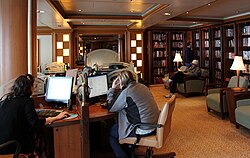
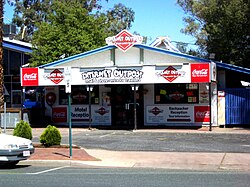
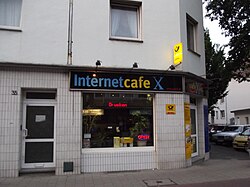
An Internet café, commonly referred to as a cybercafé, is an establishment—ranging from a dedicated business to a convenience store or traditional café—that provides computers with high-bandwidth internet access for a fee. Typically charging by the minute or hour, these venues often supplement their connectivity services with refreshments or technical support, such as phone repair.
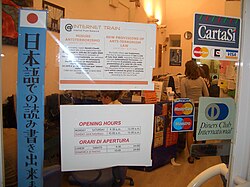
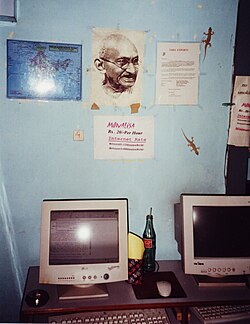
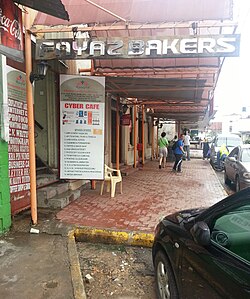
For many travelers, these cafés serve as vital hubs for accessing webmail and instant messaging to stay connected with home. In developing nations, the shared-access model of the internet café is often the primary means of digital connectivity, offering a more affordable alternative to the high cost of personal hardware and software ownership.
As internet access became more ubiquitous, the line between traditional cafés and cybercafés blurred, with many pubs and bars adding Wi-Fi hotspots. While developed countries have seen a decline in traditional cybercafés due to the rise of smartphones and home broadband, other regions have seen them evolve into esports cafés—specialized community hubs for competitive gamers and professional training.
Key Facts
- Origins: The concept of the "Cybercafé" was invented in early 1994 by Ivan Pope in London.
- Global Variations: Known as PC bangs in South Korea and warnet (warung Internet) in Indonesia.
- Economic Impact: In 2005, China's internet café industry employed over 1 million people and contributed 18.5 billion yuan to the GDP.
- Technological Shift: The proliferation of LTE and 5G NR connectivity via smartphones has significantly reduced the demand for basic access cafés.
- Modern Pivot: Many traditional cafés have transitioned into high-end gaming centers to remain viable.
The History of Public Connectivity
Pre-Internet and Early Pioneers
Before the modern web, the SFnet Coffeehouse Network launched in San Francisco in July 1991. Founded by Wayne Gregori, it utilized coin-operated terminals in coffeehouses that connected to a 32-line Bulletin Board System (BBS), offering FIDOnet and later internet mail in 1992.

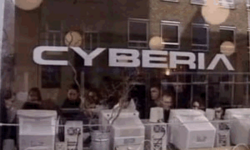
The formal "Cybercafé" concept emerged in March 1994 when Ivan Pope created an installation for the Institute of Contemporary Arts (ICA) in London. This setup featured Apple Mac computers on café-style tables with menus of available services.
Global Expansion in the 1990s
The mid-90s saw a rapid global rollout. In Finland, CompuCafé opened in September 1993, later introducing a robotic beer seller. The UK saw the opening of the CB1 Café in Cambridge in 1995, which remained operational until 2015. In the United States, New York City's East Village became a hub in 1995 with the opening of the @Cafe, Internet Cafe, and Heroic Sandwich.
Regional Characteristics and Regulations
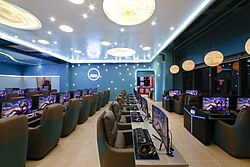
Asia: From Access to Esports
In South Korea, PC bangs are ubiquitous, with over 20,000 establishments catering primarily to the younger generation of gamers, typically costing around 1,000 won per hour.
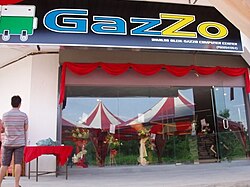
The Philippines utilizes "comshops" (computer shops) on nearly every city street. These are often strictly regulated by local ordinances to protect minors; for example, students under 18 may be prohibited from gaming during class hours. Regulations often require transparent walls, CCTV, and filtering software to block adult content.
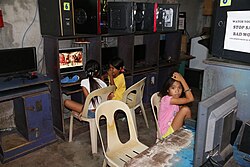
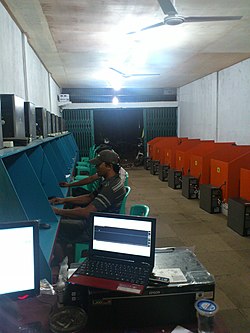
In Indonesia, urban cafés are called warnet, while rural, often government-funded centers are known as telecenters. These serve as critical infrastructure for those without personal computers.
The Americas and Europe
Brazil's early model was inspired by South Korean LAN houses, with the first opening in São Paulo in 1995. In Poland, cafés peaked in the late 90s for gaming (e.g., Counter-Strike) and messaging via Gadu-Gadu, before declining after the launch of ADSL Neostrada in 2001.
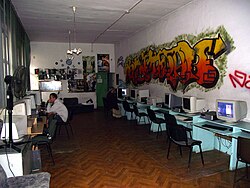
In the United States, the decline was driven by the rapid expansion of home broadband and the subsequent deployment of Wi-Fi and smartphones. Today, only specialized LAN gaming centers persist in major metropolitan areas.
The Impact of Mobile Technology
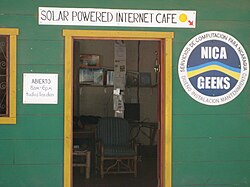
The early 2010s marked a turning point. The rise of smartphones equipped with LTE and 5G NR connectivity eroded the necessity of paying for hourly internet access. In South Korea, the number of cafés dropped from 19,000 in 2010 to 15,800 by 2012. China experienced an even sharper decline, with a government report noting that 130,000 cafés closed over a six-year period due to tightening regulations and market shifts.
| Region/Country | Local Term | Primary Use Case | Current Status |
|---|---|---|---|
| South Korea | PC Bang | Online Gaming | High (Evolved to Esports) |
| Philippines | Comshop | General Access / Gaming | Widespread / Regulated |
| Indonesia | Warnet / Telecenter | Essential Connectivity | Active in Rural/Urban areas |
| USA / Europe | Cybercafé | Webmail / Travel Access | Significant Decline |
| China | Internet Café | Gaming / General Access | Declining due to Regulation |
Frequently Asked Questions
Who invented the first cybercafé?
The concept and the name "Cybercafé" were created by Ivan Pope in early 1994 for an event at the Institute of Contemporary Arts in London.
Why are internet cafés declining in developed countries?
The widespread availability of personal devices, such as smartphones and laptops, combined with the expansion of home broadband and public Wi-Fi, has made paid public access less necessary.
What is a PC bang?
A PC bang is a South Korean internet café that primarily caters to the younger generation for online gaming, often serving as a community hub.
How do internet cafés operate in the Philippines?
Known as "comshops," they are found throughout cities and towns. They are often subject to local ordinances that regulate the age of users during school hours and require specific facility standards like transparent walls and content filtering.
What is the difference between a warnet and a telecenter in Indonesia?
Warnets are typically privately owned, bottom-up initiatives found in urban areas, whereas telecenters are usually government or donor-funded initiatives located in rural villages.