International Vegetarian Union: A Century of Promoting Plant-Based Living
The International Vegetarian Union (IVU) is a global non-profit organization dedicated to the promotion of vegetarianism. Serving as an umbrella organization, the IVU connects various national and regional societies to foster a worldwide community committed to meat-free living. By coordinating large-scale events and providing a unified voice for the movement, the IVU has played a pivotal role in the global shift toward plant-based diets for over a century.
Key Facts
- Founded: 1908 in Dresden, Germany.
- Founder: Georges Danjou.
- Current Leadership: Marly Winckler (Chairman of the International Council).
- Primary Purpose: Worldwide promotion of vegetarianism.
- Structure: An umbrella organization for regional and local vegetarian groups.
- Major Events: Organizes World and Regional Vegetarian Congresses on two-year cycles.
The Origins of the IVU
The seeds of the IVU were sown in 1907 during the diamond jubilee of the British Vegetarian Society. During this international gathering, Georges Danjou, the vice-president of the French Vegetarian Society, proposed the creation of an International Vegetarian Federation. Following this proposal, Albert Broadbent, secretary of the Vegetarian Society, invited vegetarian groups from across the globe to convene in Germany.
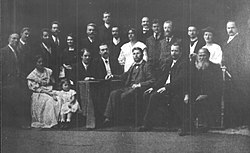
On August 18, 1908, the International Vegetarian Union was officially established at the first World Vegetarian Congress in Dresden. This inaugural event saw attendance from German, British, and Dutch societies, with support from 14 other nations. The provisional committee was formed by Broadbent, Gustav A. Selss (president of the German Vegetarian Association), and Dr. Meyroos (secretary of the Netherlands Vegetarian Society).
Organizational Structure and Governance
The IVU is governed by the International Council, which consists of eight elected members. To ensure the organization remains true to its mission, every council member must be a vegetarian and hold an active position within a member organization. These members serve four-year terms.
Member organizations vary in scale, ranging from local groups to large continental unions. These include entities like the European Vegetarian Union (EVU) and the Vegetarian Union of North America (VUNA), as well as specialized organizations such as EarthSave, provided their primary goal is the promotion of vegetarian living.
Regional Groups
To maintain a global reach, the IVU works with several regional bodies:
- European Vegetarian Union: Founded in 1988.
- Vegetarian Union of North America: Preceded by the American Vegetarian Union (1949–1980s) and the North American Vegetarian Society (1974–1987).
- Asian Pacific Vegan Union (APVU): Formerly known as the Asia Pacific Vegetarian Union.
- South American Vegetarian Union
- Southeast Asian Vegetarian Union
Historical Milestones and Evolution
Throughout the 20th century, the IVU's congresses served as hubs for innovation and policy. For example, the 6th World Vegetarian Congress in London (1926) showcased animal-free alternatives for everyday items, including violin strings, tennis rackets, gloves, furs, and boots. It was also during this congress that the organization unanimously decided to exclude any society that permitted the consumption of fish.
The movement continued to expand globally, with the 15th World Vegetarian Congress held in India in 1957, an event noted by historians for blending internationalism with Hindu nationalism. In the United States, the 1975 World Vegetarian Congress in Orono, Maine, is regarded as the most significant event for the American vegetarian movement in the 20th century, directly contributing to the 1974 founding of the North American Vegetarian Society.
Beyond formal congresses, the IVU encourages the hosting of vegetarian festivals. A notable example is the 43rd World VegFest held in Sydney and Melbourne, Australia, on October 25, 2015.
Leadership Transition
For most of its history, the IVU was led by a president. However, in November 1999, the role of president was abolished and replaced by the Chairman of the International Council. Marly Winckler currently holds this position.
IVU Summary Overview
| Attribute | Details |
|---|---|
| Founded | 1908 (Dresden, Germany) |
| Founder | Georges Danjou |
| Legal Status | Nonprofit Umbrella Organization |
| Governance | International Council (8 members, 4-year terms) |
| Current Chair | Marly Winckler |
| Key Activities | World/Regional Congresses, VegFests |
Frequently Asked Questions
When and where was the International Vegetarian Union founded?
The IVU was founded on August 18, 1908, during the first World Vegetarian Congress in Dresden, Germany.
Who is the current leader of the IVU?
The current Chairman of the International Council is Marly Winckler.
Does the IVU allow organizations that include fish in their diet?
No. Since a unanimous decision made at the 6th World Vegetarian Congress in 1926, membership is excluded for any society that allows the consumption of fish.
What is the purpose of the International Council?
The International Council serves as the ruling body of the IVU, consisting of eight elected vegetarians who hold positions in member organizations and serve four-year terms.
How often are the World and Regional Vegetarian Congresses held?
These congresses are organized in alternating two-year cycles.