Intermarché: The Evolution and Growth of a Retail Giant
From its humble beginnings in the late 1960s to becoming a dominant force in European retail, Intermarché has undergone a significant transformation. Operated by Les Mousquetaires, the chain has strategically expanded its footprint through brand consolidation, strategic alliances, and aggressive acquisitions to meet the diverse needs of modern shoppers.
The History and Brand Evolution
The journey began in 1969 when the company was founded as EX Offices de distribution. By 1973, the chain adopted the name Intermarché, setting the stage for its growth across France and beyond.
A pivotal shift occurred on June 9, 2005, when Les Mousquetaires announced that the Intermarché brand would be extended to all its grocery subsidiaries, with the exception of Netto. This move streamlined the company's identity, transitioning the brand's classification to be based on location and sales floor area rather than disparate brand names.
Store Formats and Classifications
To optimize accessibility and service, Intermarché categorized its stores into four distinct formats based on size and target demographics:
- Intermarché Hyper: The largest format, featuring sales floors between 3,200 m² and 6,000 m².
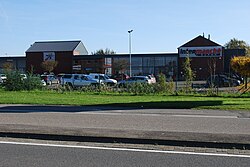
- Intermarché Super: The most common format, typically averaging around 2,000 m².
- Intermarché Express: Convenience stores strategically located in city centers for quick shopping trips.
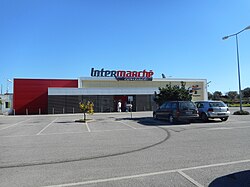
- Intermarché Contact: Convenience stores tailored for rural areas, which largely replaced the former Écomarché stores.
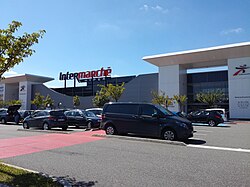
These diverse formats allow the group to maintain a presence in every environment, from bustling urban hubs to quiet countryside villages.
Strategic Alliances and Market Expansion
Intermarché has utilized strategic partnerships to increase its bargaining power. On October 8, 2014, ITM Intermarché and the Casino Group entered an agreement to combine their purchasing efforts with suppliers in France. This alliance established the two groups as the leading retail purchaser in the country, commanding a market share of 25.8%.
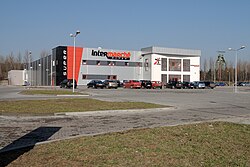
In recent years, the chain has accelerated its growth through direct acquisitions. In January 2024, Intermarché purchased 190 stores from Casino and Géant Casino. Further expanding its reach in 2025, the company acquired 81 stores from Colruyt, a Belgian brand that had operated in eastern France for approximately three decades.
Key Facts
- Founded: 1969 (as EX Offices de distribution).
- Rebranded: Became Intermarché in 1973.
- Market Power: Achieved a 25.8% French market share via a 2014 alliance with Casino Group.
- Recent Growth: Acquired 190 Casino/Géant Casino stores (2024) and 81 Colruyt stores (2025).
- Store Range: Formats range from rural Contact stores to Hypermarkets up to 6,000 m².
Store Format Summary
| Format | Typical Size | Primary Location/Purpose |
|---|---|---|
| Intermarché Hyper | 3,200 m² – 6,000 m² | Large-scale shopping centers |
| Intermarché Super | ~2,000 m² | Standard grocery needs |
| Intermarché Express | Small/Convenience | City centers |
| Intermarché Contact | Small/Convenience | Rural areas |
Frequently Asked Questions
When did the chain become known as Intermarché?
The chain was founded in 1969 as EX Offices de distribution and officially became Intermarché in 1973.
What is the difference between Intermarché Express and Intermarché Contact?
Both are convenience stores, but Intermarché Express is designed for city centers, while Intermarché Contact serves rural areas and replaced most Écomarché stores.
How did Intermarché increase its market share in France?
In 2014, Intermarché formed a purchasing alliance with the Casino Group, making them the top retail purchaser in France with a 25.8% market share.
Which stores did Intermarché acquire recently?
Intermarché purchased 190 Casino and Géant Casino stores in January 2024, and 81 stores from the Belgian brand Colruyt in 2025.
What is the largest store format offered by the chain?
The largest format is Intermarché Hyper, with sales floors ranging from 3,200 m² to 6,000 m².