Casino Group: A Comprehensive History of Retail Innovation and Evolution
The story of the Casino Group is a sweeping saga of retail ambition, spanning over a century of transformation. From its humble beginnings as a single grocery store in Saint-Étienne to its expansion into a global powerhouse across Europe, Asia, and South America, Casino has consistently pushed the boundaries of how people shop. Its journey is marked by pioneering innovations in self-service and logistics, as well as a complex modern era of financial restructuring.
Key Facts
- Founded: 1898 by Geoffroy Guichard and his father-in-law.
- First Store: Located in Saint-Étienne, originally the Lyrical Casino.
- Major Innovations: Introduced self-service stores in France (1948) and the first sell-by dates (1959).
- Global Reach: Expanded significantly into Brazil (GPA) and Colombia (Grupo Éxito).
- Key Brands: Includes Géant Casino, Monoprix, Franprix, and Leader Price.
- Recent Status: Underwent significant debt restructuring and store divestments starting in 2023.
The Genesis and Early Growth (1892–1923)
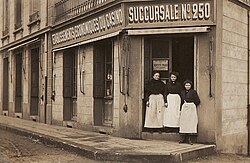
The foundation of the empire began with Geoffroy Guichard, who took sole ownership of a retail grocery store in Saint-Étienne in 1892. The shop was housed in the former Lyrical Casino, a venue that had closed in the 1850s. Inspired by the Felix Potin model, Guichard transformed the business into a general food store, opening his first branch in Veauche in April 1898.
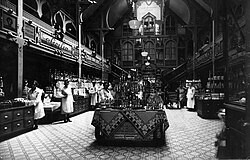
On August 2, 1898, Guichard co-founded "la Société des Magasins du Casino" under the corporate name Guichard-Perrachon & Co. The company quickly scaled, building massive warehouses and factories in Saint-Étienne that covered 16,000 m² after a fire in 1900. These facilities allowed Casino to vertically integrate, producing its own bread, oil, chocolate, coffee, and liquors. By September 1904, the company had reached its 100th branch.
Pioneering Social Action
Long before modern corporate social responsibility, Casino implemented a comprehensive social action plan for its employees. Starting in 1904 with an insurance fund, the company added health services in 1905, birth premiums in 1910, and profit sharing by 1916. In 1912, the company established a sports organization, the Casino employees’ Social Club, which eventually evolved into the professional football club known as Association Sportive de Saint-Étienne.
Industrial Expansion and Wartime Resilience (1920–1945)
Following World War I, Casino entered a phase of rapid industrialization. By 1929, the network grew to nearly 1,000 branches and 500 outlets across 28 districts. Geoffroy Guichard also expanded his influence by taking control of L’Épargne de Toulouse in 1925, a similar operation in Southwest France.
After Geoffroy Guichard's death in 1940, leadership passed to Mario Guichard and his brothers. During the German occupation of France, the company played a clandestine role in the resistance. Under François Kemlin, the company used its material resources to facilitate the escape of war prisoners and manage secret communications, despite suffering significant bombing damage to its infrastructure.
The Era of Great Innovations (1947–1960)
The post-war era brought a paradigm shift in retail. After visiting North America in 1947, Pierre Guichard introduced the self-service store concept to France in 1948. This innovation revolutionized the shopping experience, with 500 branches adopting the model within a decade.
Casino continued to lead in food safety and preservation. In 1950, it implemented some of the first cooling systems in distribution. Most notably, in 1959, Casino became the first distributor to display a sell-by date on products, a practice that became legally mandatory in France by 1984.
Diversification and the Rise of Hypermarkets (1957–1990)
The company evolved its store formats to meet changing consumer needs. The first supermarket, "Nica," opened in Nice in 1957, followed by the first official Casino-branded supermarket in Grenoble in 1960. In March 1970, the group launched Géant Casino in Marseille, which was the largest store in France at the time, spanning 16,000 m² and incorporating 41 independent businesses.
The group also ventured into the DIY (Do-It-Yourself) market in 1978 via SOMABRI, though it eventually transferred majority ownership to Castorama in 1989.
Global Expansion and Strategic Mergers (1976–1999)
Internationalization began in 1976 with Casino USA, focusing on French cafeterias and convenience stores (Le Petit Casino) in Arizona and California. The group later expanded into Asia through a partnership with Dairy Farm International, opening a hypermarket in Taiwan in 1998.
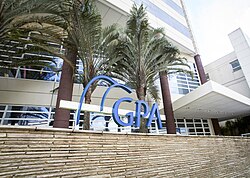
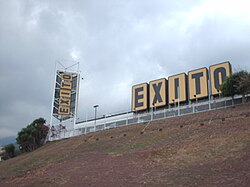
The late 1990s saw a strategic pivot toward South America. Casino invested heavily in GPA in Brazil and Grupo Éxito in Colombia, establishing a dominant presence in the Latin American market.
The Rallye Merger
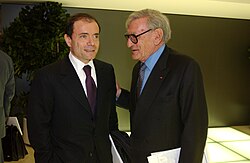
A pivotal moment occurred in October 1992 when Casino Group merged with the Rallye Group, owned by Jean-Charles Naouri. This merger integrated Rallye's distribution and catering activities, ensuring Casino's presence across all of France. By 1998, following a hostile tender offer from Promodès, Jean-Charles Naouri became the majority shareholder of the group.
Modern Growth and Digital Transformation (1999–2014)
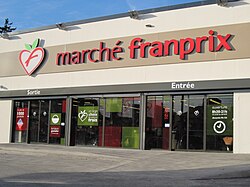
Under Jean-Charles Naouri's leadership, the group aggressively acquired diverse assets. This included the acquisition of Monoprix, Franprix, Leader Price, and the e-commerce platform Cdiscount. The group also diversified into finance with Banque Casino (2001) and real estate with Mercialys, which managed 150 shopping malls.
In 2007, the group branched into green energy with GreenYellow, connecting its first photovoltaic plant to the grid in 2010. In 2011, a partnership with La Poste was established to bring convenience food stores to small villages with fewer than 12,000 inhabitants.
Financial Crisis and Restructuring (2015–2026)
Starting in 2016, Casino began refocusing its activities, selling its Big C operations in Thailand and Vietnam for billions of euros. However, the group faced mounting financial pressure. In May 2019, the parent company, Rallye S.A., declared bankruptcy protection due to high debt costs, though subsidiaries continued to operate.
The debt crisis intensified between 2021 and 2023, with debt rising to 5.9 billion euros and share prices dropping by nearly 50%. To avoid total bankruptcy, the group entered a restructuring phase in 2023. This led to the sale of 288 stores in early 2024 to rivals Intermarché, Auchan, and Carrefour, as well as the sale of its stake in Exito for 400 million euros.
Recent years have seen further contractions, including the Chapter 15 bankruptcy of Casino USA in 2024 and the departure of several supermarket groups to Carrefour in 2025. As of July 2026, the group is negotiating with creditors regarding €1.4 billion in debt maturing in 2027.
Summary of Casino Group's Evolution
| Era | Key Focus | Major Achievement/Event |
|---|---|---|
| 1892–1904 | Foundation | Opening of the first store and 100th branch. |
| 1904–1923 | Social Welfare | Creation of employee insurance and pension funds. |
| 1947–1960 | Retail Innovation | Introduction of self-service and sell-by dates. |
| 1970–1990 | Format Expansion | Launch of Géant Casino hypermarkets. |
| 1992–2014 | Diversification | Merger with Rallye; acquisition of Monoprix and Cdiscount. |
| 2015–Present | Restructuring | Debt crisis and sale of international and domestic assets. |
Frequently Asked Questions
Who founded the Casino Group?
The group was founded by Geoffroy Guichard, who took over a grocery store in Saint-Étienne in 1892 and later established "la Société des Magasins du Casino" in 1898 with his father-in-law.
What retail innovations is Casino known for?
Casino is credited with introducing the self-service store concept to France in 1948 and being the first distributor to implement sell-by dates on products in 1959.
Which international markets did Casino enter?
Casino expanded into the United States (Casino USA), Asia (via Dairy Farm International in Taiwan), and South America, where it held significant stakes in GPA (Brazil) and Grupo Éxito (Colombia).
What caused the recent financial difficulties of the group?
The group suffered from a severe debt crisis, with liabilities reaching 5.9 billion euros by 2021, leading to bankruptcy protection for its parent company, Rallye S.A., and subsequent restructuring.
What happened to Casino's stores in 2024?
As part of a debt restructuring deal, Casino sold 288 stores to competitors, including Intermarché, Auchan, and Carrefour, and sold its 34% stake in Exito to Grupo Calleja.