Influenza: Types, Transmission, and Treatment of the Flu
Commonly known as the flu or grippe, influenza is a highly contagious infectious disease that affects the respiratory system. With approximately 1 billion cases of seasonal influenza occurring annually, it remains a significant global health challenge, resulting in between 290,000 and 650,000 deaths each year.
The illness typically manifests 1 to 4 days after exposure to the virus and generally lasts between 2 and 8 days. While often mistaken for a common cold, influenza is caused by specific influenza viruses that can lead to more severe complications in vulnerable populations.
![Symptoms of influenza,[2][3] with fever and cough the most common symptoms[4]](/images/e9/6d/e96d29370732ee8c70df4e1473bf91563281024929b9e585e0a92d20c842a668.webp)
Key Facts
![Influenza mortality in symptomatic cases in the US for the 2018/2019 season[67]](/images/75/14/751484f4f2ed6320ca447cf9c90e0509f2cd1eb2bca5954004408bde0392540c.webp)
- Annual Impact: 1 billion seasonal cases and up to 650,000 deaths worldwide.
- Primary Causes: Influenza A, B, and C viruses.
- Common Symptoms: Fever, cough, sore throat, runny nose, muscle pain, headache, and fatigue.
- Prevention: Hand washing and annual flu vaccinations.
- Treatment: Antiviral medications such as oseltamivir.
The Virology of Influenza
Influenza viruses are categorized into four main types based on their genetic makeup and the populations they infect:
- Influenza A: The most versatile type, capable of infecting humans and various animals. It is further divided into subtypes based on two surface proteins: hemagglutinin (H) and neuraminidase (N). In humans, the subtypes H1N1 and H3N2 are most common.
- Influenza B: Primarily infects humans, though it has been found in seals, horses, dogs, and pigs. It does not have subtypes but exists in two lineages: B/Victoria and B/Yamagata.
- Influenza C: Causes milder respiratory illness and is less variable than types A and B.
- Influenza D: Primarily affects cattle and is not known to infect humans.
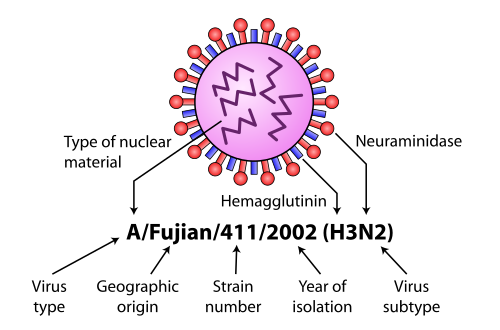
Viral Structure and Life Cycle
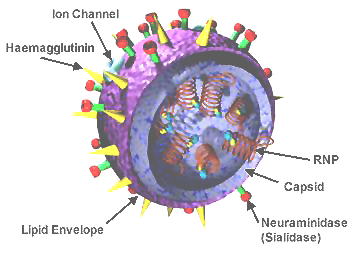
The influenza virion consists of a viral envelope containing the H and N proteins, which are critical for the virus's ability to enter and exit host cells. Inside the particle, the genome is composed of viral RNAs bound to ribonucleoproteins (RNP).
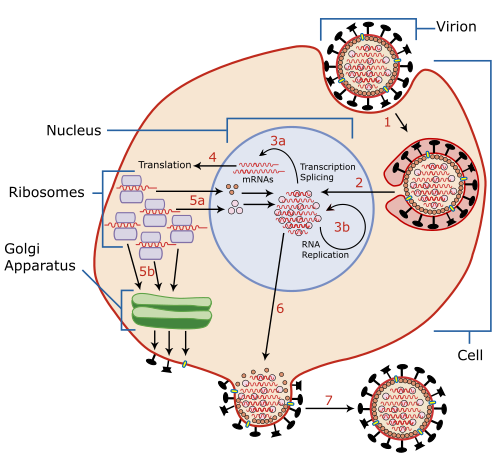
The virus invades a host cell by using hemagglutinin to attach to the cell surface, after which it replicates its genetic material to produce new viral particles.
Evolution: Antigenic Drift and Shift
Influenza viruses evolve through two primary mechanisms, allowing them to evade the human immune system:
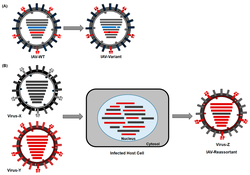
- Antigenic Drift: Small, gradual mutations in the genome that lead to the emergence of new variants. This is why the flu vaccine must be updated annually.
- Antigenic Shift: A sudden, major change occurring when two or more different influenza A viruses infect the same cell and swap genetic segments (reassortment). This can create an entirely novel subtype, potentially triggering a pandemic.
Transmission and Pathophysiology
Influenza spreads primarily through two routes. Direct transmission occurs when an infected person sneezes mucus directly into another person's eyes, nose, or mouth. The airborne route involves inhaling aerosols produced when an infected individual coughs, sneezes, or spits.
The severity of the disease often depends on where the virus infects the respiratory tract. For example, the site of infection differs between H1N1 and H5N1, which influences how easily the virus spreads and its overall lethality.
![How the different sites of infection (shown in red) of H1N1 and H5N1 influences their transmission and lethality[42]](/images/ce/c8/cec848891c160092b360b45492c9b93185f502fe0132a06753bb2b4e31fbe311.png)
Prevention and Management
The most effective way to prevent influenza is through vaccination and rigorous hygiene, such as frequent hand washing.

Diagnosis and Treatment
Healthcare providers diagnose the flu using antigen tests or imaging. In severe cases, X-rays may be used to check for complications like pneumonia.

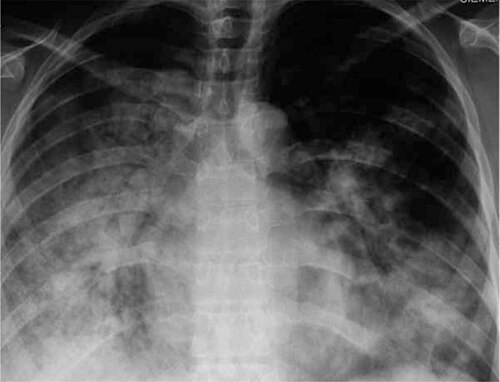
When diagnosed, antiviral drugs can be administered to reduce the severity and duration of the illness. The choice of drug depends on the patient's age and the method of administration.
| Drug | Route of Administration | Approved Age of Use |
|---|---|---|
| Oseltamivir | Oral | At least 2 weeks old |
| Zanamivir | Inhalation | At least 5 years old |
| Peramivir | Intravenous injection | At least 18 years old |
| Laninamivir | Inhalation | All ages (dosage varies by age) |
| Baloxavir marboxil | Oral | At least 12 years old |
Epidemiology and History
Influenza patterns vary by region, with specific seasonal risk areas across the Northern and Southern Hemispheres.
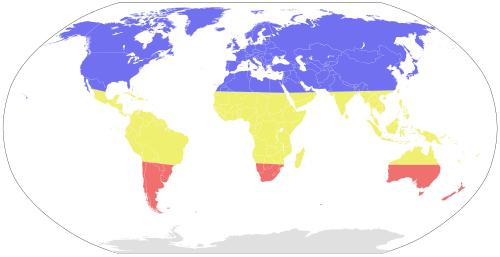
Historically, the world has faced several devastating pandemics. The 1918 epidemic was notably different from normal seasonal flu due to its unique mortality age distribution. More recently, the 2009 swine flu pandemic was caused by a novel H1N1 strain resulting from a reassortment of human, swine, and avian viruses.
![The main types of influenza viruses in humans. Solid squares show the appearance of a new strain, causing recurring influenza pandemics. Broken lines indicate uncertain strain identifications.[71]](/images/17/ca/17ca8a2f611d65baabe1e6c4a835b84ea71cd38cabd4c9719030c240ad5ba82c.webp)
![The difference between the influenza mortality age distributions of the 1918 epidemic and normal epidemics. Deaths per 100,000 persons in each age group, United States, for the interpandemic years 1911–1917 (dashed line) and the pandemic year 1918 (solid line).[81]](/images/35/72/35720cb51a118ed9bd8c4b9e6fbe8891c2f7e78080a03ce6b28d7072d7cf9dbb.png)
During pandemics, public health authorities may use tools like thermal imaging cameras at airports to detect elevated body temperatures, a common sign of infection.


Influenza in Animals
Most Influenza A viruses originate in wild birds. However, they have been found in a wide array of animals, including pigs, cattle, horses, dogs, cats, and marine mammals. Interestingly, bats carry unique influenza-like viruses with subtypes H17, H18, N10, and N11, which have an uncertain origin and cannot reassort with other Influenza A viruses.
Frequently Asked Questions
What is the difference between Influenza A and B?
Influenza A can infect both humans and animals and is capable of causing pandemics through antigenic shift. Influenza B primarily infects humans and causes seasonal epidemics but does not cause pandemics.
How does the flu spread from person to person?
The flu spreads via direct transmission (mucus from sneezes) or the airborne route (inhaling aerosols from coughing or spitting).
Why do I need a new flu shot every year?
This is due to antigenic drift, where the virus gradually accumulates mutations, changing its surface proteins so that previous vaccines or infections no longer provide full protection.
What are the most common symptoms of the flu?
The most frequent symptoms include fever and cough, accompanied by runny nose, sore throat, muscle pain, headache, and fatigue.
Can animals get the flu?
Yes, influenza viruses infect a variety of animals. While birds are the primary reservoir for Influenza A, it is also found in pigs, horses, dogs, and bats.