Inflorescence: The Complex Architecture of Plant Flower Clusters
In the diverse world of botany, plants rarely present their reproductive organs in isolation. Instead, many species organize their flowers into intricate groups or clusters known as an inflorescence. This specialized structure is a modified part of the plant shoot, where flowers are arranged along a main axis or a system of branches to facilitate reproduction.
By studying the arrangement, branching patterns, and timing of flowering, botanists can categorize these structures to understand plant evolution and reproductive strategies. Whether it is a single, massive bloom or a delicate spray of tiny florets, the architecture of an inflorescence is a masterpiece of biological engineering.
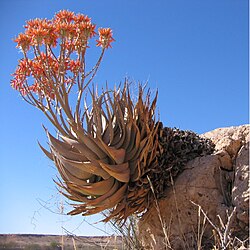
Key Facts
- An inflorescence is a cluster of flowers arranged on a plant's stem.
- The main stem supporting the entire cluster is called the peduncle.
- Inflorescences are primarily classified as determinate (cymose) or indeterminate (racemose).
- The fruiting stage of an inflorescence is known as an infructescence.
- Individual flowers within a cluster are often referred to as florets.
Anatomy of a Flower Cluster
To understand how inflorescences function, one must first master the botanical terminology used to describe their components. The structure is defined by several key parts:
- Peduncle: The primary stem that holds the entire inflorescence.
- Rachis: The main axis located above the peduncle that bears the flowers or secondary branches.
- Pedicel: The individual stalk that supports each single flower within the cluster.
- Floret: A term used for individual flowers, particularly when they are small and tightly packed in a cluster, such as in a pseudanthium (a false flower made of many tiny ones).
When a flower exists entirely on its own without a cluster, it is known as a solitary flower. In such cases, its individual stalk is also referred to as a peduncle.
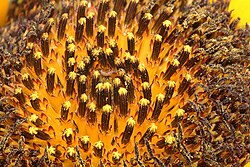
Growth Patterns: Determinate vs. Indeterminate
One of the most fundamental ways to categorize an inflorescence is by its growth pattern, which determines whether a terminal flower is formed and how the plant continues to grow.
Indeterminate (Racemose) Growth
In indeterminate inflorescences, the plant follows a monopodial growth pattern. The terminal bud continues to grow, meaning a terminal flower is never formed. Instead, flowers are produced laterally along the axis. This often results in acropetal maturation, where flowers mature from the base upward toward the tip.
Determinate (Cymose) Growth
Determinate inflorescences follow a sympodial growth pattern. Here, the terminal bud develops into a flower and then ceases growth. To continue the plant's development, secondary buds must grow from the sides. This pattern often leads to the terminal flower maturing first, a process known as precursive development.
Maturation timing can vary significantly in determinate structures:
- Acropetal maturation: Flowers mature from the base toward the top.
- Basipetal maturation: Flowers mature from the top downward.
- Divergent maturation: The central flowers mature first.
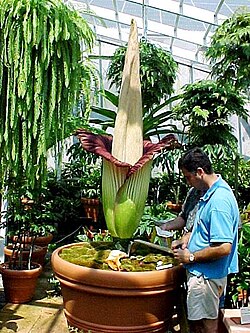
Classifying Inflorescence Types
Botanists divide inflorescences into two broad categories based on their branching complexity: simple and compound.
Simple Inflorescences
Simple inflorescences consist of a single axis. These are further divided into two main groups:
Racemose (Indeterminate) Types- Raceme: An unbranched axis with flowers on short stalks (pedicels).
- Spike: Similar to a raceme, but the flowers lack pedicels and sit directly on the axis.
- Corymb: An unbranched structure that appears flat-topped because the outer pedicels are longer than the inner ones.
- Capitulum (Flower Head): A highly compressed raceme where many sessile (stalkless) flowers share an enlarged stem.
- Catkin (Ament): A drooping, scaly spike or raceme.
- Cyme: The primary determinate form where the main axis ends in a flower.
- Monochasium: A cyme with only one secondary axis.
- Dichasium: A cyme where the secondary axis also branches into two.
- Umbel: A structure that may appear as a compressed cyme, where stalks radiate from a single point.
Compound Inflorescences
In compound inflorescences (or synflorescences), the individual flowers of a simple inflorescence are replaced by entire smaller inflorescences. This creates highly complex, branched structures.
- Panicle: A compound raceme that is branched, often appearing irregular.
- Thyrse: A structure where a central axis bears a raceme, but the individual flowers are replaced by cymes.
- Compound Umbel: An umbel where the individual flowers are replaced by smaller units called umbellets.
Summary of Inflorescence Structures
| Type | Growth Pattern | Key Characteristic |
|---|---|---|
| Raceme | Indeterminate | Unbranched axis with pedicellate flowers |
| Spike | Indeterminate | Unbranched axis with sessile flowers |
| Cyme | Determinate | Terminal bud forms a flower and stops growth |
| Panicle | Compound | A branched, compound raceme |
| Capitulum | Simple | Contracted raceme on an enlarged stem |
The Genetic and Environmental Basis of Development
The architecture of an inflorescence is not accidental; it is strictly regulated by genetics. In model organisms like Arabidopsis, specific genes such as LEAFY (LFY) and APETALA1 (AP1) promote the identity of floral meristems. Conversely, genes like terminal flower (TFL) act as inhibitors to prevent flowers from forming at the very apex, thereby maintaining the inflorescence's ability to continue growing.
Beyond genetics, environmental factors such as temperature and photoperiod (the length of light and dark periods) play critical roles in triggering the shift from vegetative growth to the reproductive phase.
Frequently Asked Questions
What is the difference between a peduncle and a pedicel?
The peduncle is the main stalk that supports the entire cluster of flowers, while the pedicel is the smaller, individual stalk that supports a single flower within that cluster.
What makes an inflorescence "determinate"?
A determinate inflorescence is one where the main growing tip (the terminal bud) turns into a flower. Because the tip has become a flower, it can no longer grow upward, forcing the plant to grow new branches from the sides to continue flowering.
What is a pseudanthium?
A pseudanthium is a structure that looks like a single large flower but is actually a tight cluster of many tiny individual flowers (florets) working together to mimic a single bloom.
What is an infructescence?
An infructescence is simply the term used to describe an inflorescence once the flowers have been pollinated and have transitioned into the fruiting stage.
How do panicles differ from racemes?
A raceme is a simple, unbranched structure with flowers on stalks. A panicle is a compound structure where the "flowers" on the main stem are actually entire smaller racemes or branched clusters.