Industrial Parks: Infrastructure, Benefits, and Global Variations
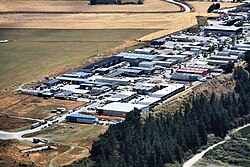
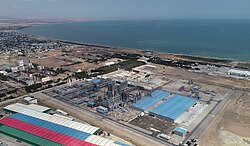
An industrial park, frequently referred to as an industrial estate or trading estate, is a specifically zoned and planned area dedicated to industrial development. While similar to business parks or office parks, industrial parks are designed for more heavyweight operations, accommodating heavy industry rather than just offices and light industrial work.
These zones are typically situated on the outskirts of main residential city areas to balance urban growth with industrial needs. A prime example can be found in the Thames Gateway area of London, where numerous industrial estates line the River Thames.
Key Facts
- Purpose: Zoned areas designed to concentrate industrial activity and infrastructure.
- Location: Usually positioned near transport hubs like highways, railroads, airports, and ports.
- Infrastructure: Provides high-capacity utilities including three-phase electric power and large-volume gas and water lines.
- Environmental Goal: Separates heavy industrial use from residential urban areas to reduce social and environmental impacts.
- Variations: Includes specialized forms like biotechnology parks and urban flatted factories.
Strategic Benefits of Industrial Zoning
The practice of setting aside land for industrial parks serves several critical economic and social functions. By concentrating development in a delimited area, municipalities and developers can achieve the following:
- Cost Reduction: Concentrating dedicated infrastructure reduces the per-business cost of essential services. This includes the installation of railroad sidings, high-end communications cables, and high-power electric supplies.
- Business Attraction: Providing a "plug-and-play" integrated infrastructure makes the location more attractive to new businesses.
- Urban Separation: By isolating industrial uses from residential zones, cities can mitigate the environmental and social disruptions caused by heavy industry.
- Targeted Control: It allows for the implementation of localized environmental controls tailored specifically to industrial requirements.
The Role of Transport and Utilities
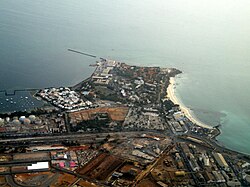
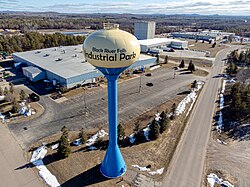
Proximity to transport facilities is a defining characteristic of these parks, particularly where multiple modes of transport—such as ports and highways—coincide. In North America, a common landmark of these parks is the water tower. These structures serve a dual purpose: they ensure sufficient water pressure for industrial demands and firefighting, and they act as advertising beacons, often featuring the community's name and logo.
Benchmarking and Performance
To evaluate the effectiveness of these zones, operators use benchmarking—the process of comparing performance against a standard. This often involves ESG (Environmental, Social, and Governance) criteria, which rank parks based on investment, environmental protection, and social responsibility.
For manufacturing companies, the efficiency of the park operator is vital. The costs charged for infrastructure and services directly impact the global competitiveness of the companies operating within the park.
Challenges and Criticisms
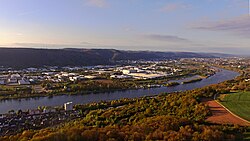
Not all industrial parks meet high standards of infrastructure. Some smaller communities establish parks that offer only basic utilities and highway access, often lacking any viable public transportation options.
In developing nations, such as India, additional complexities arise. These include a shortage of skilled labor and the problematic clustering of incompatible sectors. For example, placing pharmaceutical plants alongside heavy engineering firms can lead to unfavorable outcomes for industries that require strict quality and cleanliness controls.
Global Variations in Industrial Design
Depending on the local economy and land availability, industrial parks evolve into different forms:
- Biotechnology Industrial Parks: Also known as bio-industrial parks or eco-industrial clusters, these specialize exclusively in biotech industries.
- Flatted Factories: In land-scarce cities like Hong Kong and Singapore, industries are housed in multi-story buildings. These "flats" feature cargo lifts and, in some cases, roads that provide vehicle access to every level.
- Mixed-Use Zones: In Geneva, Switzerland, a lack of land has led to the densification of industrial areas. These zones are being transformed into mixed-use areas where ground-floor spaces are leased to service providers—such as restaurants, fitness centers, and shops—to serve the industrial workforce.
| Type | Primary Characteristic | Typical Location/Example |
|---|---|---|
| Standard Industrial Park | Heavy industry, high-capacity utilities | City outskirts / Thames Gateway |
| Biotechnology Park | Specialized biotech infrastructure | Eco-industrial clusters |
| Flatted Factory | Multi-story industrial units | Singapore, Hong Kong |
| Mixed-Use Zone | Industrial combined with retail/services | Geneva, Switzerland |
Frequently Asked Questions
What is the difference between an industrial park and a business park?
An industrial park is designed for heavy industry and requires more robust infrastructure, whereas a business park typically houses offices and light industry.
Why are water towers common in North American industrial parks?
They provide the necessary water volume for industrial operations and firefighting, while also serving as a visible landmark for the community's branding.
What are flatted factories?
Flatted factories are multi-story industrial buildings used in cities where land is scarce, featuring cargo lifts and sometimes road access to upper floors.
How does benchmarking affect manufacturing companies?
Benchmarking allows companies to evaluate the cost and quality of services provided by the park operator, which directly affects the company's overall competitiveness.
What are the risks of clustering different industrial sectors together?
In some developing regions, clustering radically different sectors (like heavy engineering and pharmaceuticals) can negatively impact quality-centered industries due to environmental or operational conflicts.