Indonesian Coffee History: From Colonial Roots to Global Influence
Indonesia holds a distinguished place in the global history of caffeine, serving as the first location outside of Ethiopia and Arabia where coffee was widely cultivated. The journey of coffee in the archipelago is a complex narrative of botanical ambition, colonial exploitation, and resilience against agricultural disaster.
The Arrival of Arabica in the East Indies
The introduction of Coffea arabica (Arabica coffee) to Indonesia began in 1696, when the Dutch governor in Malabar, India, sent seedlings from Yemen to the governor of Batavia (modern-day Jakarta). While the first attempt failed due to flooding, a second shipment arrived in 1699 via Hendrik Zwaardecroon. These plants thrived, leading to the first exports from Java to Europe in 1711.
These exports were managed by the Verenigde Oostindische Compagnie (VOC), known in English as the Dutch East India Company. By 1717, shipments reached 2,000 pounds. In Amsterdam, this coffee was a luxury item; one kilogram cost nearly one percent of the average annual income.
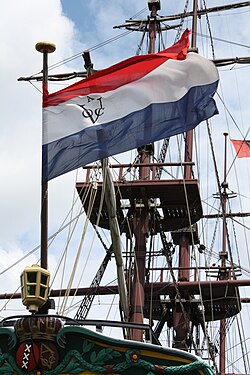
Batavia: The Gateway of the Coffee Trade
The port of Batavia served as the primary hub for shipping coffee to Europe. The site has a long maritime history, dating back to 397 AD when King Purnawarman established the city of Sunda Kelapa at the mouth of the Ciliwung River. Today, the legacy of this trade survives in the Kota area of Jakarta.
Key historical landmarks include the Bahari Museum, which once served as a VOC warehouse for spices and coffee, and the Menara Syahbandar (Lookout Tower), built in 1839 to replace the flagpole where VOC ships docked to load their cargo.
Economic Shifts and the Cultivation System
During the 18th century, coffee prices in Amsterdam were initially high, selling for 3 Guilders per kilogram. Given that annual incomes in Holland ranged from 200 to 400 Guilders, this represented a significant expense. However, by the end of the century, the price dropped to 0.6 Guilders per kilogram, allowing coffee consumption to spread from the elite to the general population.
While the VOC and the subsequent Dutch East Indies government (established in 1800) profited immensely, the burden fell on Indonesian farmers. Between 1830 and 1870, the colonial government enforced the Cultuurstelsel (Cultivation System). Under this exploitative regime, farmers were forced to deliver export crops—primarily coffee, sugar, and indigo—to government warehouses instead of paying taxes.
This system was implemented in the Preanger region of West Java, West Sumatra, South Sulawesi, and the Minahasa region of North Sulawesi. The hardships caused by the Cultuurstelsel, which diverted labor away from essential rice production, were exposed in the 1860 novel Max Havelaar: Or the Coffee Auctions of the Dutch Trading Company by Eduard Douwes Dekker (writing as Multatuli). This work shifted Dutch public opinion on colonialism and later inspired the name of a prominent fair trade organization.
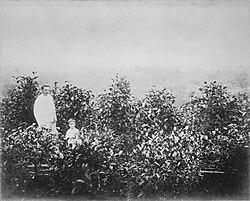
Expansion and the Impact of Coffee Rust
By the mid-1870s, the Dutch expanded Arabica cultivation into Bali, Sulawesi, Timor, and Sumatra. In Sulawesi, planting began around 1850, while North Sumatra saw growth near Lake Toba in 1888 and the Gayo highlands in 1924. In East Indonesia, specifically Flores and East Timor (originally under Portuguese control), Arabica was grown from different root stocks. These plants were more resistant to disease, and some East Timorese coffee is believed to date back to the 18th century.
However, the industry faced a catastrophe in 1876 when Hemileia vastatrix (coffee rust) swept through Indonesia, destroying most of the Arabica Typica cultivar. To combat this, Robusta coffee (C. canephor var. robusta) was introduced to East Java in 1900, as it was more resilient at lower altitudes. Robusta spread to smallholders in Kerinci around 1915 and across southern Sumatra in the 1920s, eventually eclipsing Java as the primary producing region by volume.
Post-Independence and Modern Management
Following independence, Dutch-owned plantations in Java were nationalized in the 1950s. These are now managed by PTPN (Perusahaan Terbatas Perkebunan Nusantara), the state-owned plantation company. During the 1950s, these plantations and local smallholders revitalized their crops with new varieties of Coffea arabica through government development programs.
Key Facts
- First Global Expansion: Indonesia was the first place outside Arabia and Ethiopia to cultivate coffee widely.
- Colonial Monopoly: The VOC (Dutch East India Company) controlled early exports, making Indonesia the world's leading supplier until the 1840s.
- The Cultuurstelsel: A forced cultivation system (1830–1870) that prioritized export crops over local food security.
- Botanical Crisis: The 1876 coffee rust outbreak led to the introduction of the hardier Robusta variety in 1900.
- Regional Dominance: Southern Sumatra eventually surpassed Java as the most productive coffee region by volume.
| Year/Period | Event | Significance |
|---|---|---|
| 1696–1699 | Introduction of Arabica | Seedlings brought from Yemen to Batavia. |
| 1711 | First Exports | VOC begins shipping Java coffee to Europe. |
| 1830–1870 | Cultuurstelsel | Forced cultivation system causing farmer hardship. |
| 1876 | Coffee Rust Outbreak | Hemileia vastatrix wipes out Arabica Typica. |
| 1900 | Robusta Introduction | Introduced to East Java as a rust-resistant substitute. |
| 1950s | Nationalization | Plantations transferred to state-owned PTPN. |
Frequently Asked Questions
Why was coffee so expensive in 18th-century Amsterdam?
Coffee was a rare luxury import. In the 18th century, 1 kg of coffee cost 3 Guilders, which was nearly one percent of the average annual income of a Dutch citizen.
What was the Cultuurstelsel?
The Cultuurstelsel, or Cultivation System, was a colonial policy from 1830 to 1870 that forced Indonesian farmers to grow export crops like coffee, sugar, and indigo for the Dutch government instead of paying taxes.
How did coffee rust change Indonesian coffee production?
The 1876 outbreak of Hemileia vastatrix destroyed most Arabica Typica plants. This led the Dutch to introduce Robusta coffee in 1900, which was more resistant to the disease and grew well at lower altitudes.
What is the significance of the novel Max Havelaar?
Written by Eduard Douwes Dekker in 1860, the novel exposed the corruption and cruelty of the Cultivation System, helping to change Dutch public opinion regarding colonialism.
Which region is currently the most important for coffee volume in Indonesia?
Southern Sumatra is the most important producing region by volume today, having eclipsed Java after the spread of Robusta coffee in the 1920s.