Exploring Indonesia: A Journey Through the Archipelago of Diversity
Spanning a vast expanse of Southeast Asia, the Republic of Indonesia is a nation defined by its incredible variety. From its ancient prehistoric roots to its status as a modern economic powerhouse, Indonesia offers a unique tapestry of cultures, landscapes, and traditions. Guided by the national motto, Bhinneka Tunggal Ika—an Old Javanese phrase meaning "Unity in Diversity"—the country manages to harmonize hundreds of ethnic groups and languages within a single sovereign state.

Key Facts
- Population: Approximately 288 million (2025 estimate), making it the 4th most populous country in the world.
- Capital: Jakarta.
- National Ideology: Pancasila ("The Five Principles").
- Official Language: Indonesian.
- Major Economies: World's largest producer of palm oil and nickel.
- Geography: The 14th largest country by total area.
Foundations of a Nation: History and Government
![Köppen-Geiger climate classification map of Indonesia[102]](/images/63/1a/631a6e1a297c95b16c6aa97cf9bd4b0822e3dca6834263fb96ea57e1996bc6a0.webp)
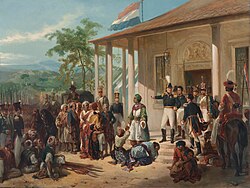
Indonesia's history is a deep well, stretching from prehistoric cave paintings to the era of powerful Islamic sultanates and eventually through European colonial rule. The nation officially proclaimed its independence from the Netherlands on 17 August 1945, receiving formal recognition on 27 December 1949.

Today, Indonesia operates as a unitary presidential republic. The government is led by a President and Vice President, with a legislative branch consisting of the People's Consultative Assembly (MPR). This assembly is divided into two houses: the Regional Representative Council (DPD) and the House of Representatives (DPR).

Political Leadership
As of the current administration, the leadership is held by President Prabowo Subianto and Vice President Gibran Rakabuming Raka.
Geography and Natural Wonders
![Jakarta hosts the headquarters of ASEAN.[177]](/images/98/ba/98ba6db36f239c9a577a4214554a006aa257e816961f358a0fb5c257b10850a8.jpg)
Indonesia is situated in one of the most tectonically active regions on Earth, a fact reflected in its dramatic volcanic landscapes. The archipelago is home to massive geological features, including the world's largest known Cenozoic caldera at Lake Toba.
![Mount Semeru and Mount Bromo in East Java. Indonesia lies within one of the most tectonically active regions on Earth.[88]](/images/12/d5/12d59cfd7e4cf13ecf2ba9da2846559e3653d8ffdc5a0d866d6157a148f2c2a8.jpg)
![Lake Toba in North Sumatra, the world's largest known Cenozoic caldera[112]](/images/33/77/33777ad9b62653a287d71ee24833b7304dd537cd2414d66423d37763cfc36c59.jpg)
The nation's biodiversity is equally staggering. From the marine protected areas of the Coral Triangle to the unique habitats of the Komodo dragon, Indonesia's ecosystems are vital to global environmental health. However, the country faces challenges in conservation, as forest cover has declined from 87% in 1950 to 47.7% in 2023.
![The Komodo dragon (Varanus komodoensis) is one of Indonesia's officially designated national animals under a presidential decree in 1993.[125]](/images/7c/aa/7caa725f4da34be74cdc34466ee6e475e635c455f936d9e99640dcaf9ba08e78.jpg)
![The Bunaken National Park. It lies near the centre of the Coral Triangle and is managed as a marine protected area.[141]](/images/5d/16/5d16a51a1a073c964a6e671516d608acb7c2418fef128aaa930ca2ec931ccbc8.jpg)
Demographics: A Mosaic of People

With over 718 indigenous languages, the demographic landscape of Indonesia is incredibly complex. While Indonesian is the official language, regional languages such as Javanese, Sundanese, Batak, and Balinese are widely spoken. The Javanese people constitute the largest ethnic group at 40.1%, followed by the Sundanese at 15.5%.

Religion and Belief Systems
Religion plays a central role in Indonesian life. The population is predominantly Muslim (87.2%), with significant Christian (10.4%), Hindu (1.6%), and Buddhist (0.7%) communities. This religious diversity is visible in the architecture and daily customs found across the islands, from the grand mosques of Sumatra to the Hindu temples of Bali.
![Baiturrahman Grand Mosque in Banda Aceh, northern Sumatra. The region saw one of Southeast Asia's earliest Islamic sultanates, the Samudera Pasai Sultanate.[325]](/images/58/d3/58d386b5e7dab3ee6198a4d037db160084734104abc9b7e46613e52ceb64c349.jpg)
![A Hindu prayer ceremony at Besakih Temple in Bali, the only province where Hinduism is the predominant religion[326]](/images/4f/3d/4f3dc4d4d02d15d1d63fd4e71764105933f255a92151f3bfba9ee3a86a21c69c.jpg)
Economy and Infrastructure
![Riots on the streets of Jakarta on 14 May 1998, part of a wave of civil unrest that involved attacks on people and property directed predominantly against Chinese Indonesians[207]](/images/51/31/51319546fd1d48f7e8f18a4be8c52a8801466f5ae37670ffe4a6545b06128625.jpg)
Indonesia is a significant player in the global economy. It is the world's largest producer of both palm oil and nickel, driving substantial industrial activity in regions like Riau and Central Sulawesi.
![Palm oil plantation in Kampar Regency, Riau. Indonesia is the world's largest producer of palm oil.[217]](/images/19/87/19876d111d5b49a5a4374da7e22f295a3012847605b61200252877802d192617.jpg)
![Morowali Industrial Park hosting primarily nickel-related industries in Morowali Regency, Central Sulawesi. Indonesia is the world's largest producer of nickel.[218]](/images/6b/ea/6bea6311cb5ee103795f2008f9f03f57f3266825e09a8f98bd6abc2d081aa810.jpg)
To support its growing economy and massive population, the nation has invested heavily in infrastructure. This includes modern transport like the "Whoosh" high-speed railway—the first of its kind in Southeast Asia—and expanding telecommunications through satellite systems.
![The Palapa satellite system (pictured here in 1984), first launched in 1976 with U.S. assistance, expanded domestic communications across the archipelago.[261]](/images/29/74/2974230c2b8f1da5a36f520e9eaced3f33d23b993e5e77cd6f68e020ab8d7bb0.jpg)

Energy and Sustainability
As the nation develops, there is an increasing focus on energy diversity, including wind power and geothermal resources, to support its industrial and domestic needs.
![Sidrap wind farm, Indonesia's first wind power plant,[282] in Sidrap Regency, South Sulawesi](/images/af/b8/afb846a2a788e3d48f7430ab190d91d740563a464236e0976020b44d5cf04b36.jpg)
Culture and Heritage
![Borobudur in Central Java, part of the Borobudur Temple Compounds World Heritage Site[256]](/images/31/c9/31c9f09ff396507dcfce63739685d8ccba954eb09ce2152201f92e2d4a596f7e.jpg)
Indonesian culture is a vibrant blend of indigenous, Islamic, Hindu, and colonial influences. This is expressed through intricate arts like Batik (traditional textile dyeing), the dramatic Wayang Wong theatre, and the martial art of Pencak Silat.


The nation's culinary heritage is equally celebrated, with regional specialties like Nasi Padang serving as a testament to the diverse flavors found across the archipelago.

| Category | Details |
|---|---|
| Official Language | Indonesian |
| Currency | Indonesian rupiah (IDR) |
| Largest Ethnic Group | Javanese (40.1%) |
| Predominant Religion | Islam (87.2%) |
| GDP (PPP) 2026 Est. | $5.449 trillion |
Frequently Asked Questions



What is the national motto of Indonesia?
The national motto is Bhinneka Tunggal Ika, which translates from Old Javanese to "Unity in Diversity."
How many languages are spoken in Indonesia?
While Indonesian is the official language, there are 718 indigenous languages spoken across the archipelago.
What are Indonesia's main economic drivers?
Indonesia is a global leader in the production of palm oil and nickel, and it maintains a significant presence in the global economy with a high GDP.
Is Indonesia a diverse country religiously?
Yes. While the majority of the population is Muslim, Indonesia is home to significant Christian, Hindu, and Buddhist communities, reflecting its diverse cultural history.
What is the capital of Indonesia?
The capital and largest city of Indonesia is Jakarta.