Indigenous Religions: Definitions, Characteristics, and Academic Debates
In the academic study of religion, the term indigenous religion (or native religion) is used to categorize the belief systems of communities described as indigenous. This classification helps scholars distinguish localized spiritual practices from "world religions"—such as Christianity, Islam, and Buddhism—and "new religious movements." These systems are found globally, spanning the Americas, Australasia, Asia, Africa, and Europe.
While world religions often seek to expand their reach, indigenous religions are typically tied to specific landscapes and ancestral lineages. Because of this, they offer a unique window into the diversity of human spirituality and the complex relationship between faith, land, and identity.
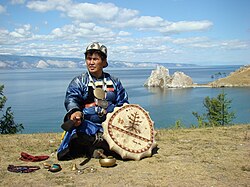
Key Facts
- Non-Proselytizing: Unlike world religions, indigenous religions generally do not seek converts.
- Transmission: These beliefs are typically transmitted orally rather than through sacred texts.
- Scope: While they constitute the majority of the world's distinct religions, the total number of practitioners is smaller than that of world religions.
- Nature: They are often characterized as pluralist, folk-oriented, and deeply intertwined with traditional lifestyles.
Defining Indigenous Religions
Scholar Carole M. Cusack notes that indigenous religions are often excluded from the "world religions" category because they are typically this-worldly, expressed through myths and traditional law, and non-proselytizing. This distinguishes them from global faiths that actively engage in conversion efforts.
Evolution of Terminology
The language used to describe these systems has shifted significantly over time to reflect changing academic perspectives:
- 19th Century: Terms like "primitive religion" or "non-literate religion" were common, as these systems were viewed as precursors to modern faith.
- 1970s: Andrew Walls coined the term "primal religion" to focus on non-Western forms in Africa, Asia, and Oceania.
- Modern Critique: Scholars like Graham Harvey and James Cox argue that terms such as "primitive" or "primal" can imply an undeveloped state, potentially framing these religions as mere preparations for conversion to Christianity.
Despite their localized nature, some indigenous systems have achieved global visibility. For example, the spiritual influences of the Maori, Indigenous Australian, and Canadian First Nations peoples have reached international audiences through music.
Contested Classifications
The boundary of what constitutes an "indigenous" religion is frequently debated among scholars, as the definition of "indigenous" itself is complex.
The Case of Shinto
Shinto is often labeled an indigenous religion of Japan. However, scholar John K. Nelson points out that this is contested because the Japanese people were colonizers of neighboring groups, such as the Ainu, rather than being colonized themselves. While it is certainly a native religion—belonging to the ethnicity that settled the islands—its status as "indigenous" remains a point of academic discussion.
![A Shinto rite; Shinto is often called an "indigenous religion", though the reasons for this classification have been debated among scholars.[10]](/images/ce/7e/ce7ee15b5d958eae501b209ba189a1e49772a93ef004262696923e3d3a1f35b3.jpg)
Modern Paganism and Heathenry
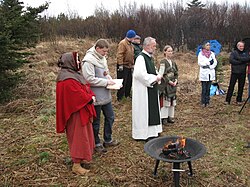
Some practitioners of Heathenry, a modern Pagan religion classified by scholars as a new religious movement, claim their faith is an indigenous religion. Some, particularly in the United States, frame themselves as successors to pre-Christian Germanic communities and victims of Medieval Christian colonialism.
However, scholars Jennifer Snook, Thad Horrell, and Kirsten Horton argue that this claim often ignores the racial dynamics of the present. They suggest that many who claim this indigeneity are considered "white" and have historically benefited from the very colonial policies that oppressed actual indigenous communities in the Americas.
Comparison of Religious Categories
To better understand where indigenous religions fit within the broader study of faith, the following table compares them with other major academic categories.
| Feature | Indigenous Religions | World Religions | New Religious Movements |
|---|---|---|---|
| Proselytization | Generally None | Active | Varies |
| Transmission | Primarily Oral | Scriptural/Textual | Mixed/Modern |
| Scope | Localized/Ethnic | Global/Transnational | Diverse/Emergent |
| Orientation | This-worldly/Folk | Universalist | Innovative/Restorative |
Frequently Asked Questions
What is the main difference between an indigenous religion and a world religion?
The primary differences are that indigenous religions are typically localized, orally transmitted, and do not seek converts (non-proselytizing), whereas world religions are global and actively seek new followers.
Are there more indigenous religions or world religions?
According to Graham Harvey, indigenous religions constitute the majority of the world's distinct religions, although the total number of people practicing them is smaller than the number of people practicing world religions.
Why is Shinto's classification as an indigenous religion debated?
The debate stems from the fact that the Japanese people colonized other groups (like the Ainu) rather than being colonized themselves, which complicates the application of the term "indigenous" in a political or colonial context.
Why do scholars criticize the term "primitive religion"?
Scholars like James Cox argue that terms like "primitive" or "tribal" suggest that these religions are undeveloped or inferior, implying they are merely a stepping stone toward conversion to Christianity.
Can a new religious movement be an indigenous religion?
While some movements, such as Heathenry, attempt to frame themselves as indigenous by claiming ancestral links to pre-Christian Europe, most scholars classify them as new religious movements due to their modern origins and the socio-political context of their practitioners.