Indian Rebellion of 1857: The Great Uprising Against the East India Company

Indian Rebellion of 1857: The Great Uprising Against the East India Company

The Indian Rebellion of 1857, also known as the Sepoy Mutiny or the First War of Independence, was a pivotal conflict that shook the foundations of British rule in India. Lasting from May 10, 1857, to November 1, 1858, this uprising saw a diverse coalition of Indian soldiers, displaced royalty, and civilian groups challenge the authority of the East India Company (EIC).

While the rebellion was ultimately suppressed by British forces, it marked the end of the East India Company's governance and led to the direct administration of India by the British Crown.
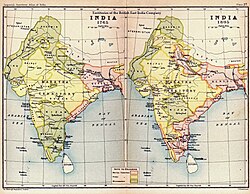
India in 1765 and 1805, showing East India Company-governed territories in pink

Key Facts

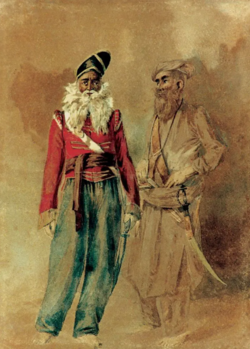
A pensioned sepoy, Moradabad, 1842
  • Duration: May 10, 1857 – November 1, 1858.
  • Primary Belligerents: The Mughal Empire, Sepoy mutineers, and various regional states against the United Kingdom and the East India Company.
  • Key Figures: Bahadur Shah II, Rani Lakshmibai, Nana Sahib, and Tatya Tope.
  • Outcome: British victory, leading to the dissolution of EIC rule.
  • Casualties: Approximately 6,000 of the 40,000 British residents in India were killed.

The Roots of Rebellion
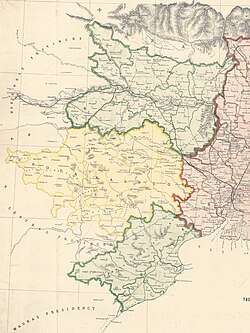
Chota Nagpur Division of the Bengal Presidency, 1872

The Role of the Sepoys

The backbone of the East India Company's military power was the sepoys—Indian soldiers recruited into the company's service. By the eve of the rebellion, there were over 300,000 sepoys compared to only 50,000 British troops. The forces were split into three presidency armies: Bombay, Madras, and Bengal.

The Bengal Army was particularly volatile. Unlike the more caste-neutral Madras and Bombay armies, the Bengal Army recruited heavily from high castes, such as Brahmins, Rajputs, and Bhumihars, primarily from Bihar and Awadh. In 1855, the EIC even restricted the enlistment of lower castes, further intensifying social tensions.
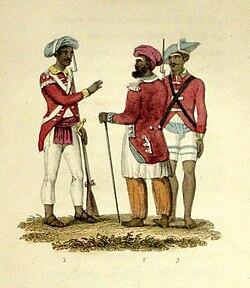
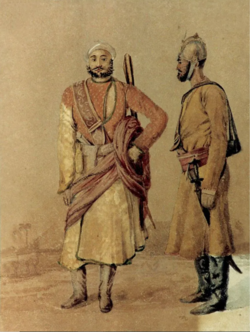
Two sepoy officers and a private, 1820s

The Enfield Rifle Controversy

The immediate spark for the uprising was the introduction of the Enfield rifle. Rumors spread among the sepoys that the cartridges for these rifles were greased with beef and pork fat. Because the cartridges had to be bitten off before loading, this was seen as a direct assault on the religious beliefs of both Hindus (who revere cows) and Muslims (who forbid pork).
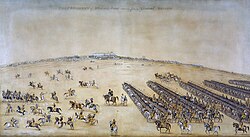
The Bengal Native Cavalry

Civilian and Political Disquiet

Beyond the military, widespread civilian unrest grew. Local rulers felt threatened by the EIC's expansion, and the general population was increasingly dissatisfied with colonial administration and social changes.
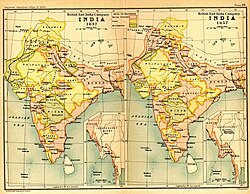
India in 1837 and 1857, showing East India Company-governed territories in pink

The Outbreak of Violence

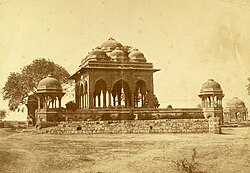
An 1858 photograph by Robert Christopher Tytler and Harriet Tytler of a mosque in Meerut where some of the rebel soldiers may have prayed

Mangal Pandey and the First Sparks

The unrest reached a breaking point with Mangal Pandey, whose actions signaled the beginning of the open revolt. Tensions peaked in April 1857, leading to a spontaneous outbreak of violence.

The Meerut Uprising

On May 10, 1857, the rebellion erupted in Meerut, a major military cantonment. The station housed 2,357 Indian sepoys and 2,038 British soldiers. The scale of the uprising at Meerut suggests it was a spontaneous explosion of anger rather than a meticulously planned conspiracy.
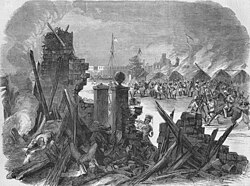
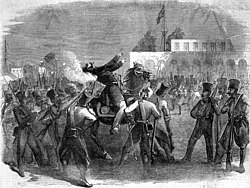
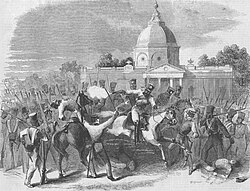
"The Sepoy revolt at Meerut", wood-engraving from the Illustrated London News, 1857

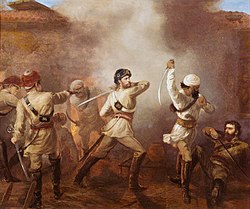
The death of Colonel John Finnis on the parade ground at Meerut. Finnis was the first European officer to be killed in the Mutiny.

The March to Delhi

Following the events at Meerut, mutineers marched to Delhi, where they proclaimed the elderly Mughal Emperor, Bahadur Shah II, as the leader of the rebellion. This gave the uprising a symbolic center of legitimacy, though the Emperor had little actual control over the various mutineer factions.
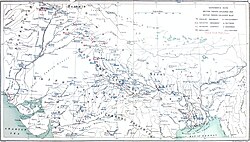
A map of the Indian mutiny, showing the position of troops on 1 May 1857

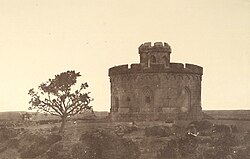
The Flagstaff Tower, Delhi, where the British survivors of the rebellion gathered on 11 May 1857; photographed by Felice Beato

Major Centers of Conflict

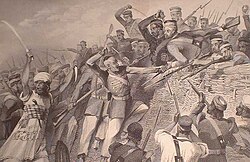
Wood-engraving depicting the massacre of officers by insurgent cavalry at Delhi. Illustrated London News, 1857. St. James' Church, Delhi is seen in the background.

The Siege of Delhi and Lucknow

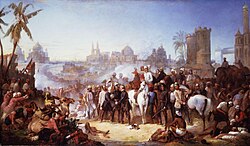
Delhi became the primary target for British recapture. The fighting was intense, resulting in significant damage to the city, including the Jantar Mantar observatory and the Kashmiri Gate. Simultaneously, Lucknow became a focal point of the struggle, characterized by prolonged sieges and brutal urban warfare.
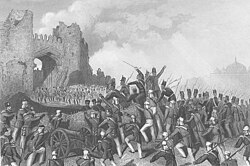
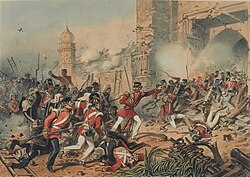
Assault on Delhi and capture of the Cashmere Gate, 14 September 1857

The Relief of Lucknow by Thomas Jones Barker

Cawnpore and Jhansi

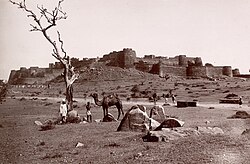
In Cawnpore (Kanpur), the rebellion was marked by extreme violence on both sides, including the massacre at Satichaura Ghat. In Jhansi, the Rani of Jhansi emerged as a formidable leader, defending her fort against British forces before eventually falling in battle.
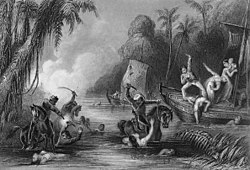
A contemporary image of the massacre at the Satichaura Ghat

Jhansi Fort, which was taken over by rebel forces, and subsequently defended against British recapture by the Rani of Jhansi

Regional Spread and Resistance

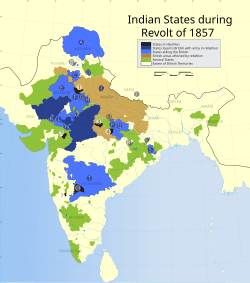
The rebellion was largely confined to the northern Gangetic Plain and central India. While regions like the Punjab, South India, and Bengal remained relatively stable, other areas like Bihar and Gujarat saw significant clashes. Interestingly, some Indian forces, such as the Sikhs, remained loyal to the British or actively fought against the mutineers.
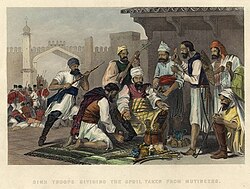
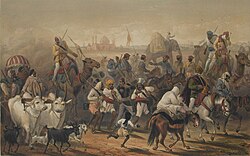
Sikh Troops Dividing the Spoil Taken from Mutineers, circa 1860

The British Response and Aftermath

Police in Delhi during the nominal rule of Bahadur Shah II, 1842, by Emily Eden

Suppression and Retribution

The British victory was achieved through a combination of military reinforcements and brutal retribution. Executions were common, including the practice of blowing from a gun, where prisoners were tied to the mouth of a cannon and fired.
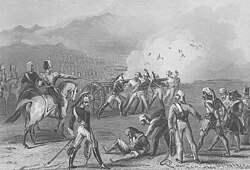
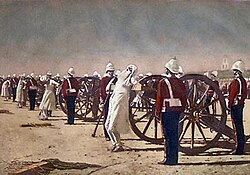
Execution of mutineers by blowing from a gun by the British, 8 September 1857.

Blowing from Guns in British India, which depicts execution by blowing from a gun, a method used by the British to execute Indian rebels after the end of the rebellion. This 1884 painting is by Vasily Vereshchagin

Political Reorganization

The rebellion forced a total overhaul of Indian governance. The East India Company was abolished, and the British Crown took direct control of India. Queen Victoria issued a proclamation on November 1, 1858, promising a new era of duty toward her Indian subjects.
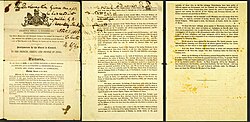
The proclamation to the "Princes, Chiefs, and People of India", issued by Queen Victoria on 1 November 1858. "We hold ourselves bound to the natives of our Indian territories by the same obligation of duty which bind us to all our other subjects." (p. 2)

Military Reform

To prevent future uprisings, the British reorganized the army. They moved away from the "regular" system, which had created a divide between British officers and sepoys. The new "irregular" system encouraged closer associations between officers and soldiers and gave more responsibility to Indian officers.
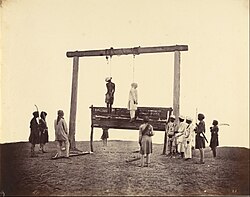
The hanging of two participants in the Indian Rebellion, Sepoys of the 31st Native Infantry. Albumen silver print by Felice Beato, 1857.

Summary of the Rebellion

States during the rebellion
Category Details
Timeline May 10, 1857 – November 1, 1858
Primary Cause Enfield rifle cartridges (religious offense) and political grievances
Key Rebel Leaders Bahadur Shah II, Rani Lakshmibai, Nana Sahib, Tatya Tope
Main Regions Northern Gangetic Plain and Central India
British Casualties Approx. 6,000 Europeans killed
Political Result End of East India Company rule; start of the British Raj

Frequently Asked Questions
5th Bengal European Cavalry Winning the Victoria Cross at Khurkowdah, Indian Mutiny, 15 August 1857
Troops of the Native Allies by George Francklin Atkinson, 1859.
'Conflict with the Ghazees before Bareilly', 1857
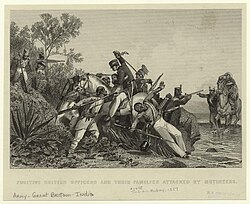
Fugitive British officers and their families attacked by mutineers.
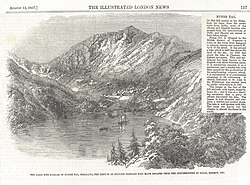
A wood-engraving of Nynee Tal (today Nainital) and accompanying story in the Illustrated London News, 15 August 1857, describing how the resort town in the Himalayas served as a refuge for British families escaping from the rebellion of 1857 in Delhi and Meerut.
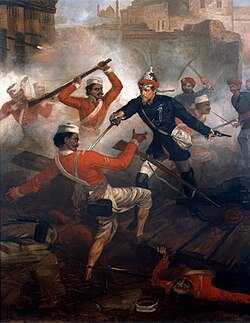
Attack of the mutineers on the Redan Battery at Lucknow, 30 July 1857
Capture of Delhi 1857.
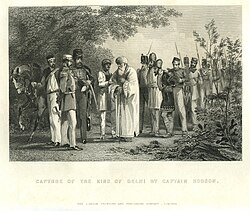
Capture of Bahadur Shah Zafar and his sons by William Hodson at Humayun's tomb on 20 September 1857
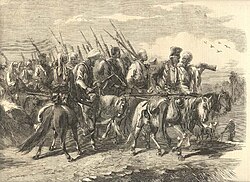
Wood-engraving depicting Tatya Tope's Soldiery
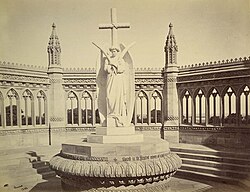
A memorial erected (circa 1860) by the British after the Mutiny at the Bibighar Well. After India's Independence the statue was moved to the All Souls Memorial Church, Cawnpore. Albumen silver print by Samuel Bourne, 1860
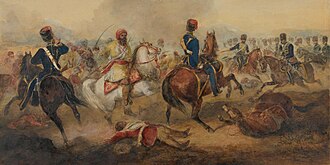
7th Hussars, charging a body of the Mutineer's Cavalry, Alambagh, Lucknow
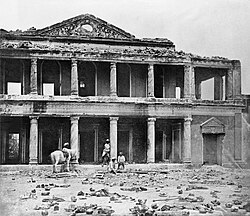
The interior of the Secundra Bagh, several months after its storming during the second relief of Lucknow. Albumen silver print by Felice Beato, 1858
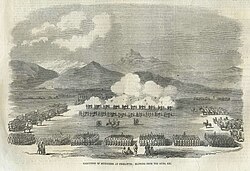
Wood-engraving of the execution of mutineers at Peshawar
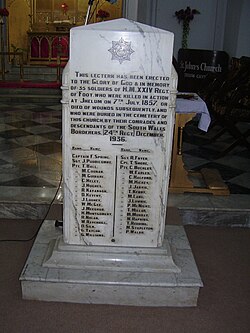
Marble Lectern in memory of 35 British soldiers in Jhelum
Lieutenant William Alexander Kerr, 24th Bombay Native Infantry, near Kolapore, July 1857
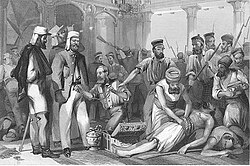
British soldiers looting Qaisar Bagh, Lucknow, after its recapture (steel engraving, late 1850s)
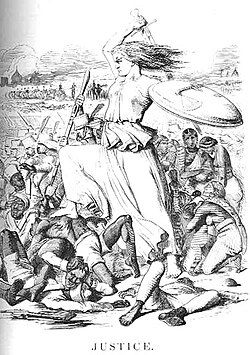
Justice, a print by Sir John Tenniel in a September 1857 issue of Punch
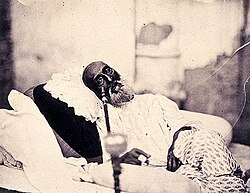
Bahadur Shah Zafar (the last Mughal emperor) in Delhi, awaiting trial by the British for his role in the Uprising. Photograph by Robert Tytler and Charles Shepherd, May 1858
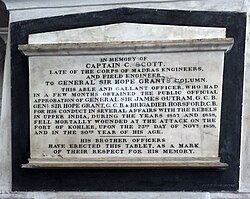
Captain C Scott of the Gen. Sir. Hope Grant's Column, Madras Regiment, who fell on the attack of Fort of Kohlee, 1858. Memorial at the St. Mary's Church, Madras
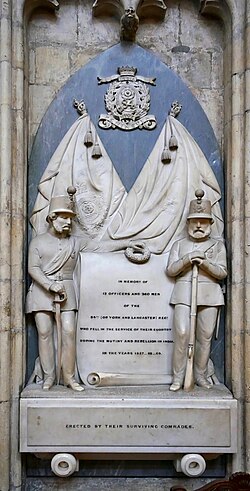
Memorial inside the York Minster
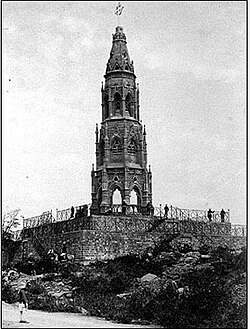
The Mutiny Memorial in Delhi, a monument to those killed on the British side during the fighting.
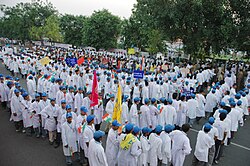
The National Youth rally at the National Celebration to Commemorate 150th Anniversary of the First War of Independence, 1857 at Red Fort, in Delhi on 11 May 2007
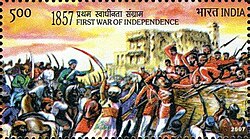
Postage Stamp Commemorate 150th Anniversary of the First War of Independence, 2007
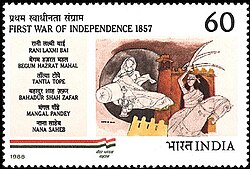
Indian Postage stamp of First War of Independence-1857
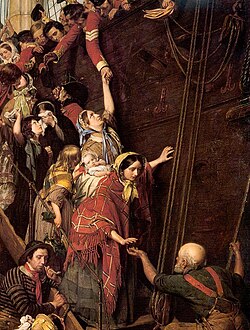
Henry Nelson O'Neil's 1857 painting Eastward Ho! depicting British soldiers saying farewell to their loved ones as they embark on a deployment to India.

What was the primary cause of the 1857 rebellion?

While there were deep-seated political and social grievances, the immediate trigger was the introduction of the Enfield rifle. Sepoys believed the cartridges were greased with cow and pig fat, which offended both Hindu and Muslim religious laws.

Who was Bahadur Shah II?

Bahadur Shah II was the last Mughal Emperor. He was proclaimed the leader of the rebellion by the mutineers in Delhi, though he lacked actual command over the various rebel groups. He was eventually captured and tried by the British.

Why did some parts of India not join the rebellion?

The rebellion was largely concentrated in the northern Gangetic Plain and central India. The south, Bengal, and the Punjab remained mostly unscathed, and some local rulers fought against the rebels to protect their own interests or maintain their alliances with the British.

How did the British military change after the rebellion?

The British shifted from a "regular" system to an "irregular" system. This reduced the number of British officers per unit but required those officers to build closer personal relationships with their Indian soldiers, while granting more authority to Indian officers.

What was the long-term political impact of the uprising?

The most significant result was the dissolution of the East India Company. Governance of India was transferred directly to the British Crown, marking the formal beginning of the British Raj.