Field Marshal Earl Roberts: The Military Career of 'Bobs'
Field Marshal Frederick Sleigh Roberts, known affectionately as "Bobs", was one of the most distinguished British military figures of the 19th and early 20th centuries. From his early days in the Bengal Artillery to his eventual rank as Field Marshal, Roberts' career spanned the height of the British Empire, characterized by strategic brilliance and a relentless drive for victory across three continents.
Educated at Eton, Sandhurst, and the Addiscombe Military Seminary, Roberts entered the East India Company Army as a second lieutenant on December 12, 1851. His early service in the Bengal Army laid the foundation for a career that would see him command forces in India, Afghanistan, and South Africa.
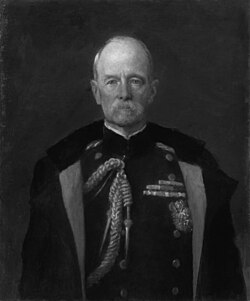
Key Facts
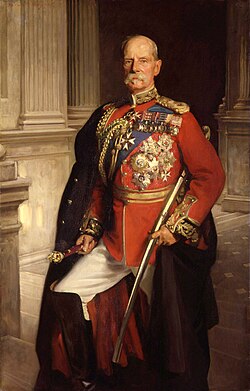
- Full Name: Frederick Sleigh Roberts, 1st Earl Roberts.
- Highest Rank: Field Marshal.
- Major Conflicts: Indian Rebellion, Second Anglo-Afghan War, and Second Boer War.
- Highest Honor: Recipient of the Victoria Cross (VC).
- Notable Achievement: Led the 300-mile march to relieve Kandahar in 1880.
- Final Resting Place: St Paul's Cathedral, London.
Early Career and the Indian Rebellion
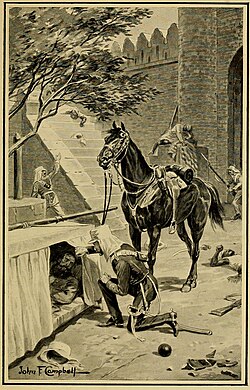
Roberts' rise began in the mid-19th century. After transferring to the Bengal Horse Artillery in 1854, he found himself in the midst of the Indian Rebellion of 1857. His bravery during this conflict earned him the Victoria Cross, the highest award for gallantry in the face of the enemy.
Expansion of Service
Following the rebellion, Roberts transitioned to the British Army in 1861. He participated in several key campaigns, including the Umbeyla Campaign (1863) and the Abyssinia Expedition (1867–1868), where he fought at the Battle of Magdala. He also served in the Lushai Expedition (1871–1872), a mission focused on recovering the captive Mary Winchester from local chiefs.
The Afghan Campaigns
Roberts achieved international fame during the Second Anglo-Afghan War. In October 1878, he took command of the Kurram Valley Field Force, securing a significant victory at the Battle of Peiwar Kotal. This success led to his promotion to major general.
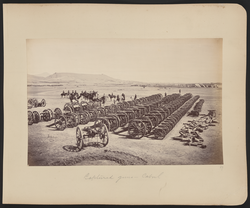
The conflict intensified after the murder of the British envoy, Sir Louis Cavagnari, in Kabul. Roberts was dispatched to lead the Kabul Field Force, winning the Battle of Charasiab and occupying the city. Despite being besieged in the Sherpur Cantonment in December 1879, he successfully repulsed attacks and re-established control.
His most celebrated feat occurred in 1880. Following a British defeat at Maiwand, Roberts led 10,000 troops across 300 miles of grueling terrain to relieve Kandahar, defeating Ayub Khan on September 1, 1880. This victory cemented his reputation as a master of logistics and leadership.
![Lord Roberts of Kabul and Kandahar on his Celebrated Charger[83]](/images/f6/b6/f6b6d51523885b33c22917cda08fa26ab9e6bd8eaaa388b79e4d7dfa302c2285.jpg)
Command in India and Ireland
Roberts' administrative and strategic skills led to his appointment as Commander-in-Chief of the Madras Army in 1881, and later as Commander-in-Chief, India, in 1885. In 1892, he was created Baron Roberts of Kandahar. He eventually transitioned to the role of Commander-in-Chief of British forces in Ireland starting in 1895, where he was promoted to the rank of Field Marshal.
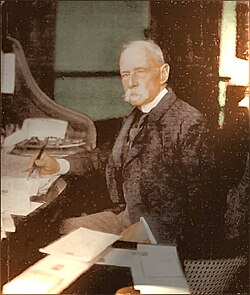
The Second Boer War
In 1900, Lord Roberts was deployed to South Africa during the Second Boer War. He is noted for the relief of the besieged city of Kimberley and victories at Paardeberg, Poplar Grove, Diamond Hill, and Bergendal. On May 29, 1900, Pretoria surrendered to his command.
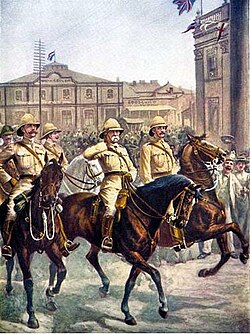
During this campaign, he established his headquarters at a high-lying site 10 km southwest of Pretoria to avoid malaria. This location became known as Roberts Heights (later renamed Voortrekkerhoogte and eventually Thaba Tshwane).
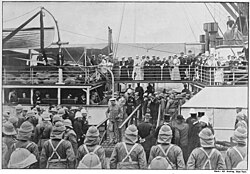
Later Years and Legacy
In his final years, Roberts became a vocal advocate for national preparedness, warning that Germany was preparing for a major war. He remained active in military circles until his death.
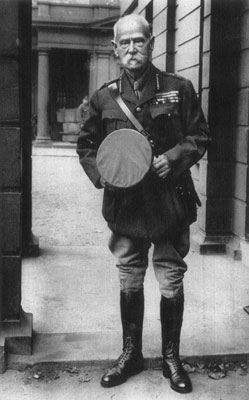
Lord Roberts died of pneumonia on November 14, 1914, while visiting Indian troops in St Omer, France, during the First World War. He was granted a state funeral and buried in St Paul's Cathedral, a rare honor for a non-royal in the 20th century.
Summary of Career Milestones
| Period/Year | Role/Conflict | Key Outcome/Award |
|---|---|---|
| 1857 | Indian Rebellion | Awarded Victoria Cross |
| 1867–1868 | Abyssinia Expedition | Battle of Magdala |
| 1878–1880 | Second Anglo-Afghan War | Relief of Kandahar; GCB awarded |
| 1885–1893 | Commander-in-Chief, India | Promoted to General; created Baron Roberts |
| 1895 | C-in-C British Forces, Ireland | Promoted to Field Marshal |
| 1900 | Second Boer War | Surrender of Pretoria |
Frequently Asked Questions
Why was Lord Roberts nicknamed "Bobs"?
"Bobs" was a popular and affectionate nickname used by his soldiers and peers throughout his military career.
What was Roberts' most famous military achievement?
He is most renowned for leading 10,000 troops on a 300-mile march across difficult terrain to relieve the city of Kandahar and defeat Ayub Khan in 1880.
Which high honor did he receive for his actions in 1857?
He was awarded the Victoria Cross (VC) for his bravery during the Indian Rebellion of 1857.
Where is Lord Roberts buried?
He is buried in St Paul's Cathedral in London, following a state funeral.
What is the origin of "Roberts Heights" in South Africa?
It was the site of Lord Roberts' headquarters near Pretoria during the Second Boer War, chosen specifically for its elevation to avoid malaria.