India National Football Team: A Journey of Passion and Perseverance
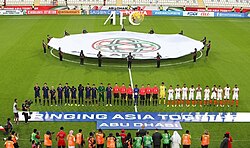
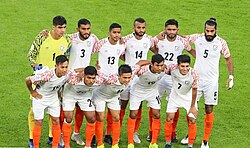
Known affectionately as the Blue Tigers, the India national football team represents the spirit of sport in one of the world's most populous nations. Governed by the All India Football Federation (AIFF) and competing within the Asian Football Confederation (AFC) and the South Asian Football Federation (SAFF), the team has a storied history that spans from early Olympic appearances to regional dominance in South Asia.
From the golden era of the mid-20th century to the modern resurgence led by legendary goal-scorers, the Blue Tigers continue to strive for excellence on the continental stage.
Key Facts
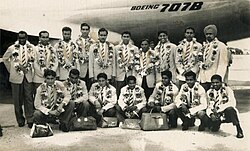
- Nickname: The Blue Tigers
- Most Capped Player & Top Scorer: Sunil Chhetri (157 caps, 95 goals)
- Highest FIFA Ranking: 94 (February 1996)
- Major Honors: Two-time Asian Games Gold Medalists (1951, 1962) and eight-time SAFF Championship winners.
- Current Head Coach: Khalid Jamil
- Current Captain: Gurpreet Singh Sandhu
Historical Evolution of Indian Football
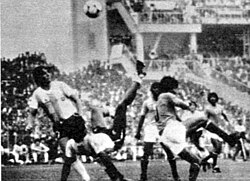
Early Days and the Golden Era (1930s–1960s)
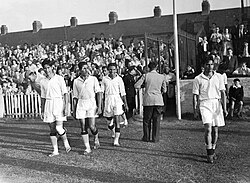
India's early foray into international football was marked by significant milestones. The team made its Olympic debut in 1948, eventually achieving a historic fourth-place finish at the 1956 Olympics.
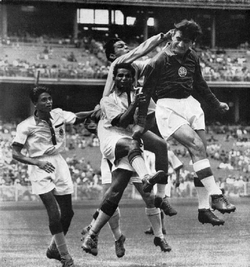
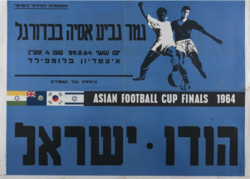
The 1950s and 60s are widely regarded as the golden years of Indian football. The nation secured gold medals at the Asian Games in 1951 and 1962, cementing its status as a powerhouse in Asia. During this period, the team also reached the final of the 1964 Asian Cup, finishing as runners-up.

Decline and Resurgence (1970s–2011)
Following the peak of the 1960s, the team entered a period of decline. However, the turn of the millennium sparked a resurgence. A pivotal moment occurred in 2008 when India won the AFC Challenge Cup, a victory that provided a gateway to the 2011 AFC Asian Cup.
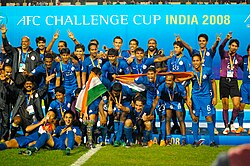
Modern Era and Recent Developments (2011–Present)
In recent years, the team has focused on consistency and professional growth. Under various coaching regimes, including the successful tenure of Stephen Constantine, India has maintained a strong grip on the SAFF Championship and improved its tactical approach.

The team has also seen the rise of iconic figures like Bhaichung Bhutia and the prolific Sunil Chhetri, who remains one of the highest-scoring international players globally.

Major Tournament Records
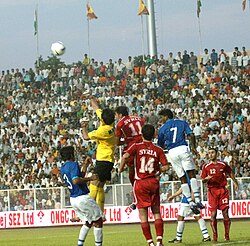
India's competitive record reflects a strong regional presence and a persistent effort to break into the top tier of Asian football. The team has been particularly dominant in the SAFF Championship, winning the title eight times.
| Tournament | Best Result | Notable Years |
|---|---|---|
| Olympic Games | Fourth Place | 1956 |
| Asian Cup | Runners-up | 1964 |
| Asian Games | Gold Medal | 1951, 1962 |
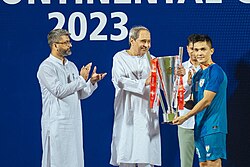
| SAFF Championship | Winners (8) | 1993, 1997, 1999, 2005, 2011, 2015, 2021, 2023 |
| AFC Challenge Cup | Winners | 2008 |
Team Identity and Support
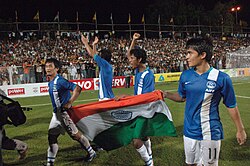
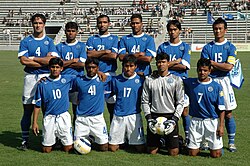
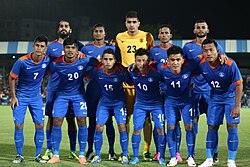
The team is recognized by its traditional blue jerseys, which have become a symbol of national pride.
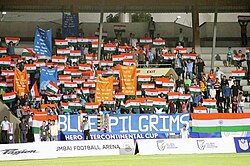
The passion of the fans is epitomized by the Blue Pilgrims, a dedicated supporters' group known for their elaborate displays and unwavering loyalty during international fixtures.

Frequently Asked Questions

Who is the all-time leading scorer for the Indian national team?
Sunil Chhetri is the all-time leading scorer with 95 goals and holds the record for the most caps with 157 appearances.
What is India's best performance in the Olympic Games?
India's best Olympic result was finishing in fourth place during the 1956 Games.
How many times has India won the SAFF Championship?
India has won the SAFF Championship a record eight times: in 1993, 1997, 1999, 2005, 2011, 2015, 2021, and 2023.
Who is the current head coach of the Blue Tigers?
The current head coach of the Indian national team is Khalid Jamil.
What is the highest FIFA ranking India has ever achieved?
India reached its highest FIFA world ranking of 94 in February 1996.