Republic of India
The Republic of India, known natively as Bhārat Gaṇarājya, is a vast and diverse nation characterized by its ancient heritage and its modern status as a leading global power. With its motto Satyameva Jayate ("Truth Alone Triumphs"), India blends a rich tapestry of spiritual traditions, linguistic variety, and a robust democratic framework.
Key Facts
- Capital: New Delhi
- Largest Cities: Mumbai (city proper) and Delhi (metropolitan area)
- Government: Federal parliamentary republic
- Population: Estimated 1.48 billion (2026), ranking 1st globally
- Official Languages: Hindi and English
- Currency: Indian rupee (₹ / INR)
- Independence: August 15, 1947 (from the United Kingdom)
Historical Evolution
India's history is a journey from ancient civilizations to a modern sovereign state. The early eras saw the composition of great epics like the Ramayana (c. 400 BCE – c. 300 CE), which laid the foundation for much of the region's cultural and spiritual identity.
![Manuscript illustration, c. 1650, of the Sanskrit epic Ramayana, composed in story-telling fashion c. 400 BCE – c. 300 CE[71]](/images/67/4d/674d01efa9b38b1a1cfcc97198c6dd41d48447f660f4ec9d050c906d670448d2.jpg)
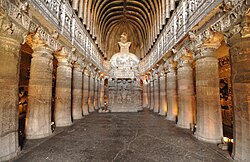
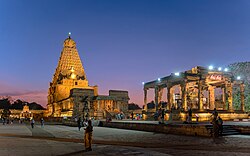
The medieval and early modern periods were marked by the rise of powerful dynasties and the influence of various faiths. This is evident in the rock-cut architecture of the Buddhist shrines at Ajanta and the grand Chola architecture of the Brihadisvara Temple, built between 1003 and 1010 CE.
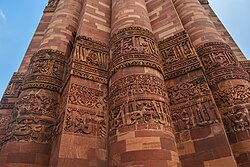
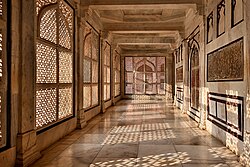
The arrival of the Delhi Sultanate and later the Mughal Empire introduced new artistic and architectural styles, such as the calligraphy found on the Qutb Minar and the serene dargah of Sufi Salim Chisti, commissioned by Emperor Akbar in the early 17th century.
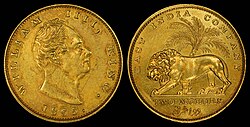
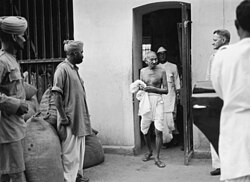
The modern era was defined by British colonial rule, represented by the East India Company, and the subsequent struggle for independence led by figures such as Mahatma Gandhi. India transitioned to a dominion in 1947 and officially became a republic on January 26, 1950.
Government and Political Structure
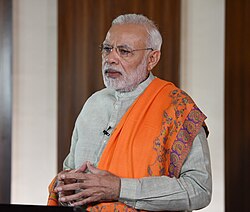
India operates as a federal parliamentary republic. The executive branch is led by the President (currently Droupadi Murmu) and the Prime Minister (Narendra Modi, in office since 2014). The legislative power is vested in the Parliament, which consists of the Rajya Sabha (Upper House) and the Lok Sabha (Lower House).
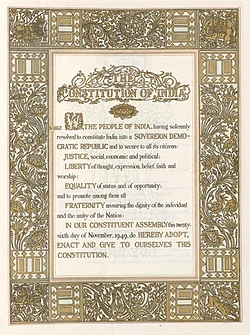
The Constitution of India, established in 1950, serves as the supreme law. Its preamble was notably amended in 1976 to describe the nation as a "Sovereign Socialist Secular Democratic Republic".
Administrative Divisions
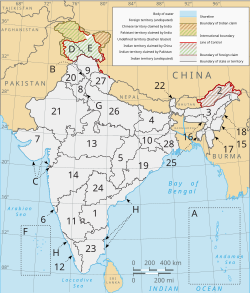
To manage its vast territory, India is divided into 28 states and 8 union territories. This structure allows for regional governance while maintaining a strong central authority in New Delhi.
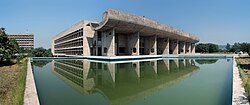
Post-partition urban planning is exemplified by the Capitol Complex in Chandigarh, commissioned after the 1947 partition to serve as a modern administrative hub.
Demographics and Society
India is one of the most linguistically diverse nations in the world, with 424 native languages. While Hindi and English are the official languages, the Eighth Schedule of the Constitution recognizes 22 major regional languages.
![On the reverse of each of India's paper money notes, the denomination is listed in a panel on the left in 15 languages, in addition to Hindi and English, which appear more prominently elsewhere. These are from top to bottom: 1. Assamese, 2. Bengali, 3. Gujarati, 4. Kannada, 5. Kashmiri, 6. Konkani, 7. Malayalam, 8. Marathi, 9. Nepali, 10. Oriya, 11. Punjabi, 12. Sanskrit, 13. Tamil, 14. Telugu, 15. Urdu.[316]](/images/79/25/792552f8335f2d8cd850c58990513b93fe3e74768574af8ef93d97c81e3a82a0.jpg)
Religious Composition
Based on 2011 census data, the religious landscape is dominated by Hinduism (79.8%) and Islam (14.2%), followed by Christianity (2.3%), Sikhism (1.7%), Buddhism (0.7%), and Jainism (0.4%).
Education and Health
India has made significant strides in public health and literacy. A landmark achievement was the World Health Organization's declaration of India as polio-free in 2014, following extensive immunization campaigns.
![Immunisation health workers in 2006. Eight years later, and three years after India's last case of polio, the WHO declared India to be polio-free.[340]](/images/1c/dd/1cddeced9be0d15c7b002393ff8f4a980ec335fab29d5123025d2090db807f8b.jpg)
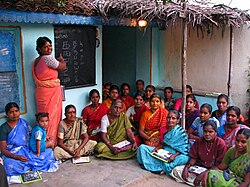
Adult literacy programs, particularly in states like Tamil Nadu, continue to expand educational access across the population.
Economy and Global Standing
India possesses one of the world's largest economies. By 2026 estimates, its GDP (PPP) is projected to reach $18.902 trillion, ranking 3rd globally, while its nominal GDP is estimated at $4.153 trillion (6th).
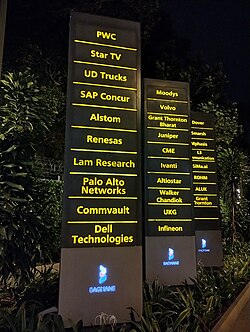
The nation has evolved into a global hub for research and development, with major corporate centers in cities like Bangalore hosting companies such as Oracle, Cisco, and Boeing.
Historically, India has maintained a strategic foreign policy, playing a pivotal role in the Non-Aligned Movement during the 1950s and 60s to avoid entanglement in Cold War power blocs.
![In the 1950s and 60s, India played a pivotal role in the Non-Aligned Movement.[239] From left to right: Gamal Abdel Nasser of United Arab Republic (now Egypt), Josip Broz Tito of Yugoslavia and Jawaharlal Nehru in Belgrade, September 1961.](/images/2d/dd/2ddd5230bc6ff5093cd9f275a7d48d6ebecd7baeba73ed5df668d33ecd71dbbb.jpg)
Culture and Arts
Indian culture is renowned for its classical arts, particularly its diverse dance forms, which often originate from temple or court traditions.
| Dance | Indigenous State | Type/Origin | Musical Accompaniment |
|---|---|---|---|
| Bharatanatyam | Tamil Nadu | Temple dance | Carnatic music |
| Kathak | Uttar Pradesh | Court dance | Hindustani music |
| Kathakali | Kerala | Dance-drama | Sopana vocal music |
| Kuchipudi | Andhra Pradesh | Dance-drama | Carnatic ensemble |
| Manipuri | Manipur | Temple/ritual dance | Pung Cholom, flutes, cymbals |
| Odissi | Odisha | Temple dance | Hindustani instruments |
Frequently Asked Questions
When did India become a republic?
India officially became a republic on January 26, 1950, following its initial independence from the United Kingdom as a dominion on August 15, 1947.
What are the official languages of India?
The official languages of the Republic of India are Hindi and English, though the government recognizes 22 regional languages under the Eighth Schedule of the Constitution.
How is the Indian government structured?
India is a federal parliamentary republic with a President as the head of state and a Prime Minister as the head of government. The legislature is a bicameral Parliament consisting of the Rajya Sabha and the Lok Sabha.
What is the current economic status of India?
India is a major global economy, estimated to be the 3rd largest in the world by GDP (PPP) and 6th largest by nominal GDP as of 2026 projections.
Which religions are practiced in India?
According to 2011 data, the majority of the population practices Hinduism (79.8%), followed by Islam (14.2%), Christianity (2.3%), and Sikhism (1.7%), among others.