Imperia: The Coastal Gem of Liguria
Perched along the stunning coastline of northwest Italy, Imperia is a vibrant city and comune (municipality) that serves as the capital of the Province of Imperia. Known for its breathtaking Mediterranean vistas, fragrant olive groves, and a rich tapestry of history, this Ligurian city offers a unique blend of industrial modernity and old-world charm.
Interestingly, Imperia as a single entity is a relatively modern creation. It was established on October 21, 1923, by Benito Mussolini, who merged the two distinct coastal towns of Porto Maurizio and Oneglia, along with several surrounding village communes including Piani, Caramagna Ligure, and Montegrazie.
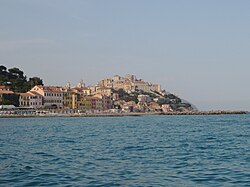
Key Facts
- Location: Liguria region, Italy (Coordinates: 43°53′N 8°2′E).
- Composition: Formed by the union of Porto Maurizio and Oneglia.
- Economy: Driven by tourism, olive oil, pasta production, and floriculture.
- Population: 42,328 (as of August 31, 2017).
- Climate: Mediterranean (Csa), characterized by mild winters and warm summers.
A Tale of Two Cities: Porto Maurizio and Oneglia
Imperia is divided by the River Impero, which separates its two historical hearts. Each district possesses a distinct personality and history.
Porto Maurizio
Located on a peninsula to the west of the river, Porto Maurizio is the more colorful and affluent of the two districts. It is famous for its carrugi—narrow, winding lanes that create a labyrinthine atmosphere typical of ancient Ligurian towns. Historically a possession of Genoa from the 13th century, it was once a Roman settlement known as Portus Maurici.
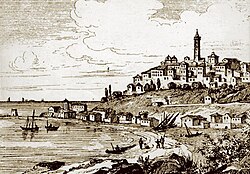
Oneglia
To the east of the river lies Oneglia, situated on an alluvial plain. Oneglia is the more industrialized center, featuring a working port and the central Dante Square. Its history is marked by frequent shifts in power, having been a fief of the Diocese of Albenga, the Doria family, and the House of Savoy, often serving as a strategic frontline during European conflicts.
Notable Sights and Landmarks
Visitors to Imperia can explore a diverse array of cultural and architectural treasures across its districts.
Cultural Highlights in Porto Maurizio
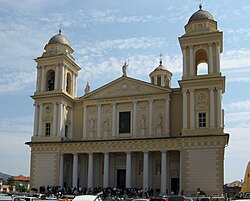
- Cathedral of San Maurizio: Built between 1781 and 1832, it stands as the largest church in Liguria.
- Parasio: The historic old town area.
- Convent of Santa Chiara: A religious site established in 1365, with the current structure dating to 1741.
- Naval Museum: A small museum dedicated to maritime history.
Cultural Highlights in Oneglia
- Museo dell'Olivo: A museum dedicated to the olive, celebrating the region's primary agricultural product.
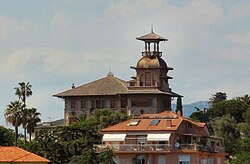
- Villa Grock: The eccentric former residence of the world-famous clown Grock.
- Church of San Giovanni Battista: A historic church constructed between 1739 and 1762.
- Calata Giovanni Battista Cuneo: A scenic historic quay lined with restaurants.
Montegrazie
Away from the coast, the area of Montegrazie hosts the Church of Santa Maria Maggiore and the Shrine of Nostra Signora delle Grazie.
Geography, Climate, and Infrastructure
Imperia covers a total area of 45.95 km² and sits at an elevation of 10 meters above sea level. The city enjoys a classic Mediterranean climate, with the warmest temperatures occurring in July and August, and the highest precipitation typically falling in November.
| Month | Mean Max Temp (°C) | Mean Min Temp (°C) | Avg Precipitation (mm) |
|---|---|---|---|
| January | 12.8 | 7.4 | 83 |
| April | 20.5 | 11.1 | 63 |
| July | 27.2 | 20.8 | 14 |
| October | 16.3 | 15.2 | 86 |
| Yearly Avg | 16.4 (Mean) | 13.6 (Min) | 796 |
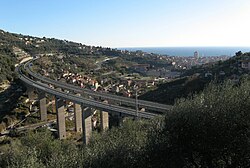
Transport is highly efficient, with the Autostrada dei Fiori (A10) providing a vital link between Genoa and the French border via high viaducts and tunnels. The city is also served by a modern double-track railway line opened in 2016, which replaced the older, single-track coastal route.
Famous Residents
Imperia has been home to many distinguished figures, including the statesman and admiral Andrea Doria, the Nobel Prize-winning chemist Giulio Natta, and the Nobel Prize-winning virologist Renato Dulbecco. Other notable figures include the writer Edmondo de Amicis and the composer Luciano Berio.
Frequently Asked Questions
How was the city of Imperia formed?
Imperia was created on October 21, 1923, by Benito Mussolini through the merger of the towns of Porto Maurizio and Oneglia, along with several smaller surrounding communes.
What are the main economic drivers of the city?
The economy is primarily based on seaside tourism, the food industry (specifically pasta and olive oil), and specialized agriculture focusing on greenhouse flowers and olive groves.
What is the difference between Porto Maurizio and Oneglia?
Porto Maurizio is located to the west, characterized by its colorful old town and narrow lanes (carrugi). Oneglia, to the east, is more industrialized and features the city's working port and Dante Square.
What is the best time to visit based on the climate?
For those seeking warm weather, July and August are the peak months with mean maximum temperatures around 27°C. For those avoiding rain, the summer months are the driest, while November is typically the wettest.
Which famous landmarks should I visit in Imperia?
Must-visit sites include the Cathedral of San Maurizio (the largest in Liguria), the Museo dell'Olivo, and the unique Villa Grock.