Illegal Immigration: Global Trends, Legal Protections, and Socioeconomic Impacts
Illegal immigration refers to the movement of people into a country in violation of that nation's immigration laws. This occurs through unauthorized entry across borders or by continuing to reside in a country after a valid visa has expired. Generally, these migration patterns are financially upward, with individuals moving from economically disadvantaged regions to wealthier nations in search of better opportunities or safety.
While national laws vary, unauthorized residence often carries significant risks, including administrative sanctions, detention, and deportation. However, the legal landscape is complex, as international treaties provide specific protections for vulnerable populations.
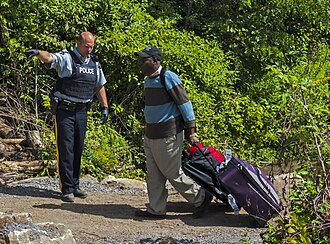
Key Facts

- Definition: Includes both unauthorized entry and overstaying legal visas.
- Primary Drivers: Poverty, gender-based violence, persecution, and the desire for family reunification.
- Legal Protections: The 1951 Refugee Convention protects asylum seekers from penalties for irregular entry if they present themselves promptly.
- Global Scale: The United States has the highest estimated irregular migrant population globally.
- Risks: Undocumented migrants are highly susceptible to labor exploitation, slavery, and sexual exploitation.
Legal Protections and Exceptions
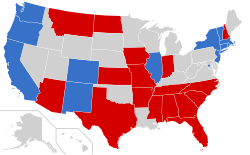
Not all individuals entering a country without authorization are treated as criminals under international law. Asylum seekers—people seeking international protection from persecution—are granted specific rights under Article 31 of the 1951 Refugee Convention and its 1967 Protocol.
Under these agreements, individuals cannot be penalized solely for irregular entry if they present themselves to authorities promptly and are lawfully allowed to remain until their asylum claims are processed. Furthermore, the principle of non-refoulement prohibits countries from returning refugees to a place where their life or freedom would be threatened.
The European Court of Human Rights has further reinforced these protections, citing the European Convention on Human Rights to block expulsions to countries where there is a documented risk of torture.
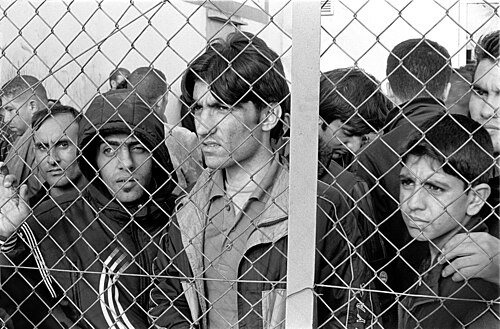
Drivers and Methods of Irregular Migration

The motivations for illegal immigration are diverse and often rooted in desperation. Key drivers include:
- Socioeconomic Factors: Extreme poverty and the pursuit of education.
- Safety and Human Rights: Escaping gender-based violence, political persecution, or the deprivation of citizenship.
- Personal Ties: The drive for family reunification.
To achieve these goals, migrants employ various methods to bypass border controls. Common tactics include illegal border crossings, overstaying temporary visas, and entering into sham marriages to obtain legal residency.
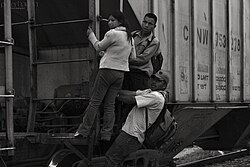
Socioeconomic Effects and Risks
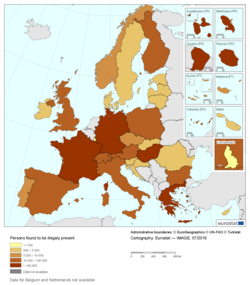
Illegal immigration creates a complex dynamic within the labor market and the lives of the migrants themselves. While some find employment, they often operate in the "shadow economy," leading to several critical issues:
- Labor Exploitation: Lack of legal status makes migrants vulnerable to unfair wages, dangerous working conditions, and modern slavery.
- Lack of Services: Undocumented individuals often lack access to essential healthcare, legal protections, and social services.
- Dangerous Routes: Strict enforcement often incentivizes the use of perilous migration routes, increasing the risk of death or injury during transit.

Global Distribution of Irregular Migrants
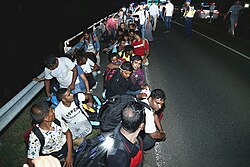
Irregular migration is a global phenomenon affecting every inhabited continent. In the Americas, the United States and Canada face significant challenges with unauthorized entry. In Eurasia, countries like Russia, Turkey, and various EU member states manage large flows of migrants via the Balkan route.
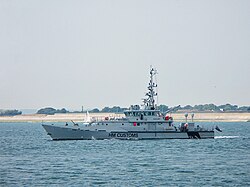
The following table provides a snapshot of estimated irregular migrant populations in several key countries.
| Rank | Country | Estimated Population | Data Year |
|---|---|---|---|
| 1 | United States | 14,000,000 | 2023 |
| 2 | South Africa | 2–5 million | 2026 (Est) |
| 3 | Peru | 1,300,000 | 2025 (Est) |
| 4 | Spain | 1.0–1.2 million | 2026 (Est) |
| 5 | Germany | 1.0–1.2 million | 2017 |
| 6 | United Kingdom | 800,000–1.2 million | 2017 |
| 7 | Italy | 500,000–700,000 | 2017 |
| 8 | Malaysia | 518,000 | 2023 |
| 9 | Canada | Up to 500,000 | 2024 |
| 10 | Colombia | 500,000 | 2023 |
![As a proportion of US population, nationwide border encounters have varied substantially over the decades.[178]](/images/4b/fc/4bfc9c15796a81ab5c158c498195bd05907c85c862f5cf5cfc05f330bee63e2a.webp)
Frequently Asked Questions
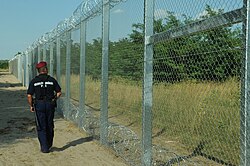
What is the difference between an illegal immigrant and an asylum seeker?
An illegal immigrant is someone who enters or remains in a country in violation of immigration laws. An asylum seeker is a person who has left their home country and is seeking international protection from persecution. Under international law, asylum seekers are protected from penalties for irregular entry if they present themselves to authorities promptly.
What is the principle of non-refoulement?
Non-refoulement is a fundamental principle of international law that forbids a country from returning (refouling) an asylum seeker or refugee to a country where they would face a clear risk of persecution, torture, or other serious human rights violations.
How do people typically become undocumented?
The most common methods include crossing a national border without official authorization or entering a country legally on a visa (such as a tourist or student visa) and remaining after that visa has expired.
What are the primary risks for undocumented migrants?
Undocumented migrants face significant risks, including detention and deportation. Because they lack legal work authorization, they are also highly susceptible to labor exploitation, human trafficking, and sexual exploitation.
Which countries have the largest irregular migrant populations?
Based on available estimates, the United States has the largest population of irregular migrants, followed by South Africa, Peru, Spain, and Germany.