ICC Enforcement Challenges and the Case of Vladimir Putin
The International Criminal Court (ICC) serves as a global mechanism for prosecuting individuals for the most serious international crimes. However, the court faces a fundamental structural hurdle: it possesses no police force of its own. To function, the ICC relies entirely on the cooperation of member states to conduct investigations and execute arrest warrants.
The Legal Framework and Membership Gaps
The ICC operates under the Rome Statute, the treaty that established the court. While many nations are signatories, several global powers—including the United States, China, and India—are not members. This lack of universal membership creates significant gaps in the court's ability to enforce its rulings globally.
Russia's relationship with the court is particularly strained. Although it once signed the treaty, Russia withdrew its signature from the Rome Statute in 2016. This decision followed an ICC ruling that characterized Russia's invasion of Crimea as an "ongoing occupation." Consequently, Russia holds no legal obligation to cooperate with the ICC, making it highly unlikely that the state would surrender suspects, including President Vladimir Putin, for prosecution.
Global Responses to Arrest Warrants
When the ICC issues warrants for high-profile figures, the response from the international community is often fragmented, reflecting a tension between legal obligations and geopolitical interests.
Support and Commitment
Some nations have expressed a firm commitment to the court's mandates. In April 2022, United States authorities indicated they would assist the ICC in prosecuting President Putin and others for war crimes committed during the invasion of Ukraine. Similarly, German Federal Justice Minister Marco Buschmann confirmed in March 2023 that Germany would arrest Putin if he entered German territory.
Strategic Hesitation
Despite some expressions of support, other US officials have remained cautious. US Secretary of Defense Lloyd Austin refused to cooperate with the ICC's investigation into Russian war crimes in Ukraine. This refusal stems from concerns that cooperating could legitimize the ICC's authority to investigate potential war crimes committed by the United States.
The Reality of Enforcement: The Mongolia Visit
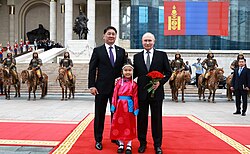
The difficulty of enforcing ICC warrants was highlighted in late 2024. On August 30, 2024, Ukraine formally requested that Mongolian authorities arrest President Putin should he visit the country.
Despite this request, President Putin visited Mongolia in September 2024 and was not arrested, demonstrating the limitations of the ICC when a host country chooses not to comply with the court's expectations.
Key Facts
- Reliance on Members: The ICC depends on member countries for all investigation and enforcement actions.
- Non-Member States: Major nations including the US, China, and India are not members of the ICC.
- Russia's Status: Russia withdrew from the Rome Statute in 2016 and has no legal obligation to cooperate with the court.
- Conflicting US Stances: While some US authorities offered help in prosecuting Putin, Secretary of Defense Lloyd Austin refused cooperation to avoid legitimizing ICC probes into US actions.
- Enforcement Failure: Putin visited Mongolia in September 2024 without being arrested, despite a request from Ukraine.
| Country | ICC Membership Status | Stated Position/Action |
|---|---|---|
| Russia | Withdrew (2016) | No legal obligation to cooperate; unlikely to hand over suspects. |
| Germany | Member | Confirmed they would arrest Putin on German soil. |
| United States | Non-Member | Mixed: Some authorities offered help; SecDef Austin refused cooperation. |
| Mongolia | Member | Did not arrest Putin during his September 2024 visit. |
Frequently Asked Questions
Why can't the ICC arrest Vladimir Putin directly?
The ICC does not have its own police force or enforcement agency. It relies on the national police and judicial systems of its member states to carry out arrests and transfer suspects to the court.
Why did Russia withdraw from the Rome Statute?
Russia withdrew its signature in 2016 after the ICC ruled that the invasion of Crimea constituted an "ongoing occupation."
Why is the United States hesitant to cooperate with the ICC?
While some US officials support the prosecution of Russian war crimes, others, such as Secretary of Defense Lloyd Austin, fear that cooperation could grant the ICC legitimacy to investigate the United States for its own alleged war crimes.
What happened when Putin visited Mongolia in 2024?
Despite a formal request from Ukraine for his arrest, President Putin visited Mongolia in September 2024 and was not detained by Mongolian authorities.
Which major countries are not members of the ICC?
Notable non-member countries include the United States, China, and India.