IBM: A Legacy of Computing Innovation and Enterprise Evolution
From the early days of punch-card tabulators to the cutting edge of quantum mechanics, IBM (International Business Machines) has remained a cornerstone of the global information technology landscape. Headquartered in Armonk, New York, the company has evolved from a merger of several early 20th-century recording and computing firms into a public powerhouse traded on the NYSE as a component of the DJIA and S&P 500.
Today, under the leadership of Chairman and CEO Arvind Krishna, IBM serves clients in 200 countries, focusing its vast resources on hybrid cloud environments and artificial intelligence to drive modern business efficiency.
Key Facts
- Founded: Emerged from predecessors including the Computing-Tabulating-Recording Company (1911–1924).
- Financials (2025): Reported revenue of US$ 67.54 billion and net income of US$ 10.59 billion.
- Workforce: Employs 264,300 people globally as of 2025.
- Core Focus: Specializes in cloud services, AI (Watson), quantum computing, and enterprise hardware.
- Global Reach: Operates 11 research labs worldwide, including the Thomas J. Watson Research Center.
The Evolution of Computing Hardware
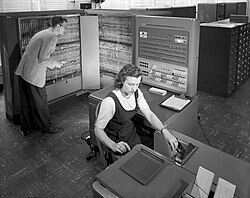
IBM's history is inextricably linked with the development of the modern computer. In the mid-20th century, the company provided the critical infrastructure for scientific advancement, including electronic data processing machines used by NACA researchers in 1957.
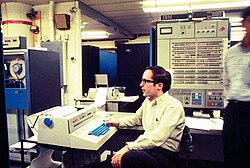
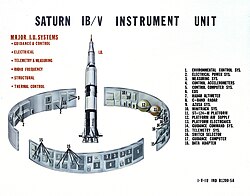
The company's influence extended into space exploration, providing the guidance computer hardware for the Saturn V Instrument Unit, and later dominating the corporate world with the IBM System/360 in the late 1960s.
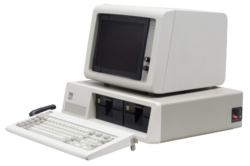
In 1981, IBM shifted the trajectory of consumer technology with the release of the IBM Personal Computer, a product that standardized the PC architecture and influenced the entire personal computing industry.
Pioneering Inventions
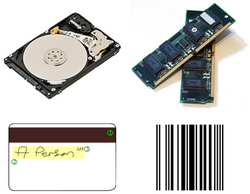
Beyond full systems, IBM's research divisions have produced some of the most ubiquitous technologies in existence. These include the hard-disk drive, DRAM (Dynamic Random-Access Memory), the UPC bar code, and the magnetic stripe card.
Software, AI, and the Quantum Frontier
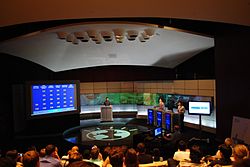
As the industry shifted toward software and services, IBM developed a massive portfolio including Fortran, WebSphere, and SPSS. In recent years, the company has pivoted toward Artificial Intelligence (AI)—the simulation of human intelligence by machines—most notably through the Watson platform.
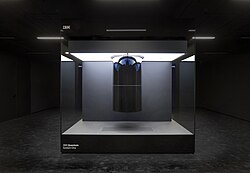
IBM is currently leading the charge into Quantum Computing, which uses quantum-mechanical phenomena such as superposition and entanglement to perform calculations far beyond the reach of classical computers. The IBM Q System One, released in 2019, stands as the first circuit-based commercial quantum computer.
Research and Global Impact
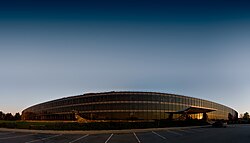
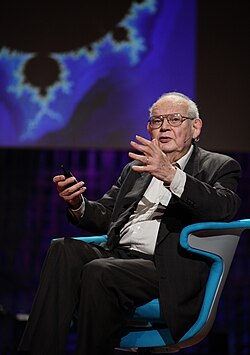
Innovation at IBM is driven by its global network of research labs. The Thomas J. Watson Research Center in New York serves as a hub for breakthroughs in mathematics and science, including the work of IBM Fellow Benoit Mandelbrot on fractal geometry (the study of complex shapes that look the same at any scale).
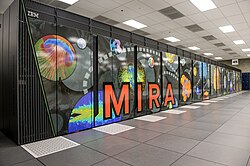
The company's commitment to high-performance computing was further recognized when the Blue Gene project was awarded the National Medal of Technology and Innovation in 2009.
Corporate Profile and Financial Trends
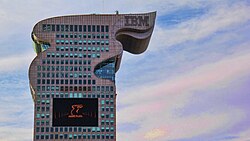
IBM's business model has transitioned from hardware sales to a mix of cloud services, professional consulting, and managed services. While revenue has seen fluctuations over the last decade as the company restructured to focus on hybrid cloud growth, it remains a financial titan.
| Year | Revenue (US$ bn) | Net Income (US$ bn) | Employees |
|---|---|---|---|
| 2014 | 92.7 | 12.0 | 379,592 |
| 2017 | 79.1 | 5.7 | 366,600 |
| 2020 | 73.6 | 5.5 | 345,900 |
| 2022 | 60.5 | 1.6 | 288,300 |
| 2024 | 62.8 | 6.0 | 270,300 |
The company's culture of excellence has produced numerous industry leaders. Notable alumni include Apple CEO Tim Cook, AMD CEO Lisa Su, and various high-ranking government officials, including former U.S. ambassadors and senators.

Frequently Asked Questions
Who is the current leader of IBM?
Arvind Krishna has served as the Chairman and CEO of IBM since 2020.
What is the IBM Q System One?
The IBM Q System One is the first circuit-based commercial quantum computer, designed to bring quantum computing capabilities to a broader range of users.
What are some of IBM's most famous inventions?
IBM is credited with inventing the hard-disk drive, DRAM, the UPC bar code, and the magnetic stripe card.
What is the focus of IBM Watson?
IBM Watson is an artificial intelligence platform capable of analyzing vast amounts of data to provide insights and solutions across various industries, including healthcare and customer service.
Where is IBM headquartered?
IBM is headquartered at 1 Orchard Road, Armonk, New York, United States.