I Love Lucy: The Revolutionary Production and History of a Sitcom Legend
Long before the modern era of streaming and high-definition television, I Love Lucy redefined how stories were told on the small screen. What began as a transition from radio to television became a masterclass in production innovation, business savvy, and comedic timing. The series not only catapulted Lucille Ball and Desi Arnaz to global superstardom but also established the technical blueprint for the American situation comedy (sitcom).
The Rise of Lucille Ball
Lucille Ball's journey to television began in Hollywood as a model and actress. After starting as a "Goldwyn Girl" in 1933, she spent years at RKO Radio Pictures. While she became known as the "Queen of the B's" for her roles in second-rate B pictures, Ball distinguished herself through her willingness to perform physical comedy and stunts that other actresses avoided.
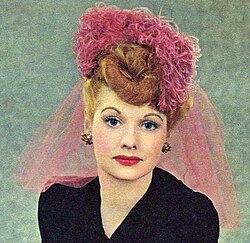
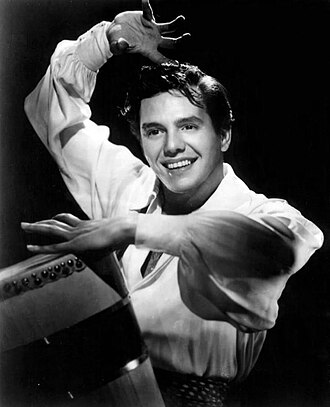
In 1940, Ball met Cuban bandleader Desi Arnaz during the filming of a movie based on the Broadway show Too Many Girls. The two eloped in November 1940, though their early marriage was marked by separation due to their demanding careers.
Ball's career reached a turning point at Metro-Goldwyn-Mayer (MGM), where she dyed her hair red to suit Technicolor films. Her work with Red Skelton in DuBarry Was a Lady (1943) cemented her reputation as a physical comedian. After her MGM contract ended in 1946, Ball transitioned into radio, starring as Liz Cugat in the hit CBS series My Favorite Husband. This role provided the foundation for the characters and dynamics that would eventually define I Love Lucy.
The Birth of Desilu and Production Innovations
When CBS ordered a television pilot in 1951, Ball and Arnaz faced a significant challenge. Their sponsor, Philip Morris, wanted the show produced in New York for live broadcasts. However, the couple insisted on staying in Hollywood. To ensure high quality for West Coast viewers—who previously relied on low-quality kinescopes (films recorded from a television monitor)—they proposed filming the show on 35mm film.
To offset the higher costs of filming, Ball and Arnaz took a $1,000-a-week pay cut in exchange for 80% ownership of the films. This decision led to the creation of Desilu, a production company formed by Arnaz to manage the series. This move effectively birthed the concept of the television rerun, as the high-quality films could be rebroadcast indefinitely.
Technical Breakthroughs
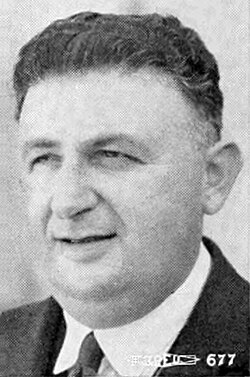
The couple hired cinematographer Karl Freund, who pioneered several techniques to make multi-camera filming efficient. Freund developed flat lighting, a method where the set is brightly lit to eliminate shadows, removing the need for constant relighting between shots. He also utilized monochrome-shaded sets and props to ensure the correct contrast in the final black-and-white print.
Every episode was filmed before a live studio audience of 300 people, with Desi Arnaz serving as the emcee. This format combined the energy of a live performance with the precision of a filmed movie.
Key Facts
- Ownership: Ball and Arnaz owned 80% of the show's films, a revolutionary move at the time.
- Technical Firsts: The show pioneered the three-camera filming system and flat lighting.
- Studio Growth: Desilu eventually purchased RKO Radio Pictures in 1957 for over $6 million.
- Ratings Record: The episode "Lucy Goes to the Hospital" reached 71.7% of all American TV sets.
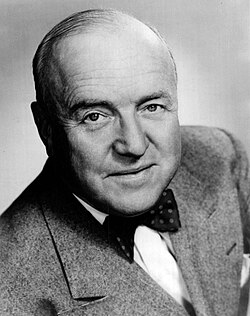
- Cast: The core cast featured Lucille Ball, Desi Arnaz, Vivian Vance, and William Frawley.
The Supporting Cast: The Mertzes
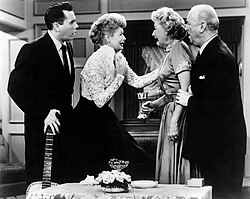
Casting the neighbors, Fred and Ethel Mertz, was a complex process. While Ball initially wanted James Gleason for Fred, his salary demands were too high. For Ethel, director Marc Daniels recommended Vivian Vance. Despite Ball's initial concerns that Vance was too attractive for the role of the "homely" Ethel, Arnaz hired her on the spot. To fit the character's image, Vance was dressed in frumpier clothing.
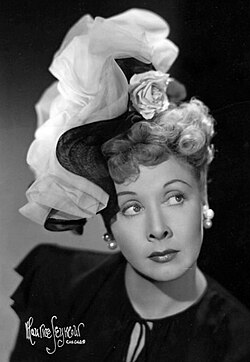
Over time, Ball and Vance developed a deep lifelong friendship. In 1954, Vance became the first actress to win an Emmy Award for Outstanding Supporting Actress.
Pregnancy and "Little Ricky"
In a groundbreaking move for the 1950s, Ball's real-life pregnancy was written into the show's second season. Because CBS forbade the use of the word "pregnant," the script used the term "expecting." The episode "Lucy Is Enceinte" (enceinte being French for pregnant) aired in December 1952.
The birth episode, "Lucy Goes to the Hospital," aired on January 19, 1953, coinciding with Ball's actual delivery of Desi Jr. via Caesarean section. The episode became the most-watched program in television history up to that point.
The character of Little Ricky grew in real-time for several years before suddenly aging by two years for the 1956–57 season. Throughout the series, five different actors played the role.
Visual Evolution and the Theme Song
The original openings of I Love Lucy featured animated caricatures created by Gene Hazelton and produced by William Hanna and Joseph Barbera. These animations often included the sponsor, Philip Morris. When the show entered syndication, these were replaced by the iconic "heart on satin" image created by typographer Verdun Philip Cook.
![Shot of the opening animation used in season one's first 20 episodes, one of at least 13 opening animations[64][65]](/images/81/47/81475dc26499ee0092c74bd4239e461a46f770879242f4db2834673e76c3198a.png)
The show's theme song was composed by Eliot Daniel, with lyrics later added by Harold Adamson. The song became a cultural staple, eventually seeing a disco version hit the Top 40 in 1977.
Production Summary
| Category | Details |
|---|---|
| Production Company | Desilu Productions |
| Key Innovators | Karl Freund (Cinematography), Desi Arnaz (Production) |
| Original Sponsor | Philip Morris |
| Filming Method | 35mm film with three-camera setup |
| Studio Locations | General Service Studios, Desilu-Cahuenga, RKO Radio Pictures |
Frequently Asked Questions
Why was I Love Lucy filmed instead of broadcast live?
Ball and Arnaz wanted to remain in Hollywood rather than move to New York. Filming on 35mm ensured high quality for West Coast viewers and allowed the episodes to be rebroadcast as reruns.
How did the show handle Lucille Ball's pregnancy?
The pregnancy was written into the plot, though the word "pregnant" was banned by CBS. The show used terms like "expecting" and "enceinte" to describe Lucy's condition.
What was the significance of Desilu Productions?
Desilu was one of the first independent television production companies. It grew from producing one show to owning major studio lots, including the purchase of RKO Radio Pictures in 1957.
Who created the famous "heart on satin" opening?
The heart motif and typography were designed by Verdun Philip Cook, while the post-production was handled by Howard Anderson Jr.'s studio for syndicated rebroadcasts.
How did Karl Freund change television filming?
Freund introduced flat lighting to eliminate shadows and used monochrome-painted sets to maintain consistent contrast across multiple cameras, creating a uniform image quality.