Hydroelectricity: Powering the World Through Water
Hydroelectricity, or hydroelectric power, is the process of generating electricity from the energy of moving water. As a cornerstone of the global transition to clean energy, hydropower currently supplies 15% of the world's electricity. In 2023, this amounted to nearly 4,210 TWh, a figure that exceeds the output of all other renewable sources combined, as well as nuclear power.
One of the most significant advantages of hydroelectricity is its flexibility. Unlike some renewable sources that are intermittent, hydroelectric stations with reservoirs can increase or decrease power production in seconds or minutes to meet fluctuating demand. This makes it a vital component for maintaining secure and stable electricity supply systems.
Key Facts
- Global Impact: Hydropower is the largest renewable energy source, providing 15% of global electricity.
- Capacity: Global installed capacity reached nearly 1,400 GW in 2021.
- Leading Nations: China, Brazil, and Norway are among the world leaders in hydroelectric production.
- Scalability: Facilities range from massive dams (gigawatts) to pico-hydro systems (under 5 kW).
- Environmental Trade-off: While low-carbon, large dams can cause population displacement and ecosystem disruption.
The Evolution of Hydropower
The use of water to create mechanical energy dates back to 202 BC in ancient China during the Han dynasty. By the late 18th century, hydraulic power became the engine of the Industrial Revolution. Key milestones included Bernard Forest de Bélidor's descriptions of hydraulic machines in the mid-1700s and Richard Arkwright's water frame in 1771, which helped establish the modern factory system.
![Museum Hydroelectric power plant "Under the Town" in Užice, Serbia, built in 1900[11]](/images/48/0e/480e77bd52c46dde688f0e671e5f17661d49dac51ad59ee8003da207da46e601.jpg)
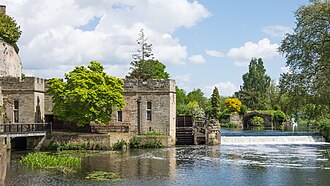
The transition from mechanical energy to electricity occurred in the late 19th century. In 1878, William Armstrong developed the first hydroelectric power scheme at Cragside, England, to light a single arc lamp. This was followed by rapid expansion in the United States, with the Schoelkopf Power Station (1881) and the Vulcan Street Plant (1882) marking the dawn of commercial hydro-generation.
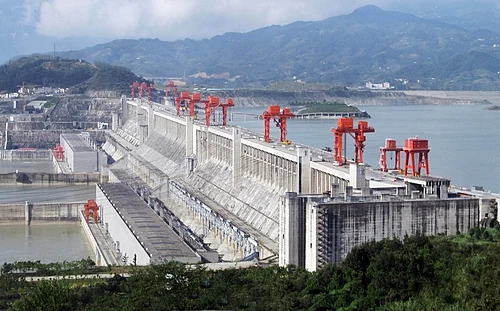
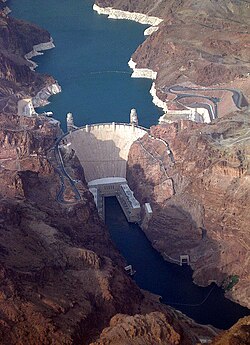
Throughout the 20th century, hydropower—often called "white coal"—scaled up dramatically. The United States saw the rise of massive federal projects like the Hoover Dam (1928) and the Bonneville Dam (1937). By the end of the century, the scale of these projects reached unprecedented levels, culminating in the Three Gorges Dam in China, which surpassed the Itaipu Dam in 2008 to become the world's largest facility.
Types of Hydroelectric Facilities
Hydroelectric plants are categorized primarily by their size and the method used to capture energy.
Large-Scale Facilities
Conventional hydroelectric dams use large reservoirs to store water, providing a high-value, dispatchable power source. These facilities are often multi-purpose, aiding in irrigation, navigation, and flood control.
Small, Micro, and Pico Hydro
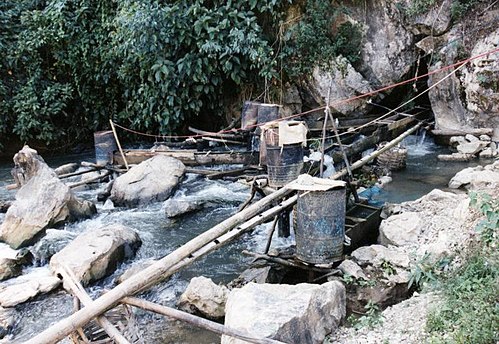
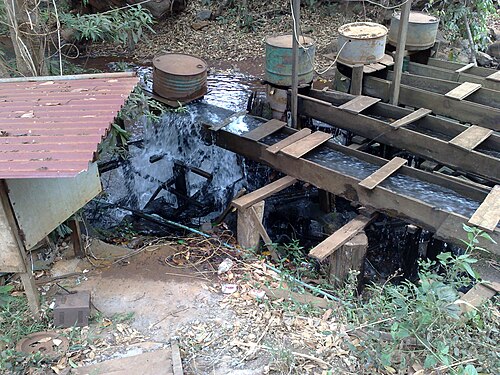
Smaller systems are often run-of-the-river, meaning they divert a portion of a river's flow through a turbine without requiring a massive dam. Pico hydro refers to systems generating under 5 kW, which are essential for remote communities. For example, a 1.1 kW project in Kenya can provide basic electricity (lights and phone chargers) to dozens of homes.
Specialized Generation Methods
- Pumped-storage: Acts as a giant battery, moving water between reservoirs to store and release energy.
- Tidal power: Utilizes the natural rise and fall of ocean tides in coastal regions.
- Conduit hydro: Captures energy from existing water pipes or canals.
Environmental and Economic Considerations
While hydroelectricity produces no direct waste during operation and generally emits far fewer greenhouse gases than fossil fuels, it is not without impact. The construction of large dams can lead to the loss of arable land, population displacement, and the disruption of river ecology, affecting siltation and erosion patterns.
In specific cases, such as lowland rainforests, the inundation of forests can lead to the emission of substantial greenhouse gases. In some instances, the life-cycle emissions of these projects can potentially exceed those of coal power stations due to changes in land albedo and decaying vegetation.
Economically, greenfield hydropower investments typically cost between USD 1,200/kW and USD 4,500/kW, though large-scale megaprojects can range from USD 1,000/kW to USD 10,000/kW.
Global Production Summary
Hydropower remains a dominant force in the global energy mix, particularly in South America and Asia.
![Yearly hydro generation by continent[81]](/images/e3/a3/e3a30c7adbda71ce8bbc1fa17fde98073ca3b9f66ee04f437a33bd2a60e0060a.png)
![Hydro generation by country, 2021[81]](/images/c0/ea/c0ea37e9690658f76d5bcbaf1af43780f0f2f812b5fcfac367d2f27a05bfcec2.png)
| Rank | Station | Country | Capacity (MW) |
|---|---|---|---|
| 1 | Three Gorges Dam | China | 22,500 |
| 2 | Baihetan Dam | China | 16,000 |
| 3 | Itaipu Dam | Brazil / Paraguay | 14,000 |
| 4 | Xiluodu Dam | China | 13,860 |
| 5 | Belo Monte Dam | Brazil | 11,233 |
Frequently Asked Questions
Is hydroelectricity always carbon-free?
While it produces no direct waste during operation, it is not always carbon-free. In lowland rainforest areas, flooding forests can release significant amounts of greenhouse gases, which may increase its global warming impact.
What is the difference between a dam and run-of-the-river hydro?
Conventional dams create large reservoirs to store water for later use, providing high flexibility. Run-of-the-river systems divert a portion of the river's natural flow through a turbine, generally having a smaller environmental footprint but less storage capacity.
How does pumped-storage hydropower work?
Pumped-storage acts as an energy storage system. It pumps water from a lower reservoir to an upper reservoir during periods of low electricity demand and releases it to generate power during peak demand.
What are the primary risks associated with large dams?
The primary risks include the displacement of local populations, loss of arable land, and the potential for catastrophic failure. For example, the 1975 Banqiao Dam failure in China resulted in hundreds of thousands of deaths due to flooding and subsequent epidemics.
Which countries rely most on hydropower?
Countries such as Norway, Brazil, Paraguay, and the Democratic Republic of the Congo derive over 85% of their electricity from hydropower.