Hurricane Ida Tornado Outbreak of 2021
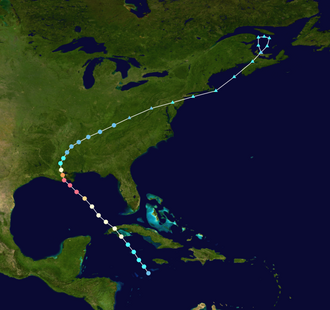
In late August and early September 2021, the remnants of Hurricane Ida triggered a devastating series of severe weather events across the Southeastern and Northeastern United States. While the hurricane's initial landfall brought catastrophic winds and rain, its transition into an extratropical system sparked a significant tornado outbreak that spanned several states and caused millions of dollars in damage.
The event was characterized by a complex interplay of atmospheric conditions, including strong low-level shear and high moisture levels, which allowed supercells—rotating thunderstorms capable of producing tornadoes—to form far from the storm's center.
Key Facts
- Total Tornadoes: 36 confirmed touchdowns.
- Peak Intensity: EF3 tornado with winds reaching 150 mph (240 km/h).
- Human Impact: 1 fatality and 7 injuries.
- Financial Loss: Over $72.098 million (2021 USD).
- Duration: The outbreak lasted approximately 79 hours and 15 minutes.
- Historic Milestone: First-ever tornado emergency issued for the Northeast and the first associated with a tropical cyclone in that region.
Meteorological Progression
Landfall and Southeastern Activity
Hurricane Ida made landfall near Port Fourchon, Louisiana, on August 29, 2021, at 16:55 UTC. At the time of landfall, it maintained sustained winds of 150 mph and a central pressure of 930 mbar. As the storm moved inland, the combination of daytime boundary heating and weak inland buoyancy increased the risk of tornadoes across the Southeast.
Between August 29 and 31, the Storm Prediction Center (SPC) maintained a slight risk for the Central Gulf Coast. This period saw numerous weak tornadoes in Mississippi, Louisiana, and Alabama. Notably, an EF1 tornado in Saraland, Alabama, on August 30, injured three people and caused significant damage to motels and industrial buildings.
Northeastern Escalation
By September 1, Ida had become extratropical—meaning it lost its tropical characteristics but remained a powerful low-pressure system. As it entered the Northeast, a strengthening low-level jet (LLJ), a fast-moving current of air in the lower atmosphere, coupled with a moist environment and surface heating to create a high-risk scenario between Washington, D.C., and New York City.
The SPC issued an enhanced risk, including a 10% tornado risk and a 30% damaging wind risk. This resulted in several supercells forming over the D.C. metropolitan area, which then tracked northeast, producing significant tornadoes in Maryland and Pennsylvania.
The Mullica Hill EF3 Tornado
The most intense event of the outbreak occurred in Gloucester County, New Jersey. A powerful wedge tornado—a tornado that is wider than it is tall—touched down at 6:10 p.m. EDT on September 1. This tornado reached EF3 intensity on the Enhanced Fujita (EF) scale, which rates tornado strength based on estimated wind speeds and related damage.
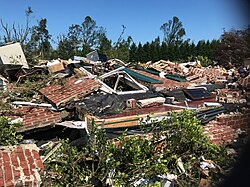
The tornado traveled 12.37 miles, reaching a maximum width of 400 yards. It caused catastrophic damage in the Willow Oaks subdivision of Cedar Grove, where homes were leveled and exterior walls collapsed. It also destroyed barns and storage buildings at a dairy farm in Mullica Hill. This event was one of only four EF3 tornadoes ever confirmed in New Jersey's history, resulting in over $64 million in damages and two injuries.
Outbreak Summary Table
| Metric | Details |
|---|---|
| Timeframe | August 29 – September 2, 2021 |
| Total Tornadoes | 36 |
| Intensity Distribution | EF0: 22 | EF1: 10 | EF2: 3 | EF3: 1 |
| Highest Wind Speed | 150 mph (EF3) |
| Primary Affected Regions | Southeastern and Northeastern United States |
| Total Estimated Damage | >$72.098 Million |
Frequently Asked Questions
What was the strongest tornado produced by the remnants of Ida?
The strongest tornado was an EF3 wedge tornado that struck Mullica Hill, New Jersey, with maximum wind speeds of 150 mph.
How many people were killed or injured during this outbreak?
The tornado outbreak resulted in one fatality and seven injuries across the affected regions.
Why was the Northeast particularly vulnerable on September 1?
The vulnerability was caused by a strengthening low-level jet along a warm front, combined with a very moist atmosphere and sufficient surface heating, which allowed supercells to form.
What is a "tornado emergency" and why was it significant here?
A tornado emergency is the highest level of alert issued when a violent tornado is confirmed to be moving into a populated area. This event marked the first such alert ever issued for the Northeast and the first associated with a tropical cyclone in the region.
Which states were most affected by the tornadoes?
The tornadoes primarily impacted Mississippi, Louisiana, Alabama, Virginia, Maryland, Pennsylvania, New Jersey, and Massachusetts.