Hungarian Immigration and Community in Ohio and Cleveland
Throughout the 19th and 20th centuries, Ohio became a primary destination for Hungarian immigrants seeking new opportunities in the United States. This migration shaped the cultural and economic landscape of the region, creating vibrant communities that persisted through multiple waves of arrival.
The Growth of Hungarian Populations in Ohio
The scale of Hungarian settlement in Ohio grew rapidly during the early 1900s. In 1900, the state was home to approximately 17,000 Hungarians. By 1920, this number had surged to 73,181. While many arrived before the First World War, the community was further bolstered by two subsequent major waves of immigration: one following the Second World War and another following the Hungarian Revolution of 1956 (a nationwide uprising against the Soviet-backed government).
In recent decades, these concentrated communities have begun to disperse across other parts of Ohio, though their historical and cultural presence remains significant.
The Rise of "Little Hungary" in Cleveland
A significant portion of Hungarian immigrants settled along the coastline of Lake Erie, with Cleveland serving as a major hub. The neighborhood along Buckeye Road became particularly famous, earning the nickname Little Hungary. At its peak, this area boasted the largest population of Hungarians outside of Budapest.
The community's infrastructure developed quickly. By the end of the 19th century, six distinct Hungarian communities had already organized their own churches in Cleveland. The demographic shift was stark: in 1900, 9,558 Hungarians lived in the city, representing 8% of Cleveland's foreign-born population. By 1920, that number rose to 43,134, accounting for 18% of the foreign-born population.
Industrial Influence and Hungaria Hall
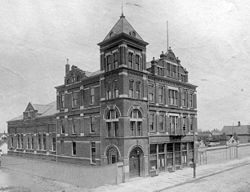
Economic success played a vital role in the community's stability. Theodor Kuntz, who immigrated in 1873, established a factory that employed 2,500 Hungarian workers, eventually becoming one of the wealthiest individuals in Cleveland. In 1890, Kuntz funded the construction of Hungaria Hall on Clark Avenue, a landmark that remained standing as of 2010.
Community Expansion and Evolution
By 1920, the Hungarian influence in Cleveland was deeply embedded in the local economy and social fabric, with over 300 Hungarian-owned factories and 81 associations. Between 1947 and 1953, an additional 6,000 Hungarians settled in the city, aided in their assimilation (the process of integrating into a new culture) by those who had arrived in earlier waves.
The population peaked in the 1980s with 113,000 Hungarians in Cleveland. However, by 1990, the number decreased to 61,681, though the community remained highly organized with 924 Hungarian organizations active at that time.
Key Facts
- Peak Population: Cleveland's Hungarian population reached 113,000 in the 1980s.
- Little Hungary: The Buckeye Road neighborhood was once the largest Hungarian settlement outside Budapest.
- Economic Impact: By 1920, there were more than 300 Hungarian-owned factories in Cleveland.
- Key Landmark: Hungaria Hall was built in 1890 by industrialist Theodor Kuntz.
- Immigration Waves: Major arrivals occurred before WWI, after WWII, and after the 1956 Revolution.
| Year | Ohio Total Population | Cleveland Population | % of Cleveland Foreign-Born |
|---|---|---|---|
| 1900 | ~17,000 | 9,558 | 8% |
| 1920 | 73,181 | 43,134 | 18% |
| 1980s | Not specified | 113,000 | Not specified |
| 1990 | Not specified | 61,681 | Not specified |
Frequently Asked Questions
What was "Little Hungary"?
Little Hungary was a nickname for the neighborhood along Buckeye Road in Cleveland, which once held the largest population of Hungarians outside of Budapest.
Who was Theodor Kuntz?
Theodor Kuntz was a Hungarian immigrant who arrived in 1873 and became one of Cleveland's wealthiest men after founding a factory that employed 2,500 Hungarian workers.
When did the major waves of Hungarian immigration to Ohio occur?
Major waves occurred before the First World War, after the Second World War, and following the Hungarian Revolution of 1956.
How many Hungarian organizations were in Cleveland by 1990?
By 1990, there were 924 Hungarian organizations present in the city.
What is the significance of Hungaria Hall?
Built in 1890 by Theodor Kuntz on Clark Avenue, Hungaria Hall serves as a lasting architectural symbol of the Hungarian community's presence in Cleveland.