Human Rights Watch: Global Advocacy and Human Rights Monitoring
Human Rights Watch (HRW) is a prominent international non-governmental organization (NGO) that serves as a global watchdog. Headquartered in New York City, the organization is dedicated to investigating and reporting on human rights abuses worldwide. By applying public pressure on governments and policymakers, HRW strives to ensure that nations respect fundamental human rights and adhere to international standards.
Operating in nearly 100 countries, HRW acts as a critical voice for the voiceless, documenting violations and advocating for systemic change to protect individuals from state-sponsored abuse and discrimination.
Key Facts
- Founded: 1978 as Helsinki Watch.
- Headquarters: New York City, U.S.
- Current Executive Director: Philippe Bolopion.
- Scope: Active in nearly 100 countries worldwide.
- Financials (2025): Revenue of $85 million, expenses of $102 million, and an endowment of $169 million.
- Core Mission: Opposing violations of the Universal Declaration of Human Rights (UDHR).
History and Evolution
The organization was co-founded in 1978 by Robert L. Bernstein, Jeri Laber, and Aryeh Neier. Originally named Helsinki Watch, its primary purpose was to monitor the Soviet Union's compliance with the 1975 Helsinki Accords, an agreement intended to improve relations between the Communist bloc and the West.
As the organization's scope expanded, it established several regional "Watch Committees," including Asia Watch (1985), Africa Watch (1988), and Middle East Watch (1989). In 1988, these separate divisions merged to form the unified entity known today as Human Rights Watch.
Over the decades, HRW has taken increasingly bold stances on global issues. In April 2021, it became the first major international rights NGO to release a report accusing Israel of apartheid and calling for an investigation by the International Criminal Court into systematic discrimination against Palestinians.
The organization has also faced significant political pushback. In August 2020, the Chinese government sanctioned former executive director Kenneth Roth for his support of the pro-democracy movement during the 2019–20 Hong Kong protests. This tension eventually led HRW to leave Hong Kong in 2021, shifting its monitoring of the region to its China-based team.
Core Activities and Advocacy
HRW bases its work on the Universal Declaration of Human Rights (UDHR), a milestone document that outlines basic rights for all humans. The organization specifically opposes capital punishment and discrimination based on sexual orientation, while advocating for freedom of religion and freedom of the press.
To achieve its goals, HRW employs a strategy of public pressure. It documents abuses through rigorous research and lobbies powerful governments to use their influence to curb violations in other nations. Additionally, the organization presents the annual Human Rights Defenders Award to courageous activists who help expose abuses.
Despite its global reach, HRW faces access restrictions in several countries, including Cuba, North Korea, Sudan, Iran, Israel, Egypt, the United Arab Emirates, Uzbekistan, and Venezuela.

Leadership and Legacy
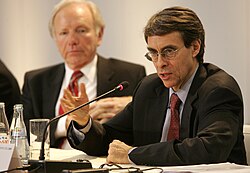
Kenneth Roth served as the executive director from 1993 to 2022, overseeing a period of significant global expansion. His commitment to human rights was influenced by his father's escape from Nazi Germany in 1938. Following Roth, Tirana Hassan led the organization from 2023 until February 2025, before the current leadership of Philippe Bolopion.
Human Rights Watch vs. Amnesty International
While both are leading NGOs headquartered in the North Atlantic Anglosphere, HRW and Amnesty International (AI) differ in their structure and methodology.
| Feature | Human Rights Watch (HRW) | Amnesty International (AI) |
|---|---|---|
| Structure | Research-driven, funded by wealthy donors | Mass-membership organization |
| Primary Tool | Crisis-driven research and detailed reports | Member mobilization and letter-writing |
| Advocacy Style | Direct lobbying for sanctions and arrests | Adopting "prisoners of conscience" |
| Report Focus | Extensive political and historical analysis | Focus on specific rights abuses |
Funding and Financials
HRW relies heavily on private donations. In 2010, George Soros of the Open Society Foundations provided a $100 million grant over ten years, the largest in the organization's history, which significantly expanded its international staff. As of 2025, the organization held total assets of $216.7 million.
The organization has faced controversy regarding its funding. In 2020, HRW returned a $470,000 donation from Saudi businessman Mohamed Bin Issa Al Jaber after it was revealed the funds were conditioned on not supporting LGBT advocacy in the Middle East and North Africa. HRW described the acceptance of these funds as "deeply regrettable."
Criticism and Restrictions
Due to its nature as a watchdog, HRW is frequently criticized by the governments it investigates. Some critics, including co-founder Robert L. Bernstein, have alleged bias in its reporting, particularly regarding the Israel-Palestine conflict. In 2026, the organization's Israel and Palestine director resigned after a report describing the denial of the Palestinian right of return as a "crime against humanity" was blocked.
Other criticisms have focused on internal practices. In 2014, over 100 activists and scholars, including two Nobel Peace Laureates, criticized HRW for its hiring practices with the U.S. government and its perceived silence during the 2004 Haitian coup d'état.
Governments have also taken direct action against the group. For example, Russia effectively banned HRW from operating within its borders in 2025.
Frequently Asked Questions
What is the difference between Human Rights Watch and Helsinki Watch?
Helsinki Watch was the original name of the organization when it was founded in 1978 to monitor the Soviet Union. In 1988, Helsinki Watch merged with other regional committees (Asia, Africa, and Middle East Watch) to become Human Rights Watch.
How does Human Rights Watch fund its operations?
HRW is a nonprofit funded by private donors. Notable contributions include a $100 million grant from George Soros. It does not rely on a mass-membership fee structure like Amnesty International.
What is the Human Rights Defenders Award?
This is an annual award presented by HRW to activists who have shown exceptional leadership and courage in defending human rights and exposing abuses.
Where is the Human Rights Watch archive located?
The archive is housed at the Rare Book and Manuscript Library at Columbia University in New York City, providing public and academic access to decades of field notes and interviews.
Why did Human Rights Watch leave Hong Kong?
HRW left Hong Kong in 2021 following sanctions imposed by the Chinese government on its then-executive director Kenneth Roth and other human rights leaders, amid a broader crackdown on civil society in the region.