Hui Muslims: History, Military Influence, and Cultural Evolution in China
The Hui are a distinct ethnic group of Muslims in China whose origins are deeply intertwined with the ancient Silk Road. Emerging from a blend of foreign traders and local populations, the Hui have navigated a complex path of assimilation, military prominence, and political loyalty, establishing themselves as a unique cultural bridge between Islamic faith and Chinese identity.
Origins and Ethnic Formation
The ancestry of the Hui is diverse, primarily stemming from Iranian (Bosi) traders who introduced Islam to China. On the southeast coast, particularly in Guangdong and Fujian, the Hui emerged from the intermarriage of these foreign traders with local populations. In Northwestern China and Yunnan, the population formed through a convergence of Mongol, Turkic, and Iranian settlers recruited by the Yuan dynasty as semu (specialists or officials).
During the Yuan dynasty, the Hui occupied a high social stratum, ranking just below the Mongols. While some ancestral groups were originally Nestorian Christians, many converted to Islam during the subsequent Ming and Qing dynasties. Interestingly, genetic evidence suggests that Hui populations in Gansu did not experience the same level of Western or Central Asian gene flow as other groups, instead growing through the assimilation of Muslim military units stationed across China.
A Legacy of Military Service
Muslims have a long history of distinguished service in the Chinese military. As early as the Tang dynasty, Arab mercenaries were employed to suppress the An Lushan rebellion. However, this period also saw tragedies, such as the Yangzhou and Guangzhou massacres, where thousands of Muslim and other foreign merchants were killed.
By the Ming and Qing dynasties, Hui troops were integral to imperial stability, fighting against Mongol incursions and internal rebellions. During the Boxer Rebellion, the Kansu Braves, led by General Dong Fuxiang, fought against Western armies in notable battles at Langfang and Beicang.
The Ma Clique and the Republic of China
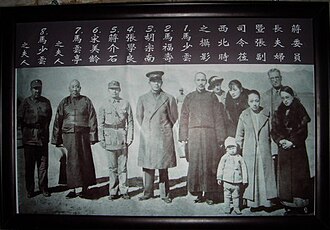
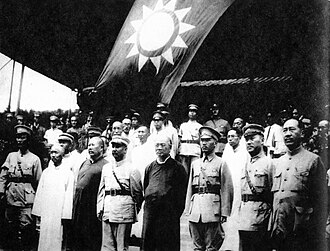
The Republic of China era marked a peak in Hui military and political power. The Kuomintang (KMT) appointed Hui generals as military governors of Qinghai, Ningxia, and Gansu, creating a powerful bloc known as the Ma Clique. These leaders, including Ma Bufang and Bai Chongxi, were staunch nationalists and KMT members.
Hui forces played critical roles in several 20th-century conflicts:
- Sino-Tibetan War: Fighting against Tibetan forces.
- Second Sino-Japanese War: Resisting Japanese invasion; General Ma Hongbin notably defeated Japanese forces in 1940.
- Chinese Civil War: Fighting alongside the KMT against the Chinese Communist Party (CCP).
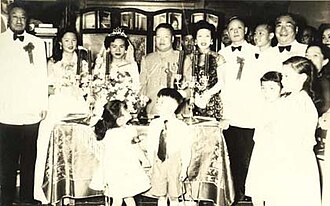
Following the KMT's retreat to Taiwan, several high-ranking Hui generals, including Bai Chongxi and Ma Buqing, continued their service in the Republic of China's military on the island.
Political Integration and Modern Life
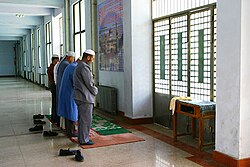
The relationship between the Hui and the Chinese state has often been characterized by a lack of separatist sentiment, which has historically granted them more religious freedom than other Muslim minorities. For decades, the CCP permitted Hui children to attend mosques and pursue religious studies under an ahong (imam).
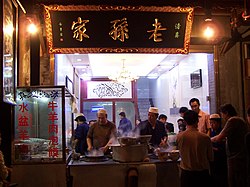
In the modern era, the Hui have maintained a visible presence through a thriving halal industry in Ningxia, producing Islamic clothing and food. The government has occasionally shown public respect for the faith, such as banning a book that insulted Islam in 1989 and removing pig depictions from CCTV in 2007 to honor the faith.
Sinicization and Recent Challenges
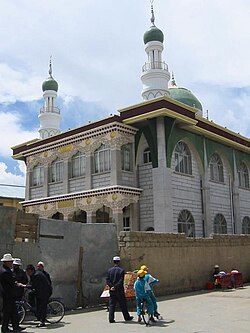
In recent years, the policy of sinicization—the process of making religious practices more aligned with traditional Chinese culture—has impacted the Hui. This has included the removal of Arabic signs and the renovation of mosques to reflect Han Chinese architecture. Some reports indicate that a small number of Hui have been placed in vocational reeducation centers to reform political thoughts.
Inter-Ethnic and Sectarian Tensions
Despite their shared faith, the Hui have experienced significant tensions with other Muslim groups and ethnic minorities:
- Uyghurs: Tensions arose because Hui troops were often used by the state to suppress Uyghur revolts. Differences in language, political loyalty, and population growth in Xinjiang have further strained relations.
- Tibetans: Historical conflicts under the rule of Ma Bufang and more recent migrations into Lhasa have led to sporadic violence and boycotts of Hui businesses.
- Internal Sects: Violent clashes between different Islamic sects occurred during the Qing dynasty and resurfaced in the 1990s, particularly with the rise of the Salafi movement.
Key Facts
- Origins: Descendants of Silk Road traders (Iranian, Turkic, and Mongol) mixed with local Chinese.
- The Ma Clique: A group of powerful Hui generals who governed Northwest China under the Kuomintang.
- Religious Status: Generally granted more freedom than other Muslim groups due to a lack of separatist movements.
- Military Role: Served across multiple dynasties, from Tang mercenaries to high-ranking Republic of China generals.
- Sinicization: Recent government efforts to replace Arabic architectural styles with traditional Chinese designs.
| Period | Key Role/Event | Outcome/Impact |
|---|---|---|
| Yuan Dynasty | Semu (Specialists/Officials) | High social status below Mongols |
| Qing Dynasty | Imperial Army Service | Suppression of revolts; Boxer Rebellion |
| Republic Era | The Ma Clique | Governorships of Qinghai, Ningxia, and Gansu |
| WWII | Resistance against Japan | Defeat of Japanese forces in West Suiyuan |
| Modern Era | Sinicization | Architectural and cultural alignment with Han traits |
Frequently Asked Questions
Who are the Hui people?
The Hui are a Chinese Muslim ethnic group descended from a mixture of local Chinese and foreign traders, primarily from Iran and Central Asia, who settled along the Silk Road.
What was the Ma Clique?
The Ma Clique refers to a group of Hui Muslim generals who served as military governors of Qinghai, Ningxia, and Gansu provinces during the Republic of China era, maintaining strong ties to the Kuomintang.
How do the Hui differ from the Uyghurs?
While both are Muslim, the Hui are generally more assimilated into Chinese culture, speak Chinese, and have historically lacked a separatist movement, whereas Uyghurs have a distinct Turkic language and culture with a history of seeking autonomy.
What is the 'sinicization' of the Hui?
Sinicization is a government directive to make Islamic practices and architecture in China appear more traditionally Chinese, involving the removal of Arabic domes and signs in favor of Han-style buildings.
Did the Hui fight in World War II?
Yes, many Hui generals and soldiers fought against the Imperial Japanese Army, with General Ma Hongbin leading successful military operations in West Suiyuan.