Horton Hospital: A History of Medical Innovation and Redevelopment
Established at the turn of the 20th century, Horton Hospital served as a cornerstone of psychiatric care within the Epsom Cluster—a group of five mental institutions located on the Horton Estate west of Epsom. Designed by George Thomas Hine, the consultant architect to the Commissioners in Lunacy for the London County Council, the facility utilized a "Compact Arrow" plan, a layout previously implemented at the Bexley Asylum in Kent. Opening its doors in 1902, the hospital would go on to witness a century of medical evolution, from wartime service to pioneering psychiatric treatments.
Key Facts
- Opened: 1902, as part of the Epsom Cluster.
- Peak Capacity: 1,587 beds in 1971.
- Medical Milestones: National center for mosquito breeding and early music therapy pioneer.
- Specialized Care: Home to the Wolvercote Clinic for sex offender treatment.
- Closure: Officially closed in 1997, with redevelopment beginning in 2002.
Wartime Service and Medical Breakthroughs
During both World Wars, the hospital's role shifted from psychiatric care to military support. The facility was commandeered as a military hospital, necessitating the transfer of existing patients to other institutions to make room for wounded soldiers.
Induced Malaria Treatment
For a significant portion of the 20th century, Horton Hospital was at the forefront of treating general paralysis of the insane, a severe manifestation of advanced syphilis. Doctors employed a method known as induced malaria treatment, where patients were intentionally infected with malaria. The resulting high fevers were intended to kill the spirochetes (spiral-shaped bacteria) responsible for the disease.
To support this effort, a laboratory within the hospital's 14-bed isolation unit became a national hub for mosquito breeding, supplying infected mosquitoes to British hospitals nationwide. By the 1970s, the unit was recognized as the World Health Organization's Regional Malarial Centre for Europe. However, the rise of penicillin as an effective treatment for syphilitic symptoms rendered this method obsolete by 1975.
Music Therapy and Specialized Care
Beyond malarial research, the hospital gained recognition in the 1960s for its pioneering work in music therapy, integrating artistic expression into psychiatric recovery.
The Wolvercote Clinic
In 1995, the hospital became the site of the Wolvercote Clinic, a pioneering treatment center specializing in the intensive care of convicted child sex offenders. The clinic earned an international reputation for its effectiveness, with non-reoffending rates estimated at 80%.
Patients stayed in secure accommodation for up to 12 months. The program focused on cognitive behavioral goals, teaching patients to acknowledge their sexual responses to children and develop the skills to control their own behavior. The clinic operated until 2002, when it closed due to the sale of the hospital site for redevelopment.
Decline and Modern Redevelopment
The hospital's patient population peaked in 1971 with 1,438 patients and 1,587 beds. A steady decline followed, with bed numbers dropping to 1,200 by 1975. While the main hospital officially closed in 1997, the Wolvercote Clinic and a small psychiatric unit called Horton Haven remained operational for several more years.
The site was sold for development in 2002, leading to the demolition of most buildings. However, several structures were preserved for conversion into a new village development, including the administration block, the chapel, the water tower, and select villas and wards.
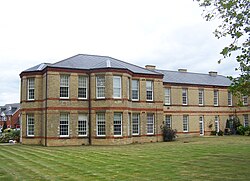
By 2009, much of the site had been transformed into apartments and housing. While the Horton Haven and the original gate lodge continued to provide psychiatric services, other landmarks faced different fates. The water tower was demolished by October 2012 and replaced by a commemorative plaque, while the chapel remained secured and maintained by the Epsom and Ewell Borough Council.
| Metric/Feature | Detail | |
|---|---|---|
| Architectural Plan | Compact Arrow plan | Designed by George Thomas Hine |
| Peak Bed Capacity (1971) | 1,587 | 1,438 patients treated |
| Key Medical Focus | Induced Malaria / Syphilis treatment | WHO Regional Malarial Centre for Europe |
| Wolvercote Clinic Success | ~80% non-reoffending rate | Closed 2002 |
| Current Status | Residential redevelopment | Horton Haven still provides services |
Frequently Asked Questions
What was the "Compact Arrow" plan?
The Compact Arrow plan was an architectural layout for mental institutions first used at Bexley Asylum and later implemented by George Thomas Hine at Horton Hospital to organize the facility's wards and services.
How did malaria treat syphilis at Horton Hospital?
The treatment involved infecting patients with malaria to induce high fevers, which were believed to kill the spirochetes (bacteria) that caused general paralysis of the insane, a form of advanced syphilis.
What was the purpose of the Wolvercote Clinic?
The Wolvercote Clinic was a specialized center for the intensive treatment of convicted child sex offenders, focusing on behavioral control and the acknowledgment of sexual responses.
Which buildings were saved during the redevelopment?
The chapel, administration block, and some wards and villas were retained for conversion into a residential village. The original gate lodge also remained in use.
Is any part of the original hospital still providing medical care?
Yes, the Horton Haven psychiatric unit continues to provide psychiatric services on the site.