Hong Kong International Airport
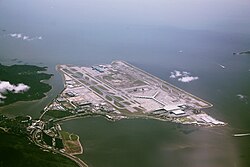
Hong Kong International Airport (HKG), also known as Chek Lap Kok International Airport, serves as the primary gateway to Hong Kong and the wider Pearl River Delta. Since its opening on July 6, 1998, the airport has evolved into one of the world's most significant aviation hubs, blending massive passenger throughput with a world-leading air cargo operation.
Located on the reclaimed land of Chek Lap Kok in the New Territories, the airport is operated by the Airport Authority Hong Kong. It functions as a critical link between Asia and the rest of the world, supporting a vast network of passenger and freight airlines.
Key Facts
- IATA/ICAO Codes: HKG / VHHH
- Location: Chek Lap Kok, New Territories, Hong Kong
- Runways: Three asphalt runways, each 3,800 meters (12,467 ft) long
- 2025 Statistics: Approximately 60.99 million passengers and 5.07 million metric tonnes of cargo
- Primary Hub For: Cathay Pacific, Air Hong Kong, DHL Aviation, and HK Express
- Elevation: 8.5 meters (28 ft) above mean sea level (AMSL)
Infrastructure and Composition
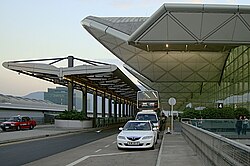
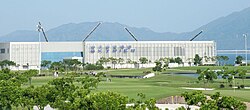
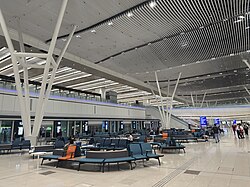
The airport's layout is designed for high-efficiency movement of passengers and goods. The core of the passenger experience is centered around Terminal 1 (T1), which is supported by the T1 Satellite Concourse and the Midfield Concourse to maximize aircraft docking capacity.
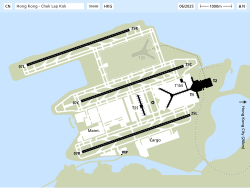
The facility has undergone significant evolution, including the transition from the former Terminal 2 to a New Terminal 2. Beyond passenger terminals, the airport houses specialized facilities such as the Hong Kong Business Aviation Centre and the Airport Ground Transportation Centre Bus Terminus.
Air Traffic Control
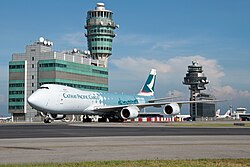
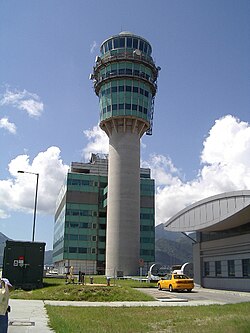
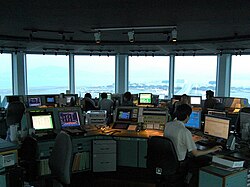
Operations are managed from a state-of-the-art control tower, which provides controllers with a comprehensive view of the taxiways and runways to ensure safe and timely aircraft movements.
The Three-Runway System and Expansion
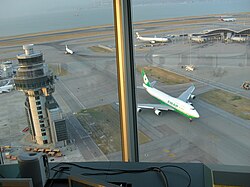
To meet growing demand, the airport implemented a Master Plan 2030. A pivotal part of this growth was the transition from a two-runway system to a three-runway system. This expansion involved extensive land reclamation of Lantau Island, Lam Chau, and Chek Lap Kok.
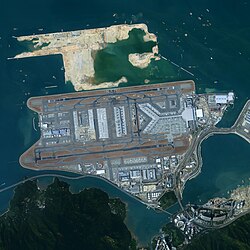
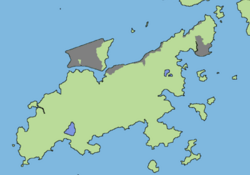
The completion of this system allows for simultaneous three-runway operations, significantly increasing the airport's capacity for aircraft movements and passenger handling.
Cargo and Logistics Powerhouse
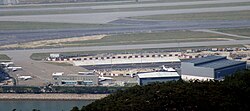
Hong Kong International Airport is not only a passenger hub but also one of the busiest cargo airports globally. It features massive dedicated facilities including SuperTerminal 1, the Asia Airfreight Terminal, and the DHL Central Asia Hub.
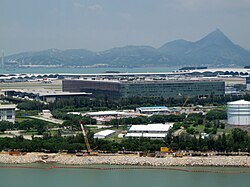
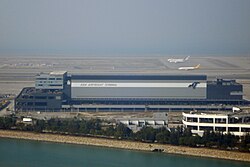
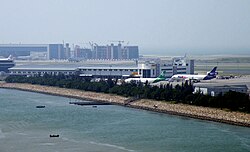
The cargo sector is supported by a diverse range of operators, from global giants like UPS and FedEx to specialized carriers like Polar Air Cargo and Kalitta Air, ensuring the seamless flow of trade across the Pacific and Europe.
Intermodal Transportation
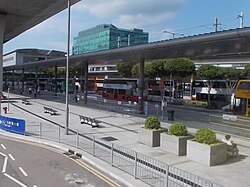
The airport is designed as an intermodal hub, offering multiple ways to reach the city center and neighboring regions:
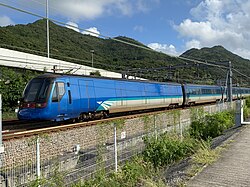
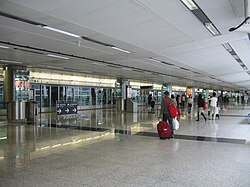
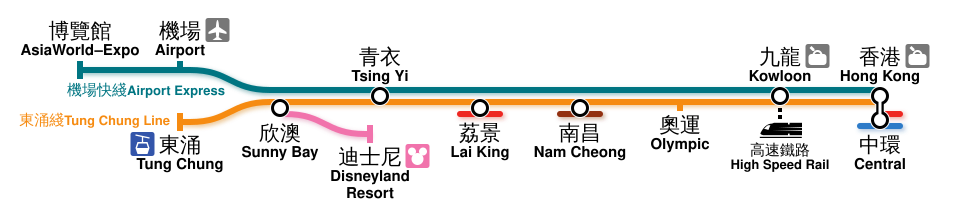
- Rail: The Airport Express provides a high-speed connection between the airport and the Central business district.
- Water: The Skypier allows passengers to transfer directly to ferries.
- Road: A comprehensive bus network and three distinct types of taxis serve the terminal.
- Regional Links: The Mainland/Macao Transport and Travel Services Centre in Terminal 2 facilitates coach travel to Macau and Mainland China.
Airport Summary and Statistics
The following table provides a snapshot of the airport's operational capacity and recent performance.
| Metric | Current / 2025 Value | Ultimate Capacity |
|---|---|---|
| Annual Passengers | 60,992,000 | 120,000,000 |
| Annual Cargo (Tonnes) | 5,070,000 | 10,000,000 |
| Aircraft Movements | 394,730 | N/A |
| Passenger Stands | 118 | N/A |
| Cargo Stands | 69 | N/A |
Frequently Asked Questions
What are the IATA and ICAO codes for Hong Kong International Airport?
The IATA code is HKG and the ICAO code is VHHH.
How many runways does the airport currently operate?
The airport operates a three-runway system, with each runway measuring 3,800 meters (12,467 ft) in length.
What is the fastest way to get to the city center from the airport?
The Airport Express rail link is the primary high-speed connection to the central business district of Central.
Which airlines use HKG as a primary hub?
Major hub airlines include Cathay Pacific, Air Hong Kong, DHL Aviation, Greater Bay Airlines, HK Express, Hong Kong Airlines, Kalitta Air, Polar Air Cargo, and UPS Airlines.
What is the ultimate passenger capacity of the airport?
The airport is designed to eventually handle up to 120 million passengers annually.