Honeyguides: The Remarkable Birds That Lead Humans to Honey
In the tropical forests and savannas of Africa and Asia, there exists a family of birds with a talent unlike any other in the avian world. The honeyguides (family Indicatoridae) are a group of 16 species known for their specialized diets and a legendary ability to cooperate with humans to locate bee colonies.
While most birds avoid the danger of stinging insects, honeyguides have evolved to thrive on the rewards of the hive. From their unique taxonomic placement to their complex social behaviors, these birds offer a fascinating glimpse into the evolution of interspecies cooperation.
Key Facts
- Species Count: 16 species distributed across Africa and Asia.
- Unique Diet: Among the few birds that regularly consume beeswax.
- Mutualism: Certain species lead humans to beehives in exchange for leftover wax and larvae.
- Breeding: All known species are brood parasites, meaning they lay eggs in other birds' nests.
- Taxonomy: Part of the order Piciformes, sharing a lineage with woodpeckers and barbets.
Taxonomy and Physical Characteristics
Honeyguides belong to the order Piciformes. Morphologically, they are unique among non-passerines because they possess only nine primaries (the outermost flight feathers). While they share a barbet-like structure, they are distinct in their behavior and ecological niche.
Visually, most honeyguides are a dull greenish-brown, though some, such as the yellow-rumped honeyguide of the Himalaya, feature bright yellow plumage patches. A defining characteristic across the family is the light-colored outer tail feathers, which are white in African species and pale grey in Asian species.
The size variation within the family is significant:
- Smallest by mass: Green-backed honeyguide (average 10.2 g).
- Smallest by length: Cassin's honeyguide (average 10 cm).
- Largest by mass: Lyre-tailed honeyguide (54.2 g).
- Largest by length: Greater honeyguide (19.5 cm).
Diet and Specialized Feeding
The most striking biological feature of the honeyguide is its ability to digest wax. While most species eat beeswax, those in the genus Prodotiscus likely feed on the waxy secretions of scale insects. Their diet also includes waxworms (larvae of the waxmoth Galleria mellonella), spiders, flying and crawling insects, and occasionally fruit.
To access bee colonies without human help, honeyguides rely on thick skin for limited protection against stings. They typically visit nests in the early morning when cooler temperatures make bees less active, or they scavenge from abandoned hives.
The Art of Guiding: Human-Bird Mutualism
The family takes its name from the remarkable behavior of one or two species—most notably the greater honeyguide—which deliberately lead humans to bee colonies. Once humans open the hive and take the honey, the bird feasts on the remaining beeswax and grubs.
This relationship is a sophisticated form of mutualism (a symbiotic relationship where both species benefit). In northern Tanzania, the Hadza hunter-gatherers use specific calls to attract these birds. Research indicates that this partnership increases the rate of finding bee colonies by 560% and leads to higher-yielding nests.
Interestingly, the Hadza may intentionally hide or destroy honeycombs to keep the birds hungry, ensuring they remain motivated to guide humans in the future. Some scientists suggest this co-evolution may date back 1.9 million years to Homo erectus.
While reports of honeyguides leading honey badgers to hives exist, the evidence is debated. A 2023 study by the Zoological Society of London suggests that while difficult to observe, these interactions likely occur in localized areas based on community accounts from the Hadzabe and Maasai people.
Brood Parasitism and Breeding
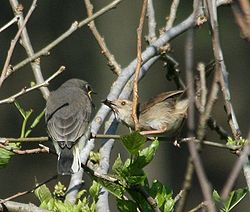
Honeyguides do not build their own nests. Instead, they are brood parasites, laying their eggs in the nests of other species. Most target hole-nesting birds like woodpeckers and barbets, though the genus Prodotiscus targets cup-nesters such as warblers and white-eyes.
The survival strategy of the honeyguide chick is brutal. They are born with needle-sharp hooks on their beaks, which they use to puncture the host's eggs or kill the host's nestlings. In some African species, the mother internally incubates the egg for an extra day before laying it, ensuring her chick hatches first and has a developmental advantage.
Summary of Honeyguide Characteristics
| Feature | Details |
|---|---|
| Distribution | Old World tropics (primarily Africa, some in Asia) |
| Primary Diet | Beeswax, waxworms, insects, and spiders |
| Key Behavior | Guiding humans to bee colonies (specific species) |
| Reproduction | Obligate brood parasitism |
| Distinctive Trait | Nine primary flight feathers |
Frequently Asked Questions
Do all honeyguides lead humans to honey?
No. While the entire family is named "honeyguides," this specific guiding behavior is only documented in one or two species, such as the greater honeyguide.
How do honeyguides survive bee stings?
They have thick skin that provides limited protection. To further minimize risk, they often visit hives in the early morning when bees are less active or utilize abandoned nests.
What is brood parasitism?
Brood parasitism is a breeding strategy where a bird lays its eggs in the nest of another species, forcing the host parents to raise the parasitic chick as their own.
Why do honeyguides sometimes lead humans to snakes?
It has been observed that honeyguides occasionally lead humans to animals other than bees, such as snakes, though the scientific reason for this behavior remains unclear.
How do honeyguide chicks eliminate their competition?
Honeyguide chicks use specialized, needle-sharp hooks on their beaks to kill the host's eggs or hatchlings shortly after they emerge from the shell.