Holozoa: The Evolutionary Bridge Between Single-Celled Protists and Animals
The transition from a single cell to a complex, multicellular organism is one of the most significant events in the history of life on Earth. At the center of this transition is Holozoa, a diverse clade of organisms that includes all animals (Metazoa) and their closest single-celled relatives. Together, these organisms comprise over 1.5 million species, the vast majority of which are animals, while a few hundred are unicellular protists.
Holozoa is part of a larger eukaryotic supergroup called Opisthokonta, which also includes fungi. However, Holozoa specifically excludes fungi, focusing instead on the lineage that led directly to the animal kingdom. By studying these single-celled relatives, scientists can piece together the genetic and structural blueprints that allowed the first animals to emerge.
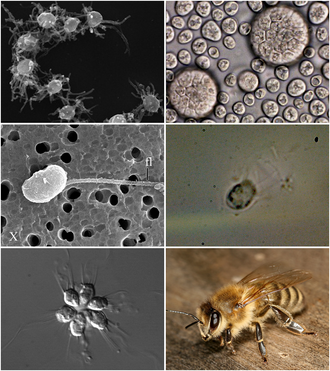
Key Facts
- Composition: Includes animals (Metazoa) and unicellular protists like choanoflagellates and filastereans.
- Diversity: Over 1.5 million species in total, including approximately 300 unicellular species.
- Timeline: Diverged from their opisthokont ancestor roughly 1,070 million years ago.
- Closest Relative: Choanoflagellates are recognized as the closest living relatives to animals.
- Defining Trait: Purely heterotrophic organisms (they must consume organic matter for energy).
The Composition of Holozoa
Holozoa is defined as the clade encompassing all relatives of Homo sapiens (humans) but excluding Neurospora crassa (a fungus). This group is composed of several distinct lineages, ranging from complex multicellular animals to specialized single-celled predators.
Metazoa (Animals)
The most well-known members of Holozoa, Metazoa include over 1.5 million species. They are characterized by a blastula phase (an early embryonic stage) and, with the exception of sponges, the development of differentiated tissues and germ layers.
Choanoflagellata
With about 250 species, choanoflagellates are the closest living relatives of animals. These flagellates can be free-living or colonial. They use a "collar" of microvilli to capture bacteria, a structure strikingly similar to the collar cells found in sponges.
Ichthyosporea (Mesomycetozoea)
Consisting of around 40 species, these organisms are primarily parasites or commensals that interact with humans, fish, and marine invertebrates. They typically reproduce via multinucleated colonies and disperse as amoebae or flagellates.
Filasterea and Pluriformea
Filasterea includes six amoeboid species characterized by thread-like pseudopods. Pluriformea includes genera such as Syssomonas and Corallochytrium. Additionally, the recently discovered Tunicaraptor unikontum is a flagellate with a unique "mouth" structure not seen in other holozoans.
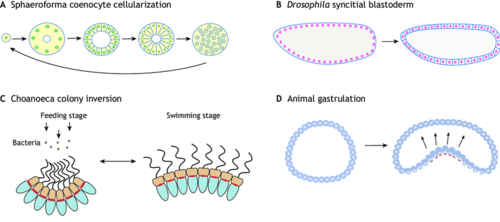
Genetics and the Path to Multicellularity
Comparing the genomes of unicellular holozoans and animals reveals how the "toolkit" for animal life was assembled. For example, the genome of the choanoflagellate Monosiga brevicollis is roughly 41.6 mega-base-pairs (Mbp), which is comparable to filamentous fungi, whereas animal genomes are generally much larger.
Crucially, many proteins once thought to be animal-specific are actually present in single-celled holozoans. These include adhesion proteins like cadherin and integrin, which allow cells to stick together to form tissues. Furthermore, transcription factors such as p53 and T-box, which regulate gene expression in animals, are also found in these unicellular relatives.
Evolutionary History and Phylogeny
Holozoans diverged from their common ancestor with fungi approximately 1.07 billion years ago. The evolutionary tree is structured into several nested clades:
- Filozoa: A group comprising filastereans, choanoflagellates, and animals.
- Choanozoa: A more specific clade consisting of choanoflagellates and animals.
Recent environmental DNA surveys of the oceans have uncovered new lineages, including a potential new group tentatively named MASHOL (marine small Holozoa), suggesting that the diversity of this clade is even greater than previously thought.
Summary of Holozoan Groups
| Group | Cellularity | Key Characteristics | Example/Genus |
|---|---|---|---|
| Metazoa | Multicellular | Blastula phase, differentiated tissues | Apis (Honey bee) |
| Choanoflagellata | Unicellular/Colonial | Collar of microvilli, closest animal relative | Salpingoeca |
| Ichthyosporea | Unicellular/Colonial | Often parasitic or commensal | Amoebidium |
| Filasterea | Unicellular | Thread-like pseudopods | Capsaspora |
| Pluriformea | Unicellular | Diverse predatory protists | Syssomonas |
Frequently Asked Questions
What is the difference between Holozoa and Opisthokonta?
Opisthokonta is a larger supergroup that includes both Holozoa and Holomycota (fungi and their relatives). Holozoa is a specific branch within Opisthokonta that contains only animals and their closest single-celled relatives, excluding fungi.
Why are choanoflagellates important to evolutionary biology?
Choanoflagellates are the closest living relatives of animals. Their ability to form colonies and their use of "collar" cells—which mirror the cells found in sponges—provide vital clues about how multicellular animals first evolved.
Do single-celled holozoans have "animal" genes?
Yes. Many unicellular holozoans possess genes for cell-cell adhesion (like cadherins) and transcription factors (like p53) that were previously believed to exist only in multicellular animals.
When did Holozoa first appear?
Evidence suggests that Holozoa diverged from their common ancestor with fungi approximately 1,070 million years ago during the Proterozoic eon.
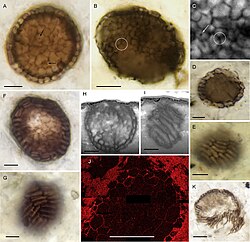
What is the significance of the fossil Bicellum brasieri?
Bicellum brasieri is a fossilized sample approximately one billion years old and is considered a potential early holozoan, offering a glimpse into the ancient history of the lineage.