The Legacy of the Tribesmen: A History of Galway Football
In the world of Gaelic games, few teams carry as much prestige and history as the Galway senior football team. Known affectionately as The Tribesmen, Galway holds a distinguished place in the sport as the first county from Connacht to win the All-Ireland Senior Football Championship (SFC)—the premier competition for Gaelic football in Ireland. With nine All-Ireland titles to their name, they rank as the third most successful team in history, trailing only the powerhouses of Kerry and Dublin.
From their early struggles with walkovers to the glory of "three-in-a-row" victories, Galway's journey is a testament to resilience and sporting excellence. Today, under the management of Pádraic Joyce, the team continues to compete at the highest level, playing their home matches at Pearse Stadium in Salthill.
The Early Years and the Road to Recognition
The All-Ireland SFC began in 1887, but Galway's start was far from seamless. In the earliest iterations of the tournament, counties were represented by their winning club champions. Because the Galway championship did not start until 1889, the county lacked official representatives for several years. This led to a series of missed opportunities; Galway failed to play scheduled matches against Wexford in both 1887 and 1890, resulting in walkovers for their opponents.
It took thirteen years for Galway to play its first actual match in the competition. In 1900, after reaching the "Home" final via a series of byes, they faced Tipperary, losing 2–17 to 0–1. The tide began to turn in 1901 with the establishment of the Connacht SFC, the provincial championship that determines the representative for the west of Ireland. While they struggled initially, Galway finally claimed the Connacht title in 1911 by defeating Roscommon 1–03 to 1–02.
The First All-Ireland Triumphs (1919–1938)
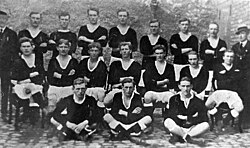
Galway's first venture into an All-Ireland final occurred in 1919, where they fell to Kildare. However, their first official title in 1925 arrived through one of the most convoluted sequences in GAA history. Following a series of disputes and disqualifications involving Kerry and Cavan, the final was not actually played until January 10, 1926. Despite the administrative chaos, Galway emerged as the outright winners.
The 1930s saw Galway solidify its status as a national force. In 1934, they defeated Dublin 3–5 to 1–9, bringing the Sam Maguire Cup—the trophy awarded to the All-Ireland champions—to Connacht for the first time since the trophy's introduction in 1928. They added a third title in 1938 after a replay against Kerry, winning 2–4 to 0–7.
The Golden Era and the Three-in-a-Row
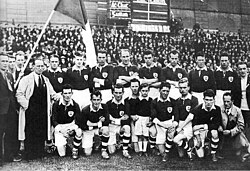
The 1960s marked a pinnacle of success for the Tribesmen. After a narrow semi-final loss to Kerry in 1960, Galway entered a period of unprecedented dominance. The year 1966 stands as one of their most successful, culminating in a comfortable 1–10 to 0–7 victory over Meath in the final. This win completed a historic "three-in-a-row," with All-Ireland titles secured in 1964, 1965, and 1966.
While the 1970s and 1980s brought continued provincial success—including five Connacht titles in the 1980s—the team struggled to convert this into national titles. They reached the All-Ireland finals in 1971, 1973, and 1974, but were defeated by Offaly, Cork, and Dublin, respectively.
Modern Resurgence: 1998 to 2001
After a period of relative slump, Galway returned to the summit of Irish football under manager John O'Mahony. In 1998, the team entered the final as underdogs against a Kildare side coached by the legendary Mick O'Dwyer. Led by standout performances from Jarlath Fallon, Michael Donnellan, and a young Pádraic Joyce, Galway won 1–14 to 1–10, ending a 32-year drought for Connacht.
The team remained competitive into the new millennium, but their 2001 victory was particularly notable due to a rule change. The GAA introduced a qualifier system, often called the "back door," which allowed teams knocked out of their provincial championships a second chance to reach the All-Ireland stages. After being eliminated from the Connacht SFC by Roscommon, Galway fought through the qualifiers to eventually defeat Meath 0–17 to 0–8 in the final.
The Contemporary Era and the Pádraic Joyce Era
Following the departure of John O'Mahony in 2004, Galway experienced varying degrees of success under managers such as Peter Ford, Liam Sammon, and Kevin Walsh. While they regained several Connacht titles, they struggled to maintain consistency outside their own province.
In 2019, former star player Pádraic Joyce took over as manager with the explicit goal of winning another All-Ireland title. His tenure has navigated the challenges of the COVID-19 pandemic, which disrupted the 2020 season and forced the rearrangement of fixtures. As of 2025, Galway continues to be a formidable contender, recently competing in the All-Ireland Quarter-Finals and maintaining a strong presence in National Football League Division 1.
Galway Football Summary
| Category | Detail |
|---|---|
| All-Ireland SFC Titles | 9 (1925, 1934, 1938, 1956, 1964, 1965, 1966, 1998, 2001) |
| National League Titles | 1 (1981) |
| Current Manager | Pádraic Joyce |
| Current Captain | John Maher |
| Home Venue | Pearse Stadium, Salthill |
| NFL Division (2026) | Division 1 (5th Place) |
The Galway Panel and Management
The current squad is a blend of experienced veterans and emerging talent. The 2025 roster features key players such as goalkeeper Conor Flaherty, captain Seán Kelly at centre-back, and the prolific Shane Walsh at full-forward. The management team supporting Pádraic Joyce includes selectors John Concannon, John Divilly, and Micheál Ó Domhnaill, with Mickey Graham serving as coach and David Morris as assistant coach.
With a rich history of dynasties and a legacy of legendary players—from the "Team of the Millennium" icons like Seán Purcell and Frank Stockwell to modern stars—Galway remains a cornerstone of the Gaelic football tradition.