Hippopotamid Evolution and Taxonomy
The story of the hippopotamids is one of survival and adaptation. These massive semiaquatic mammals are the last remnants of a diverse lineage that once spanned multiple continents. From their origins in the late Miocene to their current distribution, the evolutionary journey of the hippo reveals a complex relationship with the changing landscapes of the ancient world.
Evolutionary Origins
Hippopotamids descended from the anthracotheres, a family of artiodactyls (even-toed ungulates) that were both terrestrial and semiaquatic. Appearing in the late Eocene, anthracotheres are believed to have resembled hippos with narrower or smaller heads. The distinct hippopotamid lineage split from these ancestors during the Miocene epoch.
The earliest records of the family Hippopotamidae date back approximately 7.4 million years in Afro-Arabia. By around 6 million years ago, these animals had expanded their range into Eurasia. Scientists have theorized that this radiation was linked to the expansion of C4 grasslands—a process known as the hippopotamine event (HE), suggesting a coevolution between the animals and their changing environment.
As hippopotamids rose, the remaining anthracotheres declined due to a combination of competition with their descendants and shifting climatic conditions. This decline continued until the final genus, Merycopotamus, became extinct in India during the early Pliocene.
Modern Species and Lineages
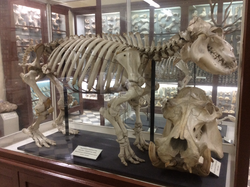
While the fossil record shows a wide variety of ancestral species, only two survive in the modern era: the common hippo (Hippopotamus amphibius) and the pygmy hippo (Choeropsis liberiensis). These two species represent the last survivors of two distinct evolutionary lineages—the hippos proper and the pygmy hippos.
Although these lineages are sometimes categorized as subfamilies, their exact relationship remains unresolved, other than the fact that they are distant relatives. Other prehistoric genera, such as the Miocene Kenyapotamus, remain enigmatic due to a lack of sufficient data for certain phylogenetic placement. Similarly, the genus Hexaprotodon, currently found in South and Southeast Asia, previously included various fossil species that are now considered unrelated.
Taxonomic Classification
Within the order Artiodactyla, hippopotamids occupy a specific branch that highlights their surprising biological connections. They belong to the clade Whippomorpha, which reveals that their closest living relatives are not other hoofed mammals, but rather the Cetacea (whales).
| Rank/Group | Classification |
|---|---|
| Order | Artiodactyla |
| Clade | Artiofabula |
| Clade | Cetruminantia |
| Clade | Whippomorpha |
| Family | Hippopotamidae |
Analogous Structures: The Hippo Tusk
An interesting example of convergent evolution—where unrelated species evolve similar traits—can be seen in the lower canine teeth of hippopotamids. These teeth are similar in structure and function to the tusks of elephants.
Despite being very distantly related within the class Mammalia, both hippos and elephants developed long, slightly curved lower canines. Both families utilize these powerful structures primarily for fighting, demonstrating how different evolutionary paths can arrive at the same biological solution for combat.
Key Facts
- Ancestry: Descended from anthracotheres, which appeared in the late Eocene.
- Timeline: Oldest records date to 7.4 million years ago in Afro-Arabia.
- The Hippopotamine Event: A theory linking hippo radiation to the spread of C4 grasslands.
- Surviving Species: Only Hippopotamus amphibius and Choeropsis liberiensis remain.
- Closest Relatives: Taxonomically grouped with whales in the clade Whippomorpha.
- Dental Adaptation: Lower canines function similarly to elephant tusks for fighting.
Frequently Asked Questions
Who are the ancestors of the hippopotamus?
Hippopotamids descended from anthracotheres, a family of semiaquatic and terrestrial artiodactyls that first appeared in the late Eocene.
What is the "hippopotamine event"?
The hippopotamine event (HE) is the theory that the radiation of hippopotamids during the Late Miocene coevolved with the expansion of C4 grasslands.
How many species of hippopotamids exist today?
There are only two surviving species: the common hippo (Hippopotamus amphibius) and the pygmy hippo (Choeropsis liberiensis).
Are hippos related to whales?
Yes, taxonomically they are both part of the clade Whippomorpha within the larger group Cetruminantia.
Why are hippo teeth compared to elephant tusks?
They are considered analogous structures because both are long, slightly curved lower canines used for fighting, despite the two animals being only distantly related.