Highland Park–Overlee Knolls: A Historic Residential Gem of Arlington
Nestled in the heart of North Arlington, Virginia, the Highland Park–Overlee Knolls historic district—historically known as Fostoria—stands as a testament to the evolution of American residential suburbs. Spanning over 180 acres, this neighborhood offers a rich architectural tapestry that reflects the changing tastes and urban development patterns of the late 19th and mid-20th centuries.
The Origins of Fostoria
The district's history began in 1890 with the platting of its first subdivision, Fostoria. This development was spearheaded by the Fostoria Land and Improvement Company, incorporated in November of that year. The company was led by President William E. Abbott and Secretary James M. Hoge, with Madison A. Ballinger serving as the real estate broker.
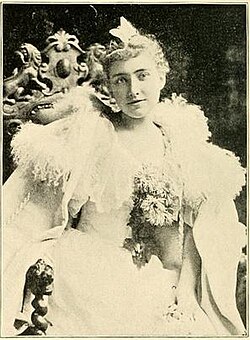
Madison A. Ballinger was a prominent figure in Washington, D.C. society. His influence was mirrored in his own home, which he famously decorated in red, white, and blue to honor the Daughters of the American Revolution, an organization where his wife served as the President of the Continental Chapter.
Growth and Expansion
While Fostoria laid the foundation, the district expanded through a series of subsequent subdivisions over the next several decades. These additions transformed the area into the diverse residential community seen today. Key expansions included:
- Over-Lee Knolls (1926)
- Section Two Over-Lee Knolls (1927)
- Richmond Hill Section Three (1946)
- Richmond Hill Section Four (1947)
- Highland Park Village (1947)
Beyond the residential plots, the district also includes Parkhurst Park, established in 1939, providing a communal green space for the neighborhood.
Architectural Diversity
The district is characterized by a wide array of single-family dwellings constructed by various speculative builders and developers. This variety has resulted in a collection of homes that showcase several iconic architectural styles, ranging from the ornate to the minimalist.
Prominent styles found within the district include Queen Anne and Italianate from the earlier periods, alongside Colonial Revival, Craftsman, and Tudor Revival. The district also features homes from the Modern Movement, illustrating the transition toward mid-century design.
| Feature | Details |
|---|---|
| Total Area | 180.7 acres (73.1 ha) |
| Construction Period | 1890 to circa 1960 |
| Contributing Resources | 681 buildings, 3 sites, 1 structure |
| NRHP Reference No. | 11000548 |
| VLR Number | 000-9703 |
Key Facts
- Located in Arlington County, Virginia, directly east of the Virginia Heights Historic District.
- Listed on the National Register of Historic Places (NRHP) on August 18, 2011.
- Designated as a Virginia Landmarks Register (VLR) site on June 16, 2011.
- Bounded by 22nd St. N., N. Lexington St., 16th St. N., N. Longfellow St., McKinley Rd., I-66, and N. Quantico St.
- The district is part of the broader "Historic Residential Suburbs in the United States, 1830-1960" Multiple Property Submission (MPS).
Frequently Asked Questions
What is the other name for the Highland Park–Overlee Knolls district?
The district is also known as Fostoria, which was the name of the first subdivision platted in the area in 1890.
Which architectural styles are represented in the neighborhood?
The neighborhood features a diverse mix of styles, including Queen Anne, Italianate, Colonial Revival, Craftsman, Tudor Revival, and the Modern Movement.
When was the district officially recognized as historic?
It was designated as a Virginia Landmarks Register site on June 16, 2011, and added to the U.S. National Register of Historic Places on August 18, 2011.
Who were the key figures in the early development of the area?
The Fostoria Land and Improvement Company was led by President William E. Abbott, Secretary James M. Hoge, and real estate broker Madison A. Ballinger.
What are the boundaries of the historic district?
The district is roughly bounded by 22nd St. N., N. Lexington St., 16th St. N., N. Longfellow St., McKinley Rd., I-66, and N. Quantico St. in Arlington, Virginia.