Highland Clearances: The Forced Displacement of Scotland's Rural Population
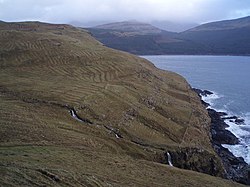
Between 1750 and 1860, the landscape of the Scottish Highlands underwent a traumatic transformation known as the Highland Clearances. This period was marked by the systematic eviction of tenants from their ancestral lands to make way for more profitable ventures, primarily large-scale sheep farming. What began as a series of "removals" evolved into a widespread social crisis that fundamentally altered the demographics of northern Scotland and fueled mass emigration to North America and Australia.
The term "clearance" itself was not widely used until the 1840s, when it became a derogatory descriptor for the activities of landlords. While some viewed it as the sudden displacement of entire communities, others applied it to the eviction of single tenants. Today, historians define it broadly as any displacement of occupiers by Highland landlords, whether forced or voluntary, resulting in resettlement or emigration.
Key Facts
- Timeline: Primarily occurred between 1750 and 1860.
- Primary Driver: The shift from traditional tenant farming to large-scale sheep grazing.
- Population Peak: The Highland population peaked around 1851 at approximately 300,000 people.
- Major Crisis: The potato blight of 1846–1856 exacerbated famine and forced mass emigration.
- Legal Resolution: The Crofters' Holdings (Scotland) Act 1886 finally granted security of tenure to crofters.
The Drivers of Displacement
The Clearances were not caused by a single event but by a convergence of economic, social, and environmental pressures.
Economic Shifts and Landlord Debt
Agriculture in the Highlands was historically marginal, leaving communities vulnerable to famine. As the 19th century progressed, many hereditary landowners fell into deep debt. The rise of a modern banking system allowed landlords to borrow more freely, but it also made lenders more likely to foreclose. By the end of the 1850s, over two-thirds of Highland estates had changed hands, often bought by a new class of landowners who viewed the land purely as a financial asset.
![The Lowland improver Lady Grisell Baillie (1665–1744) and Sheriff Donald MacLeod (1745–1834), laird of Geannies, a keen improver, the law officer involved in the 1792 Ross-shire Insurrection, and a widely respected proprietor[1]: 114–135](/images/19/02/1902f1f3cf93167f48631255d7d2dc55acd9026c39c65dd39668898a0094e399.png)
Overpopulation and Malthusian Theory
Population growth continued steadily through the 18th century. Initially, landlords viewed a large population as an asset for military recruitment and labor. However, after 1815, the consensus shifted. Influenced by Malthusian ideas—which suggested that population growth would eventually outstrip food supply—surplus population was rebranded as a liability. By 1841, a House of Commons committee estimated that crofting parishes had a surplus of 45,000 to 60,000 people.
The Collapse of Industry and Famine
The Western Isles saw an 80% population increase between 1755 and 1821, coinciding with the rise of the kelp industry. When this industry collapsed, it left a densely populated region in extreme poverty. Simultaneously, the region became heavily dependent on the potato, which offered four times the yield of oats. When potato blight struck in 1846, it triggered a famine of unprecedented scale; by the end of that year, an estimated three-quarters of the population in the north-west Highlands and Hebrides had nothing to eat.
Phases of Eviction and Resistance
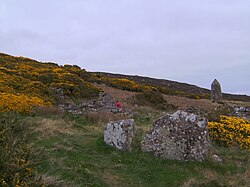
The process of clearance varied by region and landlord. Some, like the Macdonald estate on Skye, were initially reluctant to follow the advice of "improvers," while others pursued rapid results through aggressive means.
The Sutherland Clearances
One of the most notorious examples occurred on the Sutherland estate. Under the influence of advisors William Young and Patrick Sellar, thousands were removed. In 1814 alone, an estimated 2,000 people (430 families) were cleared from Strathnaver and Brora. Sellar, acting as a factor (an estate manager), famously bid for the lease of the very sheep farms he was tasked with clearing.
Resistance and the "Year of the Sheep"
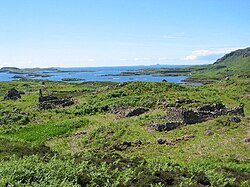
The displaced did not always leave quietly. In 1792, tenant farmers from Strathrusdale led a major protest by driving over 6,000 sheep off the land surrounding Ardross. This organized action was a response to sheep farmers impounding the cattle of local tenants, signaling a growing desperation among the rural population.

The Legacy of Emigration
For many, the only alternative to starvation or homelessness was emigration. Between 1846 and 1856, landlords provided "assisted passages" for nearly 11,000 destitute tenants. Another 5,000 were sent to Australia via the Highland and Island Emigration Society, alongside countless others who paid their own way.
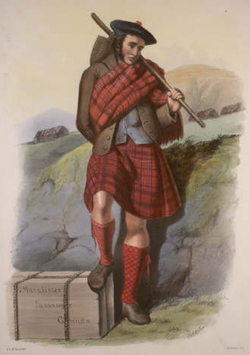
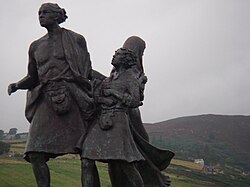
This mass exodus left a permanent mark on the Scottish landscape, leaving behind ruined croft houses and a legacy of grief. However, it also created vibrant Scottish diaspora communities across the globe.
| Driver | Impact | Result |
|---|---|---|
| Agricultural Shift | Transition from cattle/crofts to sheep | Mass evictions of tenants |
| Potato Blight | Crop failure (1846–1856) | Severe famine and assisted emigration |
| Financial Debt | Landlord bankruptcy | Sale of estates to profit-driven owners |
| Demographics | Population peak of 300,000 (1851) | Perception of "surplus population" |
Frequently Asked Questions
What were the Highland Clearances?
The Highland Clearances were the forced displacement of the rural population from the Scottish Highlands and Islands between 1750 and 1860, primarily to make room for large-scale sheep farming.
Why did landlords evict their tenants?
Landlords were driven by economic gain, as sheep farming was more profitable than small-scale tenant farming. Many were also facing enormous debts and sought to maximize their estate income to avoid bankruptcy.
How did the potato famine affect the Clearances?
The potato blight of 1846 caused widespread starvation. This crisis made the population more vulnerable, leading the government and landlords to view permanent emigration as the only viable solution to the famine.
What was the Crofters' Holdings (Scotland) Act 1886?
This Act was a landmark piece of legislation that granted security of tenure to crofters, effectively ending the era of the Clearances by preventing arbitrary evictions.
Where did the evicted people go?
Many were resettled in poorer coastal areas, while thousands emigrated to Canada, the United States, Australia, and New Zealand, often with financial assistance from their landlords.