Heavy Water Sabotage: The Allied Campaign to Stop the Nazi Nuclear Program
During World War II, a desperate race for nuclear capability unfolded in the shadows of the Norwegian mountains. At the center of this conflict was heavy water (deuterium oxide), a critical moderator required for certain types of nuclear reactors to produce plutonium. Because the German research community concluded that commercially available graphite was too impure for their needs, the Vemork plant in Norway became the world's most vital source of this rare substance.
The struggle to deny Nazi Germany access to heavy water involved a series of daring intelligence operations, failed airborne assaults, and a legendary act of sabotage that remains a cornerstone of special operations history.
Key Facts
- Primary Target: The Vemork plant operated by Norsk Hydro in Norway.
- Critical Material: Heavy water, used as a moderator in nuclear reactors.
- Major Operations: Grouse, Freshman, and Gunnerside.
- Final Blow: The sinking of the ferry SF Hydro in February 1944.
- Outcome: Over 500 kg of heavy water destroyed and production severely disrupted.
Pre-Invasion Efforts and the French Connection
Before the full-scale invasion of Norway, French military intelligence (the Deuxième Bureau) recognized the danger of German nuclear ambitions. In 1940, three French agents coordinated with Axel Aubert, the general director of Norsk Hydro, to remove the existing global supply of 185 kg of heavy water from the Vemork plant.
The transport was a high-stakes gamble, as German military intelligence (the Abwehr) was already active in Norway. The material was smuggled to Oslo, then to Perth, Scotland, and finally to France. Following the invasion of France, scientist Frédéric Joliot-Curie hid the material in a bank vault and later a prison before it was successfully evacuated to Falmouth, Cornwall, aboard the British steamer Broompark on June 21, 1940.
The First Attempts: Operations Grouse and Freshman
By October 1942, the British Combined Operations Headquarters launched a two-phase plan to destroy the Vemork plant. The first phase, Operation Grouse, involved parachuting a four-man team of Norwegian commandos from the SOE's Kompani Linge into the wilderness. Despite being dropped in the wrong location and facing extreme conditions, the team successfully navigated to the area.
The second phase, Operation Freshman, was intended to be the killing blow. On November 19, 1942, two Airspeed Horsa gliders carrying Royal Engineers were towed by Halifax bombers toward Lake Møsvatn. The mission was a disaster: poor visibility and equipment failure led to crashes. The survivors were captured by the Gestapo and executed under Hitler's Commando Order.
While Operation Freshman failed, it alerted the Germans to the Allied interest in the plant, leading to increased security. Meanwhile, the Grouse team survived in the mountains, subsisting on moss, lichen, and a captured reindeer.
Operation Gunnerside: The Successful Strike
In February 1943, the British launched Operation Gunnerside. Six additional Norwegian commandos were dropped to join the surviving Grouse team (now known as the Swallow team). Using detailed plans provided by an internal agent, the saboteurs avoided the heavily guarded bridge and instead climbed a steep ravine from the frozen Måna river.
The team entered the plant through a cable tunnel and a window, encountering only a cooperative Norwegian caretaker. They planted explosives on the electrolysis chambers—the equipment used to separate heavy water from normal water—and detonated them on the night of February 27–28, 1943.
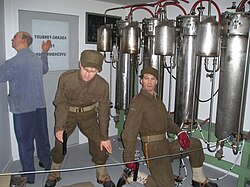
The raid destroyed over 500 kg of heavy water and the critical electrolysis equipment. To protect the local population from reprisals, the commandos left behind a Thompson submachine gun to signal that the attack was a British operation. All commandos escaped, with some skiing 322 km to safety in Sweden.
Air Raids and the Sinking of the SF Hydro
Production resumed by April 1943, prompting the USAAF to launch massive bombing raids. In November, 143 B-17 bombers attacked Vemork, while B-24 bombers targeted the Rjukan hydro-electric power station. These raids eventually convinced the Germans to abandon the plant and move the remaining heavy water stocks to Germany in 1944.
To stop the final shipment, commando Knut Haukelid and two recruits sabotaged the railway ferry SF Hydro. They attached 8.5 kg of plastic explosives to the ship's keel. On February 20, 1944, the ferry sank in Lake Tinn, taking the heavy water with it.
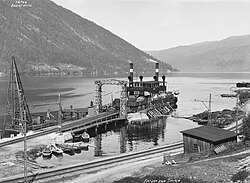
Although 18 people died in the sinking, the mission achieved its goal. A 2005 expedition recovered a barrel from the lakebed, confirming that the shipment contained actual heavy water rather than decoys.
Summary of Allied Operations at Vemork
| Operation/Event | Date | Primary Objective | Outcome |
|---|---|---|---|
| French Extraction | 1940 | Remove existing 185 kg stockpile | Successful; material moved to UK |
| Operation Grouse | Oct 1942 | Establish advance force in Norway | Successful; team survived in wilderness |
| Operation Freshman | Nov 1942 | Glider assault on Vemork plant | Failure; gliders crashed, personnel executed |
| Operation Gunnerside | Feb 1943 | Destroy electrolysis chambers | Successful; 500+ kg of heavy water lost |
| USAAF Air Raids | Nov 1943 | Bomb Vemork and Rjukan stations | Extensive damage; Germans abandoned plant |
| Sinking of SF Hydro | Feb 1944 | Destroy final shipment of heavy water | Successful; ferry sank in Lake Tinn |
Frequently Asked Questions
Why was heavy water so important to the German nuclear program?
Heavy water acts as a moderator, which slows down neutrons to sustain a nuclear chain reaction. Because the Germans found their available graphite was too impure to serve this purpose, heavy water was the only viable alternative for their reactors.
What happened to the survivors of Operation Freshman?
The survivors of the glider crashes were captured by the Gestapo, tortured, and subsequently executed under Adolf Hitler's Commando Order, which mandated the death of all captured Allied commandos.
How did the Gunnerside team enter the plant undetected?
Instead of using the guarded bridge, the team descended into a deep ravine, crossed the icy Måna river, and climbed a steep hill. They then followed a railway track directly into the plant, entering through a cable tunnel and a window.
Was the SF Hydro shipment a decoy?
While some barrels floated after the sinking, leading to speculation that they were decoys, a 2005 recovery expedition retrieved a barrel that matched the heavy water concentrations recorded in German documents, confirming it was a genuine shipment.
Who was the key figure in the sinking of the SF Hydro?
Knut Haukelid, a trained commando, led the mission. He recruited two others to plant plastic explosives on the keel of the ferry to ensure the heavy water reached the bottom of Lake Tinn.