Havana: The Vibrant Capital of Cuba

Havana: The Vibrant Capital of Cuba

Havana (Spanish: La Habana) serves as the capital and largest city of Cuba. Positioned as the country's primary port and commercial hub, it is the most populous city and the largest by area in the Caribbean region. Known for its rich tapestry of history, culture, and striking architecture, Havana is a city where colonial grandeur meets modern resilience.

The city is a major global destination, attracting over a million international tourists annually. Its historical core, Old Havana, is recognized globally for its preservation and significance, having been designated a UNESCO World Heritage Site in 1982.
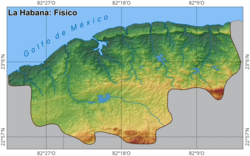
Topographic map of Havana

Key Facts

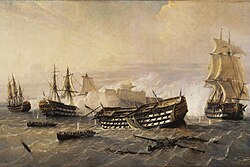
The British fleet entering Havana
  • Founded: 1514 (Relocated to current site on November 16, 1519).
  • Population: Approximately 2,137,847 (2022), though official figures dropped to 1,749,964 by late 2024.
  • UNESCO Status: Old Havana and its Fortification System (designated 1982).
  • Economy: Nominal GDP of $21.4 billion (2023) with a per capita GDP of $9,900.
  • Geography: Located in the Western region of Cuba with an elevation of 59 meters.

Historical Evolution
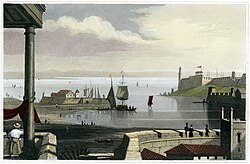
Havana Harbor entrance in 1841 by Bibliographisches Institut for Meyer's Universum

Havana's history is marked by its strategic importance in the Caribbean. Founded in the early 16th century, the city was relocated in 1519 to its current position to better serve as a maritime center. Throughout the 16th and 17th centuries, its wealth made it a target for attacks, including the looting and burning of the city by French pirate Jacques de Sores in 1555.
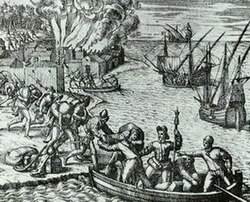
French pirate Jacques de Sores looting and burning Havana in 1555

The 18th century saw the city further fortify its defenses, particularly during the Seven Years' War. By the 19th century, Havana became a focal point for the Cuban independence movement. The 20th century brought significant political shifts, transitioning from the Republican era to the post-revolution period, which fundamentally reshaped the city's administration and social structure.

Havana in 1690, according to the Atlas Van der Hagen. British Library.[30]

Geography and Climate

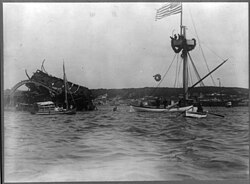
Destruction of USS Maine in the Havana Harbor

Havana experiences a tropical climate, characterized by warm temperatures and distinct rainy seasons. The city is situated at coordinates 23°08′12″N 82°21′32″W.

Havana Average Climate Data (1961–1990)
Metric January April July October Annual Average
Mean Max Temp (°C) 25.8 28.6 31.3 29.2 28.8
Mean Min Temp (°C) 18.6 22.4 24.1 21.3 21.6
Avg Rainfall (mm) 64.4 53.7 105.6 180.5 1,189.2
Sunshine Hours (Daily) 7.0 9.1 8.8 6.3 7.8

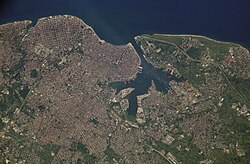
Satellite view of Havana in October 2005

Demographics and Society

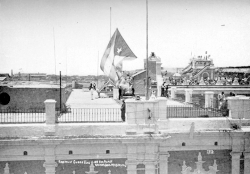
Raising the Cuban flag on the Governor General's Palace at noon on 20 May 1902

The population of Havana has seen significant fluctuations over the centuries. While it grew steadily from 70,000 in 1750 to over 2.1 million by the early 2000s, recent data indicates a decline to approximately 1.75 million by 2024.

The ethnic composition of the city is diverse, consisting of:

  • White: 58.4% (predominantly of Spanish descent)
  • Mestizo or Mulatto: 26.4%
  • Black: 15.2%
  • Asian: 0.2%

Paseo del Prado, Havana in 1909[44]

Architecture and Urban Landmarks

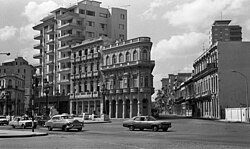
Paseo de Martí in 1978

Havana is renowned for its eclectic architectural styles, ranging from Spanish Colonial and Neoclassical to Art Deco and Modernism. The city's skyline is defined by a mix of historic forts and mid-century skyscrapers.

Historic Fortifications and Religious Sites

The city's defense system is a cornerstone of its heritage, featuring the Castillo de la Real Fuerza (1577) and the Castillo del Morro. Religious architecture is equally prominent, with the Havana Cathedral (built 1748–1777) and the Colonial Church Santo Cristo del Buen Viaje serving as key landmarks.
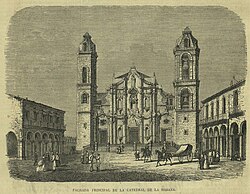
Havana Cathedral, 1748–1777

Modern and Civic Architecture

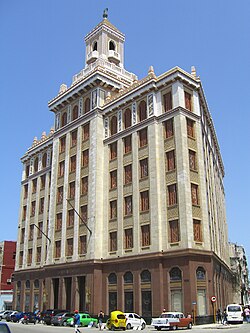
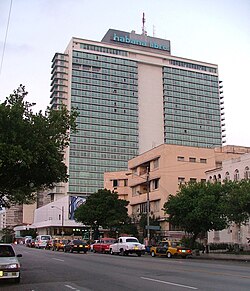
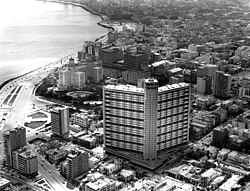
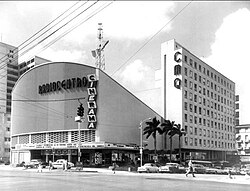
The 20th century introduced bold designs such as El Capitolio, the Bacardí Building, and the FOCSA building. The city also features the Hotel Habana Libre, located in the central corner of Vedado, and the Radiocentro CMQ Building.
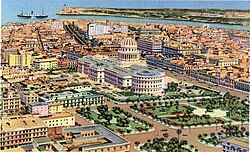
El Capitolio in 1933, photomechanical print (postcard)

Infrastructure and Culture

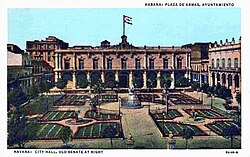
City Hall and "Plaza de Armas", 1937

Havana's transport network includes a variety of roads, such as the Autopista Este-Oeste and the Havana ring road (Primer anillo). While the city once relied on an extensive tramway system, modern transport now centers on buses and highways.

Culturally, the city is a hub for the performing arts, home to the Ballet Nacional de Cuba and the Gran Teatro de La Habana. It also hosts the prestigious Havana Film Festival, which continues to be a significant event for cinema in the region.
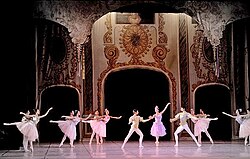
Ballet Nacional de Cuba performing at the Gran Teatro de La Habana

Frequently Asked Questions
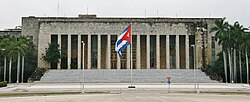
Comite Central del Partido Comunista de Cuba (Central Committee of the Cuban Communist Party)
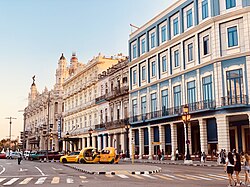
Paseo del Prado, Havana in April 2019
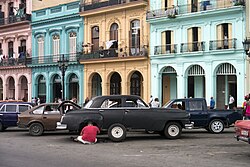
These preserved colorful Spanish Colonial era buildings are a sight common across Havana.
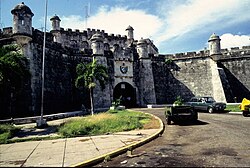
18th-century entrance of the Castillo del Príncipe, photo taken in 1997
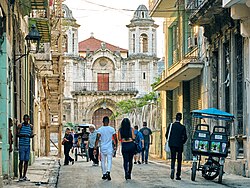
Colonial Church Santo Cristo del Buen Viaje, built between 1604 and 1693
Lonja del Comercio building
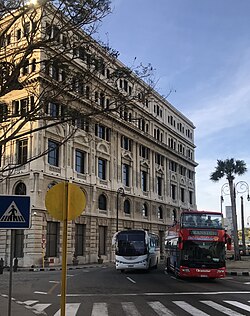
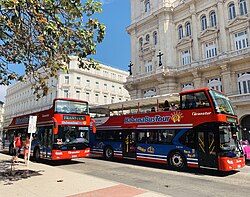
Sight-seeing busses at the Parque Central
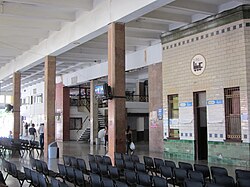
Interior of the Central Railway Station
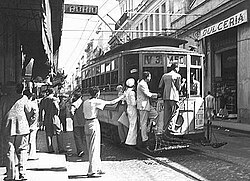
Havana tramway in 1950
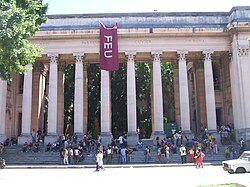
Faculty of Mathematics and Computer Science, University of Havana
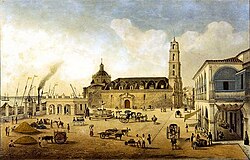
View of the Plaza de San Francisco of Havana in 1841 by James G. Sawkins
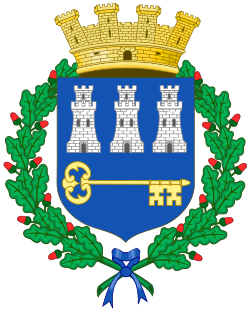
Coat of arms of La Habana
Plaza del Vapor, Havana, about 1900
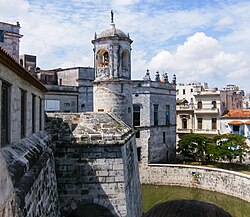
Castle of la Real Fuerza, 1577
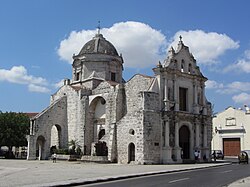
Iglesia y hospital San Francisco de Paula
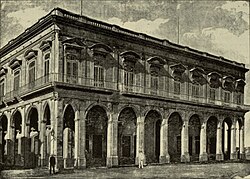
Palacio de Villalba, photo of 1898
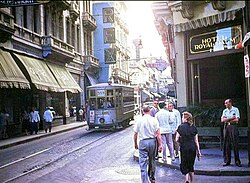
Royal Palm Hotel (Havana), entrance, c. 1930
Bacardí Building
Bacardí Building
López Serrano Building
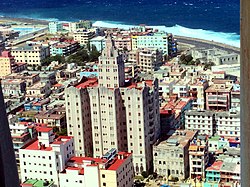
Hotel Habana Libre is located in the most central corner of Vedado.
Aerial view of the FOCSA building from the west, with the floating corridors, ca. 1958
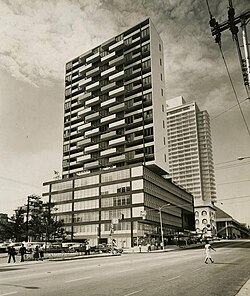
Antonio Quintana Simonetti Edificio del Seguro Médico, Havana, 1958
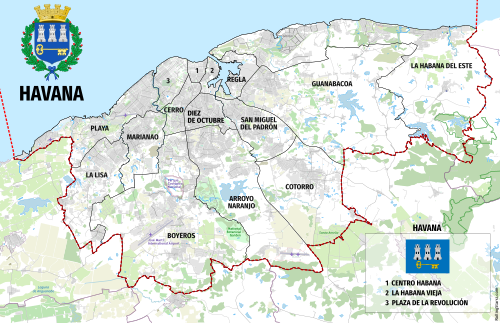
Havana Districts Map
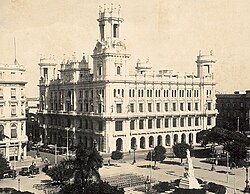
Museo Nacional de Bellas Artes, photo of 1927
ภาพประกอบบทความ
ภาพประกอบจากบทความต้นฉบับ
Radiocentro CMQ Building, Havana
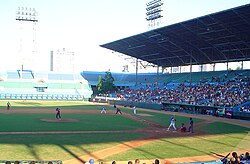
Estadio Latinoamericano

When was Havana founded?

Havana was founded in 1514 and was later relocated to its current location on November 16, 1519.

What is the population of Havana?

As of 2022, the capital city population was 2,137,847, though official figures reported a decrease to 1,749,964 by the end of 2024.

Why is Old Havana a UNESCO World Heritage Site?

Old Havana and its Fortification System were designated as a Cultural World Heritage Site in 1982 due to their historical, architectural, and cultural significance.

What is the climate like in Havana?

Havana has a tropical climate with an annual average temperature of approximately 25.2°C and an average annual rainfall of 1,189.2 mm.

What are some of the most famous buildings in Havana?

Notable landmarks include El Capitolio, the Bacardí Building, the FOCSA building, and the Castillo de la Real Fuerza.

References

  1. This term describe the equivalent to a tram.
  2. The Plaza del Vapor met a similar fate in 1959 as the Paris food market Les Halles would meet in 1971. Les Halles, unable to compete in the new market economy and in need of massive repairs, the colorful ambiance once associated with the bustling area of merchant stalls, diappeared altogether when Les Halles was dismantled; the wholesale market was relocated to the suburb of Rungis. Two of the glass and cast iron market pavilions were dismantled and re-erected elsewhere; one in the Paris suburb of Nogent-sur-Marne, the other in Yokohama, Japan.[118] At the beginning of the 1959 Revolution Fidel Castro ordered to stop all construction in Cuba, and to have the Plaza del Vapor demolished; the Ministry of Public Health declared the Plaza del Vapor unhealthy and its vendors were resettled on the grounds of Calle Amistad between Calles Estrella and Monte where the demolished Mars and Belona dance academy had operated for years. The National Institute of Savings and Housing (INAV) replaced Batista's National Lottery, which had been abolished by the Revolutionary government, and a new lottery to raise money for new construction, and directed by Pastorita Núñez who projected that a new, modern building, not unlike those that were proposed by Josep Lluís Sert a year earlier in his Havana Plan Piloto of 1955–1958 would now be built in the empty lot.[119]
  3. (INAV) is a state agency created with the objective of building houses for all Cubans who lacked them a lottery,[119]
  4. Many buildings in Havana are constructed out of coral stone including the Colegio Nacional de Arquitectos de Cuba, the promenade of El Prado, and the San Carlos and San Ambrosio Seminary. Some of the exterior walls along Calle N on the ground floor of the podium of the FOCSA Building are covered with 12"x12" coral tiles.
  5. The San Francisco de Paula Hospital for women began its functions in 1672, welcoming, in crowded conditions most of the time, black and white mentally ill patients. The gloomy aspect of the construction and the screams of the sick women made this place a well-known place in the area, but not for the reasons why hospitals like to be known, but as a gloomy reference. In the great 19th century Creole novel, Cecilia Valdés by Cirilo Villaverde, the church-hospital is evoked several times because, supposedly, Cecilia's mother was confined there when she lost the use of her mental faculties after the troubles and vicissitudes of her love affair with Don Cándido Gamboa.