Harrier Jump Jet: The Evolution of V/STOL Aviation
The Harrier is one of the most iconic aircraft in aviation history, renowned for its unique ability to take off and land vertically. As a V/STOL (Vertical and/or Short Take-Off and Landing) strike aircraft, it redefined operational flexibility, allowing fighter jets to operate from small carriers, forest clearings, or improvised forward bases rather than relying on massive, vulnerable runways.
Developed through a partnership of British and American engineering, the Harrier family spanned two generations of design, evolving from a daring prototype into a multi-role powerhouse used by several global air forces.
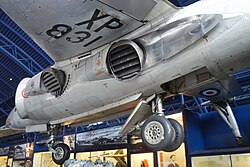
Key Facts
- First Flight: December 28, 1967.
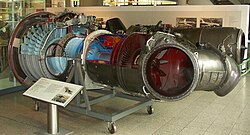
- Core Technology: Powered by the Rolls-Royce Pegasus engine with rotating nozzles.
- Total Production: 824 aircraft delivered between 1969 and 2003.
- Primary Roles: Close-support, reconnaissance, and naval air defense.
- Successor: The F-35B Lightning II.
The First Generation: Pioneering the Jump Jet
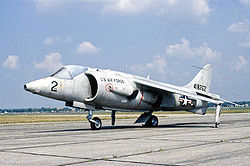
The first generation of Harriers began with the Hawker Siddeley Harrier (known in the US as the AV-8A or AV-8C). These aircraft were developed directly from the Hawker P.1127 prototype and the Kestrel evaluation aircraft. The Royal Air Force (RAF) officially inducted the Harrier GR.1 into service on April 18, 1969, followed by the United States Marine Corps (USMC), which acquired 110 aircraft (including trainers) between 1971 and 1976.
The Sea Harrier and Naval Operations
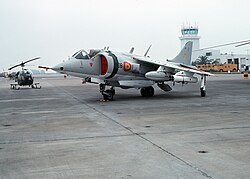
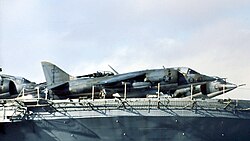
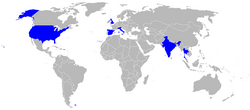
To adapt the jump jet for maritime use, British Aerospace developed the Sea Harrier. This navalized version entered service with the Royal Navy's Fleet Air Arm in April 1980. The Sea Harrier, often called the "Shar," gained international prominence during the 1982 Falklands War, operating from the aircraft carriers HMS Invincible and HMS Hermes. Lessons from this conflict led to the improved Sea Harrier FA2, which entered service in 1993. The Indian Navy also operated the Sea Harrier starting in December 1983.
The Second Generation: The Harrier II
By 1973, Hawker Siddeley and McDonnell Douglas began collaborating on a more capable successor. This effort focused on increasing performance and payload, centered around the improved Pegasus 15 engine. This collaboration resulted in the second-generation Harrier II, designated as the AV-8B in the United States and the Harrier II GR5/GR7/GR9 in the United Kingdom.
The AV-8B was delivered to the USMC in December 1983, primarily for multi-role attack missions from small carriers. The British version entered service in the mid-1980s and was also adopted by NATO allies, including Italy and Spain. Production of new Harriers ended in 1997, though the final remanufactured "Plus" configuration aircraft was delivered in December 2003.

Technical Specifications and Variants
The Harrier's capability is rooted in the Rolls-Royce Pegasus engine, which uses four rotating nozzles to direct thrust downward for hovering or backward for conventional flight.
| Variant | Crew | Max Speed | Empty Weight | Engine |
|---|---|---|---|---|
| Kestrel FGA.1 | 1 | 545 mph | 10,000 lb | Pegasus 6 |
| Harrier GR3 / AV-8A | 1 | 731 mph | 12,200 lb | Pegasus 11 Mk 101 |
| Sea Harrier FA2 | 1 | 735 mph | 14,052 lb | Pegasus 11 Mk 106 |
| Harrier GR9 | 1 | 662 mph | 12,500 lb | Pegasus 11 Mk 107 |
| AV-8B+ Harrier | 1 | Not Listed | 13,968 lb | Pegasus 11 Mk 105 |
Retirement and the Transition to F-35B
The era of the Harrier began to wind down in 2010. The RAF and Royal Navy retired their fleets by 2011, eventually selling 72 aircraft to the USMC to be used as spare parts. The USMC has since replaced the AV-8B with the F-35B Lightning II, a modern STOVL fighter that entered USMC service by May 2024. The UK's 617 Squadron introduced the F-35B in June 2018.
Spain has maintained its AV-8B+ fleet longer than most, extending its service life beyond 2025 due to funding constraints. While Spain previously considered the F-35B, it announced in August 2025 that it would not acquire the aircraft, with the Harrier fleet expected to retire around 2030.
Frequently Asked Questions
What does V/STOL stand for?
V/STOL stands for Vertical and/or Short Take-Off and Landing, referring to the aircraft's ability to take off and land vertically or using a very short runway.
Which engine allowed the Harrier to hover?
The Harrier was powered by the Rolls-Royce Pegasus engine, which utilized four rotating nozzles to direct jet exhaust downward for vertical flight.
What was the Sea Harrier's role in the Falklands War?
The Sea Harrier provided critical air defense and strike capabilities for the Royal Navy, operating from the aircraft carriers HMS Invincible and HMS Hermes.
Who manufactured the second-generation Harrier II?
The Harrier II was a joint effort between McDonnell Douglas in the United States (AV-8B) and British Aerospace in the United Kingdom (Harrier II GR series).
Which aircraft is replacing the Harrier?
The Lockheed Martin F-35B Lightning II is the STOVL successor to the Harrier for the US Marine Corps, the Royal Air Force, and the Royal Navy.