Hans Scholl and the White Rose Resistance
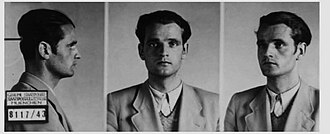
Hans Scholl was a pivotal figure in the internal struggle against the Third Reich. As a co-founder of the White Rose, a non-violent intellectual resistance movement, Scholl risked everything to awaken the German public to the atrocities of the Nazi regime. His journey from a member of the Hitler Youth to a condemned traitor highlights a profound moral evolution driven by faith, philosophy, and the horrors of war.
Key Facts
- Role: Co-founder of the White Rose resistance movement.
- Education: Medical student at Ludwig-Maximilians-Universität München (LMU).
- Action: Authored and distributed anti-Nazi leaflets calling for an end to the regime.
- Fate: Executed by guillotine on February 22, 1943, at age 24.
- Legacy: Recognized as a symbol of spiritual courage and social dissent.
Early Life and Ideological Shift
Born on September 22, 1918, in Ingersheim, Hans Scholl was the second of six children born to Robert and Magdalena Scholl. Raised as a Lutheran, Hans initially followed the prevailing currents of his time. On April 15, 1933, he joined the Hitler Youth, eventually holding leadership positions in the Deutsches Jungvolk (the organization for boys aged 10 to 14).
However, the fanaticism and demand for unconditional subordination within the organization soon became repugnant to him. By 1935, while serving as a standard-bearer at the Nazi Party's "Reich Party Rally for Freedom" in Nuremberg, his disillusionment grew, marking the beginning of his shift away from National Socialism.
Legal Struggles and Personal Trials
Between 1937 and 1938, Scholl faced legal trouble for joining the Deutsche Jungenschaft vom 1.11.1929, a forbidden youth organization. During this trial, he was also charged under Paragraph 175 of the German Criminal Code, which criminalized homosexual behavior. Scholl admitted to relationships with Rolf Futterknecht and Ernest Reden.
The presiding judge viewed these actions as "youthful exuberance" and a "youthful failing," allowing Scholl to leave the trial with a clean slate. In contrast, Ernest Reden was sentenced to prison and time in a concentration camp. These events remained a closely guarded family secret for years.
Medical Studies and the Impact of War
After completing his service in the Reich Labour Service, Scholl entered medical school at the Ludwig-Maximilians-Universität München (LMU) in 1939. At university, he encountered professors and students with Christian-ethical views who were critical of the Nazi regime, further challenging his ideological beliefs.
Scholl's convictions were solidified during his service as a medic in the Wehrmacht (the unified armed forces of Nazi Germany). His experiences during the French campaign and later on the Eastern Front, where he witnessed mass murders in Poland and the Soviet Union, convinced him that active resistance was a moral necessity.
The White Rose Movement
In 1942, Hans Scholl and Alexander Schmorell founded the White Rose. Inspired by religion, philosophy, and the arts, they began writing leaflets that appealed to the German intelligentsia. These documents quoted the Bible, Aristotle, and poets like Goethe and Schiller to argue against the regime.
The movement grew to include a core group of six members, including Scholl's sister, Sophie Scholl, and Kurt Huber. The group distributed their pamphlets via mail and by leaving them in public phone booths across Munich, Hamburg, and Ulm.
| Key Member | Role/Contribution | Outcome |
|---|---|---|
| Hans Scholl | Co-founder and principal author | Executed (1943) |
| Sophie Scholl | Core member and distributor | Executed (1943) |
| Alexander Schmorell | Co-founder | Executed (1943) |
| Kurt Huber | Academic and core member | Executed (1943) |
| Willi Graf | Core member | Executed (1943) |
Capture and Execution
The movement came to an abrupt end on February 18, 1943. While distributing leaflets at LMU, Sophie Scholl pushed the final remaining papers from the top floor into the atrium. They were spotted by Jakob Schmid, a university custodian, and promptly arrested by the Gestapo (the secret police of Nazi Germany).
During interrogation, Hans attempted to protect Sophie by claiming he had thrown the leaflets, but the custodian's testimony contradicted him. On February 22, 1943, Hans, Sophie, and Christoph Probst were found guilty of high treason by Judge Roland Freisler. To avoid creating public martyrs, the regime opted for execution by guillotine at Stadelheim Prison rather than public hanging.
In his final moments, Hans Scholl remained defiant, shouting "Es lebe die Freiheit!" ("Long live freedom!") as the blade fell. In total, 29 people were eventually accused of involvement with the White Rose; 16 were executed.
Legacy and Historical Significance
The White Rose's influence extended beyond Germany. The sixth leaflet was smuggled to the UK, and in July 1943, Allied Forces dropped millions of copies, retitled The Manifesto of the Students of Munich, over Germany.
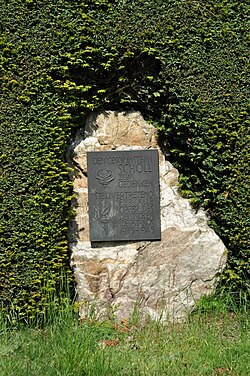
Today, the Scholls are remembered as symbols of conscience. In 2003, a ZDF poll ranked them among the most important Germans of all time. Their legal convictions were officially voided in 1998 under a law abolishing Nazi judgments of injustice. The Audimax of the Bundeswehr Medical Academy in Munich now bears Hans Scholl's name.
Frequently Asked Questions
What was the primary goal of the White Rose?
The White Rose sought to awaken the German people to the crimes of the Nazi regime and encourage active, non-violent resistance through the distribution of intellectual and moral leaflets.
Why was Hans Scholl executed by guillotine instead of hanging?
Although scaffolds for public hanging were already being built, Nazi officials feared that public executions would turn the students into martyrs, so they switched to the guillotine inside Stadelheim Prison.
Did Hans Scholl support the Nazis at any point?
Yes, as a teenager, Hans was an enthusiastic member of the Hitler Youth and held leadership positions in the Deutsches Jungvolk before becoming disillusioned with the group's principles.
How did the Allied Forces use the White Rose's work?
The Allies obtained a copy of the sixth leaflet and dropped millions of copies over Germany as "The Manifesto of the Students of Munich" to support the internal resistance.
Who were the other core members of the movement?
Alongside Hans and Sophie Scholl, the core members included Alexander Schmorell, Willi Graf, Kurt Huber, and Traute Lafrenz.