The History and Design of Hangul: Korea's Unique Writing System
The native Korean writing system, known as Hangul in South Korea and Chosŏn'gŭl in North Korea, is a remarkable feat of linguistic engineering. Unlike many writing systems that evolved haphazardly over millennia, Hangul was a deliberate creation designed to solve a specific social problem: widespread illiteracy. By providing a script that was easy to learn and perfectly suited to the Korean language, its creators aimed to empower the general population.
Before Hangul, Koreans relied on Hanja (Chinese characters) or various adaptations like the Idu script. However, Chinese characters were not designed for the Korean language, making them difficult to master and poorly suited for accurate transcription. This complexity created a significant barrier to literacy for commoners.
![The Idu script, used to write Korean, appears on this 6th- or 7th-century stone tablet [ko]. Here, Chinese characters have their meaning preserved, but their order is changed to be more Koreanic.[13]](/images/78/d5/78d505608ebb95b6b8eb387b564ce1010b6fcec27c80d0873f69aab9e19b54f5.jpg)
The Creation of Hangul
The development of Hangul is inextricably linked to King Sejong the Great (r. 1418–1450). While historical debate continues regarding the exact nature of its invention, most scholars believe Sejong was deeply involved in the process, working alongside a team of scholars. A minority of researchers argue that he may have been the sole creator. Some suggest the script was developed in secret to avoid political backlash from the elite who benefited from the difficulty of Hanja.
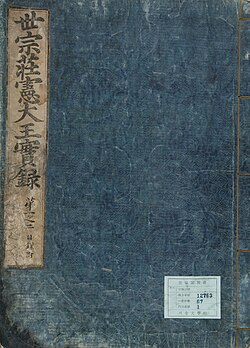
Timeline of Development and Promulgation
Pinpointing the exact moment of Hangul's birth is challenging due to the nature of contemporary records. However, key milestones include:
- Late 1443 to Early 1444: The period when the script was mostly completed. The Veritable Records of Sejong note an announcement made during the 12th month of 1443.
- 1446: The official publication of the script through the Hunminjeongeum (an instructional treatise) and the Hunminjeongeum Haerye (an explanatory manual).
In South Korea, Hangul Day is celebrated on October 9, based on the assumption that the script was promulgated around the 10th day of the 9th month in 1446. North Korea celebrates Hangul Day on January 15, though the specific reason for this date remains unknown.
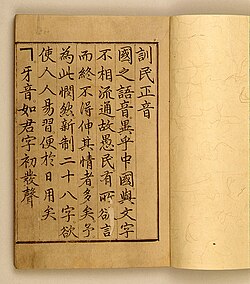
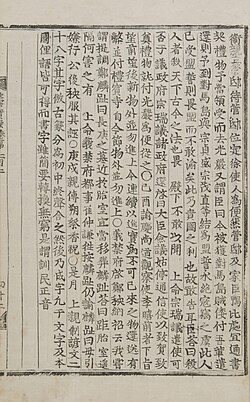
The Scientific Design of the Script
Hangul is celebrated for its scientific and systematic design. The consonants are not arbitrary shapes; they are articulatory, meaning their forms mimic the shape of the mouth, tongue, and throat during pronunciation.
Consonant Structure
The basic consonant shapes represent the physical mechanics of speech:
- ㄱ (Molar): Depicts the root of the tongue blocking the upper palate.
- ㄴ (Lingual): Depicts the tongue touching the upper palate.
- ㅁ (Labial): Depicts the shape of the mouth.
- ㅅ (Incisor): Depicts the shape of the teeth.
- ㅇ (Laryngeal): Depicts the shape of the throat.
To represent "stronger" or more aspirated sounds, strokes are added to these base shapes. For example, adding a stroke to ㄱ creates ㅋ, and adding a stroke to ㄴ leads to ㄷ and then ㅌ.
Vowel Philosophy
The vowels are based on three fundamental components:
- ㆍ (a dot representing Heaven)
- ㅡ (a horizontal line representing Earth)
- ㅣ (a vertical line representing Humanity)
By combining these elements, a wide array of vowels is formed, such as ㅗ, ㅏ, ㅜ, and ㅓ.
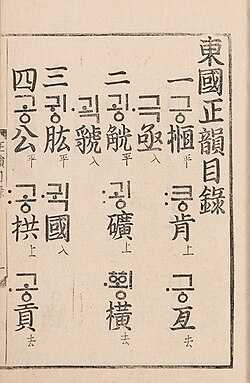
Historical Hypotheses and Influences
Because of its unique structure, many scholars have attempted to find the origins of Hangul in other writing systems. These theories range from the highly plausible to the purely speculative.
The Seal Script Hypothesis
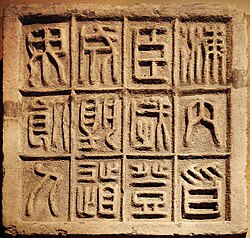
Some historical texts, including the postface to the Haerye, suggest that the letters "imitate the Old Seal" (ancient Chinese script). While some scholars believe there is a formal connection, others argue that while the shapes might look similar, the phonetic logic is entirely unique to Hangul.
Other Theories
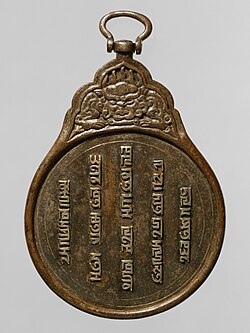
- Indo-Tibetan/Pŏm Scripts: Some early scholars suggested a connection to Indic scripts. However, some modern researchers believe this may have been an attempt to discredit the script by linking it to Buddhism, which was unpopular among the Confucian elite.
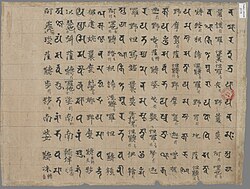
- ʼPhags-pa Script: There are comparisons between certain Hangul consonants and the ʼPhags-pa script used in the Mongol Empire.
Key Facts
- Purpose: Created to increase literacy among commoners by providing an easy-to-learn script.
- Creator: Primarily attributed to King Sejong the Great, possibly with assistance.
- Official Publication: 1446 via the Hunminjeongeum.
- Design Principle: Consonants mimic the shape of vocal organs; vowels represent Heaven, Earth, and Humanity.
- Names: Called Hangul in South Korea and Chosŏn'gŭl in North Korea.
Summary of Hangul Components
| Category | Basis/Principle | Examples |
|---|---|---|
| Consonants | Articulatory (shape of mouth/tongue) | ㄱ, ㄴ, ㅁ, ㅅ, ㅇ |
| Vowels | Philosophical (Heaven, Earth, Humanity) | ㆍ, ㅡ, ㅣ |
| Sound Variation | Addition of strokes for intensity | ㄱ → ㅋ; ㄴ → ㄷ → ㅌ |
Frequently Asked Questions
Who invented the Korean alphabet?
King Sejong the Great is credited with the creation of Hangul. While most scholars believe he worked with a group of scholars, some argue he may have been the sole inventor.
Why was Hangul created?
It was created to improve literacy. Before Hangul, Koreans used Chinese characters (Hanja), which were too difficult for the average person to learn and master.
What is the difference between Hangul and Chosŏn'gŭl?
They are the same writing system. "Hangul" is the name used in South Korea, while "Chosŏn'gŭl" is the name used in North Korea.
How are the letters designed?
The consonants are designed to mimic the physical shape of the mouth, tongue, and throat during speech. The vowels are based on three elements: a dot (Heaven), a horizontal line (Earth), and a vertical line (Humanity).
Is Hangul based on Chinese characters?
No. While some scholars have debated connections to ancient Chinese seal scripts, Hangul is a distinct, original system designed specifically to represent the sounds of the Korean language.