Gypsy Jazz: The Legacy of Django Reinhardt and Jazz Manouche
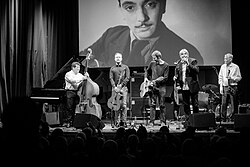
Gypsy jazz, also known by its French name jazz manouche, is a vibrant musical idiom that blends the improvisational spirit of American jazz with the traditional melodies of the Romani people. Emerging in Paris during the 1930s, this style is defined by its acoustic energy, virtuosic lead playing, and a distinctive rhythmic drive that continues to captivate audiences worldwide today.
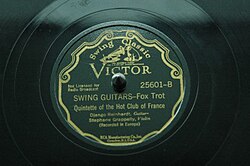
The genre was pioneered by the legendary Romani guitarist Jean "Django" Reinhardt (1910–1953) and the French jazz violinist Stéphane Grappelli (1908–1997). Together, they formed the Quintette du Hot Club de France, a group that shifted the jazz landscape by replacing the traditional brass and reed sections of big bands with a string-based ensemble.
Key Facts
- Origin: Developed around 1934 in Paris, France.
- Founders: Primarily created by Django Reinhardt and Stéphane Grappelli.
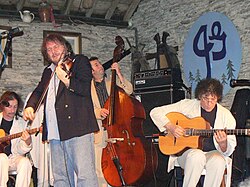
- Core Instruments: Acoustic guitar, violin, and double bass.
- Cultural Roots: Deeply tied to the Manouche and Sinti clans of the Romani people.
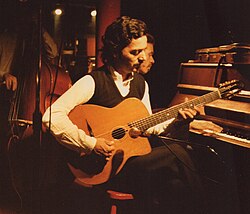
- Defining Guitar: The Selmer-Maccaferri guitar is the instrument of choice for its unique tonal projection.
The History and Evolution of Jazz Manouche
Foundations in Paris
Django Reinhardt's journey into jazz began after an apprenticeship playing in bal-musette bands—a style of French dance music featuring accordions. In 1931, while in Toulon, Reinhardt was exposed to the recordings of Louis Armstrong, Duke Ellington, Joe Venuti, and Eddie Lang. This fusion of Romani musicality and American swing culminated in the summer of 1934 when Reinhardt met violinist Stéphane Grappelli at the Hôtel Claridge in Paris.
The core of their sound was built around a rhythm section consisting of Louis Vola on double bass and Roger Chaput on rhythm guitar. With the addition of Django's brother, Joseph "Nin-Nin" Reinhardt, the group became the Quintette du Hot Club de France.
Decline and Resurgence
While popular across Europe before and after World War II, the style eventually faded as the swing era ended, giving way to bebop, mainstream jazz, and rock and roll. However, a revival began in the 1970s. The Festival Django Reinhardt, established in 1968 in Samois-sur-Seine, played a pivotal role in this comeback.
A new generation of Romani virtuosos, including Stochelo Rosenberg, Biréli Lagrène, and Fapy Lafertin, returned to the original acoustic "hot club" style. Simultaneously, Stéphane Grappelli's return to the genre, encouraged by guitarist Diz Disley, helped introduce gypsy jazz to a younger, global audience.
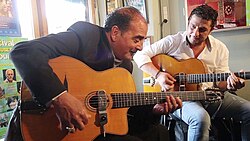
Instrumentation and Technical Characteristics
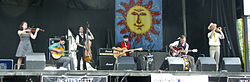
The Selmer-Maccaferri Guitar
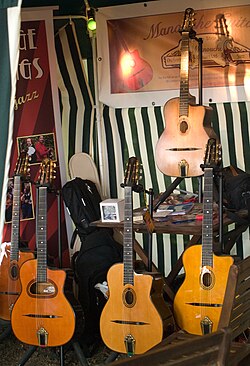
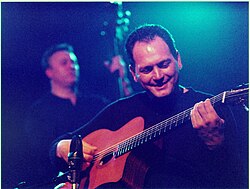
The sonic identity of gypsy jazz is inextricably linked to the Selmer guitar, originally designed by Mario Maccaferri. These instruments are prized for their responsiveness and loud, cutting tone. They typically feature two designs: an early D-shaped sound hole and a later O-shaped sound hole, the latter of which is preferred for lead playing.
Harmonic and Rhythmic Innovation
Due to a hand injury that limited his fingering, Django Reinhardt developed unique chord shapes that became hallmarks of the genre. In gypsy jazz, standard barre chords are rare. Instead, musicians utilize major 7th, major 6th, and 6/9 chords.
The style often employs reharmonization to create a "minor feel" even in major keys, such as substituting a minor 6th chord for a dominant seventh. The rhythmic foundation is characterized by a driving, percussive accompaniment known as la pompe (the pump), which provides the necessary swing for the soloist.
![La Pompe.[18] Playⓘ](/images/7c/45/7c4505cfccc6e147dddfaada1013971e52667e60034890a1bf0661804e9b2861.png)
Repertoire and Global Influence
The gypsy jazz repertoire consists of a mix of 1920s and 30s swing hits (like "Limehouse Blues"), original compositions by Reinhardt (such as "Nuages" and "Minor Swing"), and jazzed-up Romani songs. The frequent use of the dorian and harmonic minor modes gives the music a dark, modal quality that contrasts with its high-tempo energy.
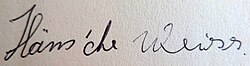
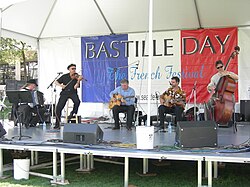
Today, the genre thrives globally. In Australia, the 'OzManouche' festival and the long-running 'MelbourneHot' jams keep the tradition alive. In the United States, artists like George Cole perform on original Selmer guitars, while in Germany, musicians like Häns'che Weiss have expanded the genre's reach.
| Feature | Description |
|---|---|
| Primary Instruments | Acoustic Guitar, Violin, Double Bass |
| Key Figures | Django Reinhardt, Stéphane Grappelli |
| Core Harmony | 6th, Major 7th, and 6/9 chords; avoidance of standard barre chords |
| Rhythmic Style | La Pompe (percussive acoustic rhythm) |
| Common Modes | Dorian and Harmonic Minor |
Frequently Asked Questions
What is the difference between gypsy jazz and mainstream jazz?
Gypsy jazz is primarily a string-based genre that avoids the brass and drums common in mainstream jazz. It relies on a specific percussive guitar rhythm (la pompe) and utilizes unique chord voicings and Romani melodic influences.
Why are Selmer guitars so important to this style?
Selmer-Maccaferri guitars are designed for high volume and projection without amplification. Their specific construction allows the lead guitar to be heard clearly over the rhythm section and bass in an acoustic setting.
Who was Django Reinhardt?
Django Reinhardt was a Romani guitarist from the Manouche clan who co-founded the gypsy jazz style in Paris. He is celebrated for his incredible virtuosity and for integrating American swing with European Romani music.
What is "la pompe"?
La pompe is the characteristic rhythmic guitar accompaniment used in gypsy jazz. It is a percussive, driving style of playing that provides the harmonic and rhythmic foundation for the soloist.
Is gypsy jazz still played today?
Yes, it is very active. It is passed down through generations in Manouche and Sinti communities and is performed by professional musicians and enthusiasts at festivals and jam sessions worldwide.