Gyeongchun Line: Connecting Seoul to Chuncheon via Modern Rail
The Gyeongchun Line serves as a vital regional artery in South Korea, linking the bustling capital of Seoul with the scenic city of Chuncheon. Operated by Korail, this rail line is a key component of the Seoul Metropolitan Subway system, providing essential commuter and intercity services across the Seoul, Gyeonggi, and Gangwon provinces.
Whether you are a student traveling for orientation trips or a commuter heading into the city, the Gyeongchun Line offers a range of services designed to balance speed and accessibility. From the high-speed ITX-Cheongchun to local subway trains, the line has undergone massive transformations to meet the growing demands of South Korea's transit network.
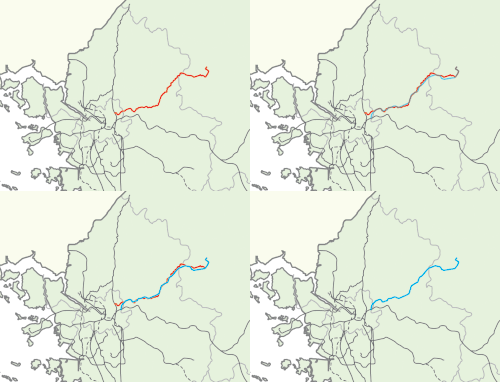
Key Facts
- Termini: Connects Mangu Station (Line 1/Jungang Line) and Chuncheon.
- Total Track Length: 80.7 km (50.1 mi).
- Major Services: Seoul Metropolitan Subway (Local) and ITX-Cheongchun (Intercity Express).
- Maximum Speed: Up to 180 km/h (112 mph) for ITX trains.
- Electrification: 25 kV/60 Hz AC catenary system.
- Operator: Korail.
A Rich History of Transformation
The origins of the Gyeongchun Line date back to July 20, 1939, when the original 87.3 km route was opened by the privately owned Gyeongchun Railway. For decades, Chuncheon was a premier destination for students, making the line a popular route for orientation trips. Following the Liberation of Korea, the railway was nationalized.
In the 2000s, the line underwent a massive reconstruction project to modernize its infrastructure. The goal was to upgrade the line to a double-tracked, electrified system capable of supporting speeds up to 180 km/h. This involved re-laying a straighter 64.2 km alignment between Geumgok and Chuncheon. The new, modernized alignment officially opened on December 21, 2010, replacing the old route and significantly reducing travel times.
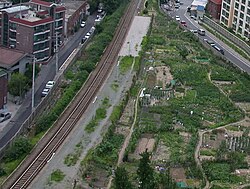
The upgrade was not just about speed; it was about capacity and integration. The new service reduced the travel time between Chuncheon and Sangbong from two hours to just 89 minutes, while simultaneously increasing passenger capacity five-fold. Furthermore, fares for the new service were reduced by half compared to the previous Mugunghwa-ho service.
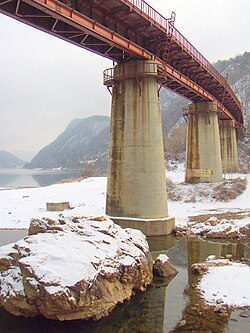
Modern Rail Services
Today, the Gyeongchun Line operates as a multi-tiered service system to cater to different passenger needs.
Seoul Metropolitan Subway Gyeongchun Line
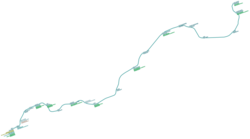
Integrated into the Seoul Metropolitan Subway, this service primarily runs between Sangbong and Chuncheon. It utilizes Class 361000 EMU (Electric Multiple Unit) trains. While most trains terminate at Sangbong, some selected services extend to Cheongnyangni, and limited rush-hour services run to Kwangwoon University via the Mangu Line branch.
ITX-Cheongchun Express
Launched on February 28, 2012, the ITX-Cheongchun (Intercity Train Express) provides a premium, faster connection. Using Class 368000 trains equipped with double-deck cars, these express services can reach Chuncheon from Cheongnyangni in just 52 minutes, and from Yongsan in 68 minutes. These trains operate at a maximum speed of 180 km/h.
Mugunghwa-ho Service
While much of the passenger traffic has shifted to the subway and ITX services, special Mugunghwa-ho trains are still utilized on the line, including specific services used to deploy military troops.
Technical Specifications Summary
| Feature | Specification |
|---|---|
| Track Gauge | 1,435 mm (Standard Gauge) |
| Number of Tracks | Double track |
| Electrification | 25 kV/60 Hz AC |
| Commuter Train Speed | 110 km/h (68 mph) |
| ITX Train Speed | 180 km/h (112 mph) |
Frequently Asked Questions
What is the difference between the subway and ITX-Cheongchun services?
The Seoul Metropolitan Subway service is a local commuter service with more frequent stops, while the ITX-Cheongchun is an intercity express service using double-deck trains that travels at higher speeds with fewer stops.
How long does it take to travel from Seoul to Chuncheon?
Travel times vary by service. The ITX-Cheongchun can reach Chuncheon from Cheongnyangni in approximately 52 minutes, while the local subway service from Sangbong takes about 89 minutes.
Does the Gyeongchun Line connect to other subway lines?
Yes. The line connects to the Jungang Line at Mangu and Sangbong stations, and provides transfers to Seoul Metro Line 1 at Cheongnyangni and Kwangwoon University stations.
Are there any discounts on ITX-Cheongchun fares?
Yes, Korail offers a 15% discount on the base fare for ITX-Cheongchun services.
What happened to the original Gyeongchun Line route?
The original route was closed on December 21, 2010, when the new, straighter, and electrified alignment was completed and opened for service.