Gully Erosion: Causes, Environmental Impacts, and Prevention Strategies
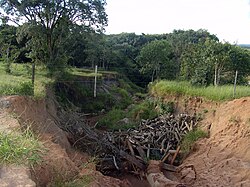
A gully is a distinct landform created by the erosive power of running water, mass movement, or a combination of both. These features appear as sharp-angled incisions in the earth, typically forming on hillsides, river floodplains, or terraces. While they may resemble large ditches or small valleys, gullies are characterized by their significant depth and width—ranging from several meters to tens of meters—and a prominent headscarp (the steep wall at the upstream end).
Gullies typically progress through headward erosion, meaning they expand upstream. This process is often linked to intermittent or ephemeral water flow, triggered by prolonged rainfall, intense thunderstorms, or rapid snowmelt.
Key Facts
- Formation: Gullies often evolve from rills (shallow channels) that are neglected and expand over time.
- Primary Drivers: Slope steepness and rainfall intensity are the most significant factors contributing to gully formation.
- Human Influence: Deforestation, overgrazing, and poor cultivation practices accelerate soil loss.
- Environmental Cost: Gullying reduces farmland productivity and contaminates downstream waterbodies with sediment.
- Extraterrestrial Presence: Similar landforms exist on Mars, providing evidence of past liquid water.
The Mechanics of Gully Formation
The transition from stable land to a gullied landscape involves several complex geomorphological processes. It often begins with rills—small, shallow channels cut into the soil by flowing water. If these rills are not managed, they thicken and deepen into gullies.
Natural and Human Drivers
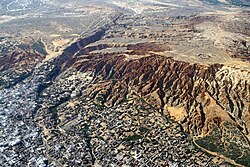
Water erosion is most aggressive on steep terrain due to increased erosive pressure and scour. In regions like southeast Nigeria, there is a positive correlation between relief and soil erosion. While highlands with stable lithology (rock composition) can resist gullying, uplands composed of friable sandstones are highly susceptible.
Human activity frequently accelerates this process. In farmlands, improper cultivation on hillslopes can trigger erosion. In rangelands, the removal of vegetative cover and the creation of livestock or vehicle tracks concentrate water flow, carving deep incisions into the earth.
Processes of Expansion
Gullies grow through several mechanisms:
- Incision: The downward cutting of the gully floor by water flow.
- Bank Erosion: The collapse of gully walls due to saturation or groundwater seepage (sapping).
- Soil Piping: Internal erosion where tunnels or pipes form within dispersive soils, eventually collapsing.
- Lateral Expansion: The development of tributary "branches" that widen the affected area.
Environmental and Economic Consequences
The impact of gully erosion extends far beyond the immediate hole in the ground. By removing fertile topsoil and organic matter, gullies directly reduce crop quality and agricultural productivity, which can lead to food shortages in severely affected regions.
Beyond the farm, the sediment displaced by gullies flows into rivers and lakes, choking waterbodies and degrading water quality. This sedimentation can discolor water supplies and create habitats for rodents. Economically, gullies can divide properties, destroy critical infrastructure such as power poles and water pipelines, and significantly decrease property values.
| Factor | Influence Percentage |
|---|---|
| Slope | 56% |
| Rainfall | 26% |
| Land Cover | 12% |
| Soil Type | 6% |
Prevention and Stabilization
Preventing gully formation requires strategic land management to ensure uniform water penetration and robust plant coverage. Effective techniques include maintaining vegetation along drainage lines, preserving high levels of soil organic matter, and avoiding over-cultivation.
Stabilization Techniques
Once a gully has formed, stabilization focuses on reducing water velocity and encouraging revegetation. Engineers use various structures to move water safely to the gully floor, including:
- Drop structures and pipe structures.
- Grass chutes and rock chutes to prevent scouring.
- Physical barriers to wall off damaged areas until restoration is complete.
Special Cases: Artificial and Martian Gullies
Human-Made Gullies
Some gullies are created intentionally through hydraulic mining. By projecting high-pressure jets of water onto soft alluvial deposits to extract gold or tin, humans create massive erosional features. A historic example is Las Medulas in Spain, where Roman aqueducts were used to wash away soil to find gold nuggets.
Gullies on Mars
Gullies are common at mid-to-high latitudes on Mars and are among the planet's youngest features, likely forming within the last few hundred thousand years. These landforms serve as critical evidence for the recent presence of liquid water, potentially caused by the melting of subsurface ice or snowpacks during the warmest parts of the Martian year.
Frequently Asked Questions
What is the difference between a rill and a gully?
A rill is a shallow channel cut into the soil by flowing water. A gully is a much larger, deeper landform that develops when a rill is neglected and continues to expand and deepen over time.
How does deforestation contribute to gully erosion?
Vegetation acts as a protective layer that slows down runoff and anchors the soil with roots. When forests are cleared, the soil is exposed to the full force of rainfall, making it easier for water to dislodge soil and carve deep gullies.
Can gully erosion be completely stopped?
Termination requires a combination of water-resource management, soil conservation, and sometimes community migration. Public education and collaboration between governments and local residents are essential for sustainable long-term solutions.
What is headward erosion?
Headward erosion is the process by which a gully grows in length by eroding backward, or upstream, from its headscarp, effectively extending the gully further into the landscape.