Gulf WarOperation Desert StormOperation Desert ShieldSaddam HusseinKuwait liberation

Gulf War: The Coalition Conflict and Liberation of Kuwait

Gulf War: The Coalition Conflict and Liberation of Kuwait

The Gulf War was a major international armed conflict fought between Iraq and a massive 42-country coalition led by the United States. The war was triggered by Iraq's invasion of Kuwait, leading to a global effort to restore Kuwaiti sovereignty and ensure regional stability in the Middle East.

The conflict unfolded in two distinct operational phases. The first, Operation Desert Shield, spanned from August 1990 to January 1991 and focused on the military buildup in Saudi Arabia to prevent further Iraqi aggression. The second, Operation Desert Storm, began on January 17, 1991, with a massive aerial bombing campaign and culminated in the liberation of Kuwait on February 28, 1991.
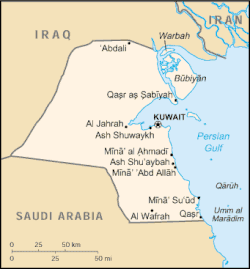
Map of Kuwait
Map of Kuwait

Key Facts

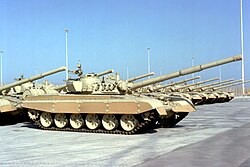
Kuwaiti Armed Forces M-84 main battle tanks
  • Coalition Size: 42 countries led by the United States.
  • Primary Phases: Operation Desert Shield (buildup) and Operation Desert Storm (combat).
  • Outcome: Decisive Coalition victory and the liberation of Kuwait.
  • Key Leaders: US President George H. W. Bush and General Norman Schwarzkopf, Jr.
  • Territorial Result: Establishment of a demilitarized zone and a separation barrier along the Iraq–Kuwait border.

The Road to War
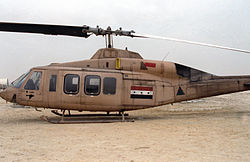
An Iraqi Air Force Bell 214ST transport helicopter, after being captured by a US Marine Corps unit at the start of the ground phase of Operation Desert Storm

The conflict began following the Iraqi invasion of Kuwait. Despite diplomatic efforts and last-ditch negotiations, Iraqi leader Saddam Hussein maintained a firm stance, stating that Iraq "would not accept death." This led to the formation of a broad international coalition to justify intervention and expel Iraqi forces.
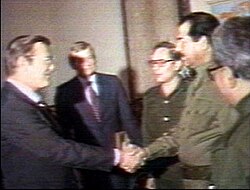
Donald Rumsfeld, US special envoy to the Middle East, meets Saddam Hussein on 19–20 December 1983.

Coalition Involvement

The coalition was a diverse assembly of nations. While the United States, United Kingdom, France, Saudi Arabia, Egypt, and Kuwait provided the bulk of the combat strength, many other nations contributed troops or logistical support. This included countries such as Canada (Operation Friction), Italy (Operazione Locusta), and Argentina (Operativo Alfil).

Countries that deployed coalition forces or provided support[2] (On behalf of Afghanistan, 300 Mujaheddin joined the coalition on 11 February 1991. Niger contributed 480 troops to guard shrines in Mecca and Medina on 15 January 1991.)[2]

Military Operations

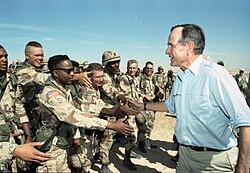
President Bush visiting American troops in Saudi Arabia on Thanksgiving Day, 1990

The war was characterized by a stark contrast in military technology and strategy. The Coalition utilized advanced air power and armored divisions to dismantle the Iraqi military infrastructure.

The Air Campaign

The combat phase opened with an intense bombing campaign. Key assets included the F-117 Nighthawk stealth aircraft and F-15E fighters. Iraq responded by launching Scud missiles at Israel and Saudi Arabia, which were countered by Patriot missile systems.
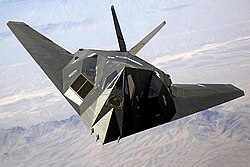
The USAF F-117 Nighthawk, one of the key aircraft used in Operation Desert Storm

The Ground Campaign

The ground offensive was a rapid movement to breach Iraqi defenses and liberate Kuwait. The Coalition deployed superior armor, including the US M1A1 Abrams and the British Challenger 1—the latter of which was noted for its efficiency, destroying approximately 300 Iraqi tanks without suffering any losses.
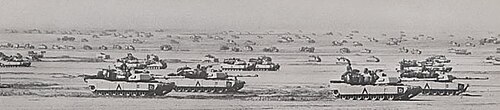
US M1A1 Abrams tanks from the 3rd Armored Division along the Line of Departure

Iraqi forces relied heavily on Lion of Babylon and T-72 tanks, but they were largely overwhelmed by the Coalition's coordinated air-land assault.
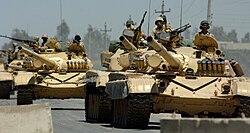
Lion of Babylon main battle tanks, common Iraqi battle tank used in the Gulf War by the Iraqi Army.

Aftermath and Consequences

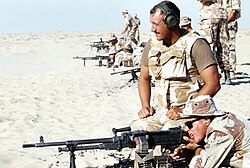
Weapons training at Abu Hydra Range, 1990

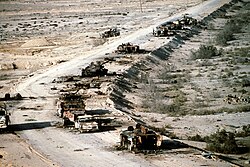
The war ended with a crushing defeat for the Iraqi Army. As Iraqi forces retreated from Kuwait, many were trapped on a route that became known as the Highway of Death, where hundreds of vehicles were destroyed.
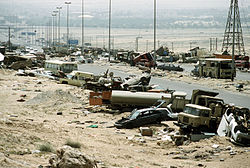
Destroyed Iraqi civilian and military vehicles on the Highway of Death

The environmental impact was severe, most notably the Kuwaiti oil fires started by retreating Iraqi forces, which raged outside Kuwait City.
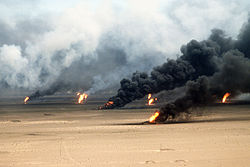
Oil well fires rage outside Kuwait City in 1991.

Casualties and Losses

Summary of Gulf War Casualties and Equipment Losses
Category Coalition Forces Iraqi Forces
Personnel Killed 292 (US) + others 20,000 – 50,000
Personnel Captured Minimal 80,000 – 175,000
Tanks Destroyed 31 (US) + others ~3,300
Aircraft Lost 75 (US) + others ~110 (plus 137 flown to Iran)

Frequently Asked Questions

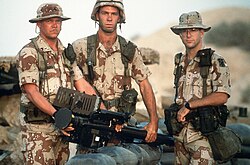
US Army soldiers from the 11th Air Defense Artillery Brigade during the Gulf War
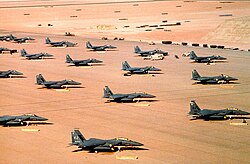
American F-15Es parked in Saudi Arabia during Operation Desert Shield
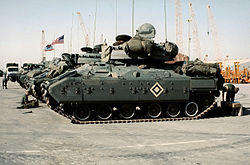
M3 Bradleys of L Troop, 3rd ACR, stand in line at a holding area during the build-up to Operation Desert Shield.
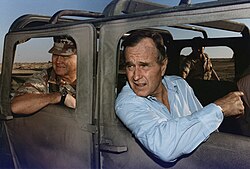
General Norman Schwarzkopf, Jr. and President George H. W. Bush visit US troops in Saudi Arabia on Thanksgiving Day, 1990.
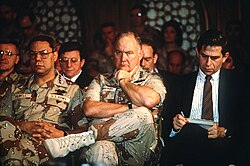
Gen. Colin Powell (left), Gen. Norman Schwarzkopf Jr., and Paul Wolfowitz (right) listen as Secretary of Defense Dick Cheney addresses reporters regarding the 1991 Gulf War.
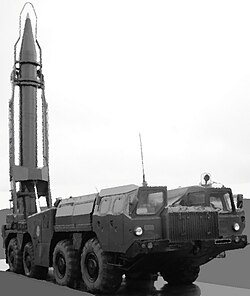
Scud Transporter Erector Launcher (TEL) with missile in upright position
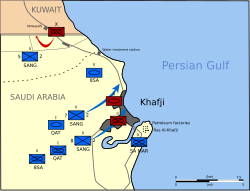
Military operations during Khafji's liberation
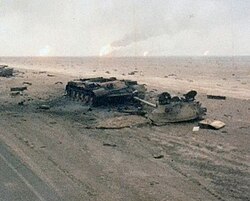
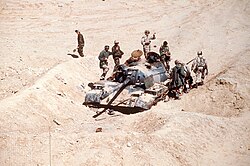
Iraqi tanks destroyed by Task Force 1-41 Infantry, February 1991
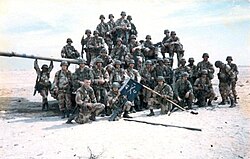
Soldiers of 2nd Platoon, Company C, 1st Battalion, 41st Infantry Regiment pose with a captured Iraqi tank, February 1991
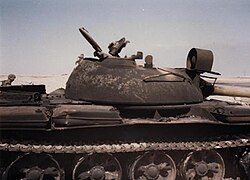
An Iraqi Republican Guard T-55 tank destroyed by Task Force 1–41 Infantry, February 1991
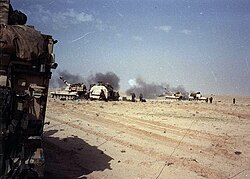
M109 howitzers belonging to 4th Battalion of the 3rd Field Artillery Regiment, 2nd Armored Division (FWD) conducts artillery strikes on Iraqi positions during the Gulf War. 4-3 FA was the primary fire support battalion for Task Force 1–41 during the Gulf War, February 1991.
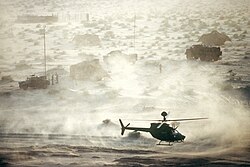
An OH-58D Kiowa helicopter departs from a communications site in the desert during Operation Desert Shield
British Challenger 1 tanks during the Gulf War. The British Challenger tank was the most efficient tank of the Gulf War, suffering no losses while destroying approximately 300 Iraqi tanks during combat operations.[226]
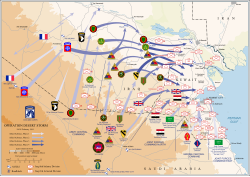
Ground troop movements 24–28 February 1991 during Operation Desert Storm
Aerial view of destroyed Iraqi T-72 tank, BMP-1 and Type 63 armored personnel carriers and trucks on Highway 8 in March 1991
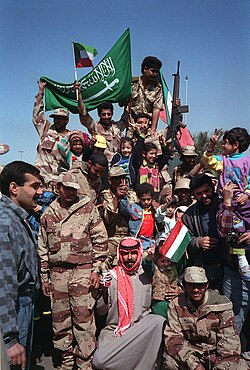
Civilians and coalition military forces wave Kuwaiti and Saudi Arabian flags as they celebrate the retreat of Iraqi forces from Kuwait.
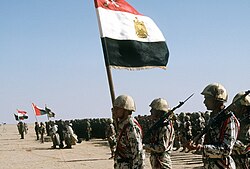
Coalition troops from Egypt, Syria, Oman, France, and Kuwait during Operation Desert Storm
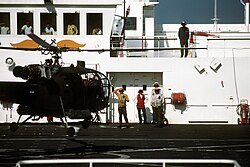
Argentine Navy Alouette III helicopter on board USNS Comfort, February 1991
French and American soldiers inspecting an Iraqi Type 69 tank destroyed by the French Division Daguet during Operation Desert Storm
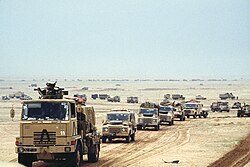
British Army convoy during the Gulf War
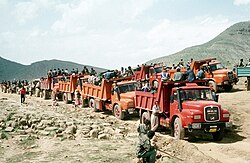
Iraqi Kurds fleeing to Turkey shortly after the war
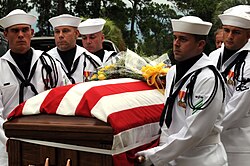
Sailors from a US Navy honor guard carry Navy pilot Scott Speicher's remains.
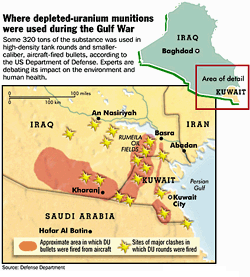
Approximate area and major clashes in which DU rounds were used
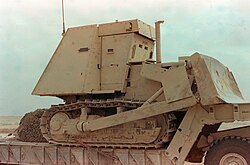
An armored bulldozer similar to the ones used in the attack
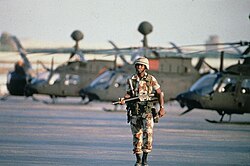
A sentry patrols along a line-up of OH-58 Kiowa helicopters
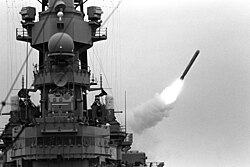
USS Missouri launching a Tomahawk missile. The Gulf War was the last conflict in which battleships were deployed in a combat role.
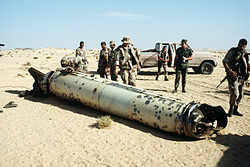
Military personnel examine the remains of a Scud.

What was the difference between Operation Desert Shield and Operation Desert Storm?

Operation Desert Shield was the defensive buildup of troops in Saudi Arabia from August 1990 to January 1991. Operation Desert Storm was the active combat phase, consisting of the air campaign and the subsequent ground offensive to liberate Kuwait.

Which tank was considered the most efficient during the conflict?

The British Challenger 1 tank was regarded as the most efficient, reportedly destroying approximately 300 Iraqi tanks while suffering no losses in combat.

What was the "Highway of Death"?

The Highway of Death refers to the road used by retreating Iraqi forces leaving Kuwait, where they were targeted by Coalition air strikes, resulting in massive destruction of military and civilian vehicles.

How many countries were part of the Coalition?

A total of 42 countries joined the coalition to support the liberation of Kuwait and oppose the Iraqi invasion.

What were the long-term environmental effects of the war?

The most prominent environmental disaster was the lighting of Kuwaiti oil wells by Iraqi forces, causing massive oil spills and raging fires that lasted long after the active hostilities ended.