Greiz: A Historic Gem of Thuringia, Germany
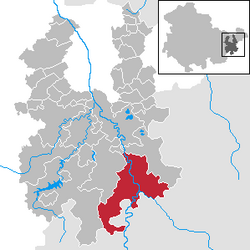
Nestled in the eastern region of Thuringia, Greiz serves as the capital of the Greiz district. Located approximately 100 kilometers east of the state capital, Erfurt, this town is strategically positioned on the White Elster river. Greiz is a place where architectural elegance meets a complex historical narrative, offering visitors a glimpse into the ruling dynasties of Germany and the resilience of a community through the centuries.
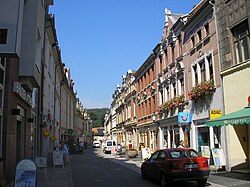
The town is renowned for its aesthetic appeal, particularly the Fürstlich Greizer Park, a sprawling English garden located in the town center. Architecture enthusiasts will find significant interest in the Jugendstil (Art Nouveau) houses found along Thomasstraße, Burgstraße, Marktstraße, Waldstraße, and Leonhardtstraße.
Key Facts
- Location: Thuringia, Germany (Capital of Greiz district).
- Geography: Situated on the White Elster river at an elevation of 265 meters.
- Population: 19,766 (as of December 31, 2024).
- Governance: Led by Mayor Alexander Schulze (CDU) for the 2024–2030 term.
- Notable Landmarks: Upper Castle (Oberes Schloss) and Lower Castle (Unteres Schloss).
History and Heritage
The origins of Greiz are rooted in Slavic history; the name originally derived from Grouts, meaning gord (a fortified settlement). First documented in 1209, the town grew rapidly due to its prime location at the confluence of the White Elster and the Göltzsch river. By the 13th century, it was officially recognized as a town.
The House of Reuss
For centuries, Greiz was shaped by the House of Reuss, a unique German dynasty where every male member was named Heinrich. This ruling family established the town's most iconic landmarks: the Oberes Schloss (Upper Castle) and the Unteres Schloss (Lower Castle). These structures, designed by renowned architects, remain unique examples of regional fortification and residence. Greiz served as the capital of the Principality of Reuss-Greiz until 1918.
Trials and Resilience
The town's history has not been without tragedy. Greiz suffered devastating fires in 1494 and 1802, which destroyed much of the settlement. During the Nazi era, the town witnessed dark chapters: 809 people were forcibly sterilized at the district hospital in Wichmannstraße, and 122 sick individuals were submitted to the Aktion T4 euthanasia program.
During World War II, forced laborers from occupied countries worked in enterprises such as Sorgwald near Thalbach, where at least 102 perished. The town also honors Kurt von Westernhagen, an officer executed by the Gestapo in April 1945 after he refused orders to blow up a bridge and defend the town.
Economy and Industry
Greiz has evolved from a traditional industrial hub into a center for high-tech innovation. While the town maintains a legacy of chemical works, mechanical engineering, and plastics manufacturing, it has diversified into modern sectors. Current economic drivers include:
- Medical Technology: Advanced healthcare equipment and services.
- Automotive Supply: Specialized components for the car industry.
- High-Tech: Sensor technology, micro-chip production, and climate simulators.
- Environmental Tech: Sustainable industrial solutions.
- Traditional Crafts: Wood machining, printing houses, and breweries.
Demographics and Transport
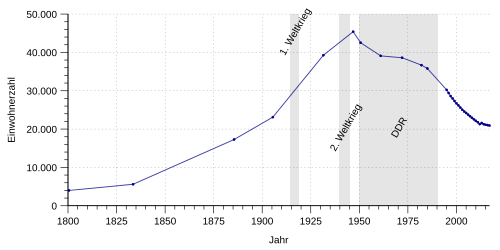
The population of Greiz has fluctuated significantly over the last two centuries. While it saw a massive peak in the mid-20th century, it has experienced a decline common to many towns in former East Germany. In December 2019, the municipality of Neumühle/Elster was merged into Greiz to consolidate the local administration.
In terms of connectivity, Greiz is served by the Gera Süd–Weischlitz railway, linking the town to the broader regional transport network.
| Year | Population | Change (%) |
|---|---|---|
| 1800 | 4,000 | — |
| 1905 | 23,114 | +33.7% |
| 1946 | 45,410 | +15.6% |
| 2000 | 26,177 | -2.0% |
| 2019 | 20,392 | +1.4% |
| 2024 | 19,766 | N/A |
Frequently Asked Questions
What is the significance of the House of Reuss in Greiz?
The House of Reuss was the ruling dynasty of the Principality of Reuss-Greiz. They are famous for the tradition of naming all male members "Heinrich" and for building the town's two landmark castles, the Upper and Lower Castles.
What architectural style is prominent in the town center?
Greiz is well-known for its Jugendstil (Art Nouveau) architecture, which can be seen in the houses located on streets such as Thomasstraße and Burgstraße.
Who is Ulf Merbold?
Ulf Merbold, born in Greiz in 1941, became the first astronaut from West Germany in 1983.
Which river flows through Greiz?
The town is situated on the White Elster river, specifically at the point where it meets its tributary, the Göltzsch.
What are the main industries in Greiz today?
While it retains traditional mechanical engineering and chemical industries, Greiz now focuses on high-tech sectors including sensor technology, micro-chip production, and medical technology.