Greater Porto Alegre: A Hub of Industry, Education, and Infrastructure in Southern Brazil
Greater Porto Alegre, the metropolitan area surrounding the capital of Rio Grande do Sul, stands as one of Brazil's most vital economic and demographic centers. As the 5th most populous metro area in the country, it serves as a strategic gateway for the development of the Southern Cone and the Mercosur trade bloc.
With an estimated population of 4.3 million inhabitants across 34 municipalities, the region covers approximately 10,234 square kilometers. Its economic significance is underscored by its GDP, estimated at 92 billion dollars, making it the 4th largest in Brazil.
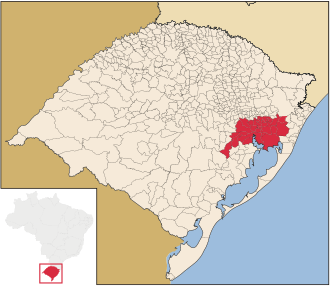
Key Facts
- Population: Approximately 4.3 million inhabitants (IBGE 2017 data).
- Economic Rank: 4th largest GDP in Brazil, estimated at $92 billion.
- Composition: 34 municipalities centered around Porto Alegre.
- Strategic Role: Key hub for the Southern Cone and Mercosur.
- Academic Excellence: Home to UFRGS, recognized by the MEC as Brazil's top university for three consecutive years.
Economic and Industrial Powerhouse
The region possesses immense industrial potential, hosting a diverse array of sectors including manufacturing, chemicals, automotive, food production, steel, and semiconductors. This industrial diversity has attracted numerous multinationals and the establishment of some of Brazil's largest companies.
Education and Technology
Greater Porto Alegre is a center for higher learning and research. It is home to prestigious institutions such as the Federal University of Rio Grande do Sul (UFRGS), UFCSPA, PUCRS, and Unisinos. To bridge the gap between academia and industry, the three major universities operate their own technology parks. These parks host global tech giants like SAP AG, Hewlett-Packard, and Oracle, alongside a growing ecosystem of start-ups.
Furthermore, the region's technical high schools ensure a steady pipeline of skilled labor, providing early technical education tailored to the needs of local industries.
Infrastructure and Transportation
To support its massive population and industrial output, the region utilizes a complex network of air, rail, and road transport.
Air Travel
The primary gateway is the Salgado Filho International Airport, operated by the German company Fraport AG. Recent expansions have improved passenger terminals and parking, while runway extensions are underway to accommodate longer flights. A unique feature of the airport is the Aeromovel, a compressed-air light rail system that connects the terminal to the Trensurb subway system.
Due to space constraints at Salgado Filho, a new project called the 20 de Setembro Airport—named after the state's symbolic independence during the Farrapos War—has been proposed for Portao and Nova Santa Rita, potentially featuring up to four runways.
Rail and Road Networks
The Trensurb is the region's heavy-rail backbone, linking downtown Porto Alegre to Novo Hamburgo via Canoas, Esteio, Sapucaia, and São Leopoldo. While plans exist to expand this line to Portao and southern Porto Alegre, a second proposed line from Cachoeirinha to Viamão is currently halted due to economic downturns. Additionally, several light-rail projects are planned to improve connectivity within Canoas and Porto Alegre.
The region is further connected by major highways, including BR-290 (Freeway), BR-116, BR-386, BR-448, RS-040, and RS-118.
Maritime and River Transport
While the Port of Porto Alegre is the primary maritime hub, many companies maintain private terminals along the local rivers. Ferry lines also provide essential transit between Porto Alegre and Guaiba, as well as between various neighborhoods within the capital.
Culture and Sports
The region's cultural calendar is highlighted by Expointer, the prominent state fair. In the realm of sports, football (soccer) dominates the local passion. The city is divided by two world-class clubs: Gremio Foot-Ball Porto Alegrense (Gremio) and Sport Club Internacional (Internacional). Both clubs have achieved the highest honors in domestic and international football, including the World-Cup Club, Libertadores Cup, Brasileirao, and Brasil Cup.
Regional Municipalities Overview
The metropolitan area is composed of various cities that contribute to its overall GDP and population. The following table highlights key data for selected municipalities.
| Town / City | Population (2018) | Area (km²) | GDP (2013 R$ thousands) |
|---|---|---|---|
| Porto Alegre | 1,479,101 | 496,827 | 57,379,337 |
| Canoas | 344,957 | 131,097 | 11,451,934 |
| Viamão | 254,101 | 1,494,263 | 2,680,846 |
| Gravataí | 279,398 | 463,758 | 10,197,232 |
| Novo Hamburgo | 246,452 | 223,606 | 7,021,001 |
| São Leopoldo | 234,947 | 102,313 | 5,854,218 |
Frequently Asked Questions
How large is the population of Greater Porto Alegre?
The metropolitan area has an estimated population of 4.3 million inhabitants, making it the 5th most populous metro area in Brazil.
Which university is considered the best in the region?
The federal university UFRGS has been recognized by the Ministry of Education (MEC) as the best university in Brazil for three consecutive years.
What is the Aeromovel?
The Aeromovel is a light rail system moved by compressed air that connects the Salgado Filho International Airport to the Trensurb subway system.
What are the main economic sectors of the region?
The economy is diversified, with strong foundations in manufacturing, chemicals, automotive, food, steel production, semiconductors, and services.
Which football teams are the most prominent in Porto Alegre?
The two most popular and successful clubs are Gremio and Sport Club Internacional, both of which have won major domestic and international titles.