Great Ordovician Biodiversification Event: The Rise of Paleozoic Marine Life
The Great Ordovician Biodiversification Event (GOBE) represents one of the most significant evolutionary expansions in Earth's history. Occurring roughly 40 million years after the famous Cambrian explosion, this period saw a massive radiation of marine animal life that fundamentally reshaped the oceans. During this time, the distinctive fauna of the Cambrian period gradually declined, replaced by a rich Paleozoic fauna characterized by a surge in pelagic animals (species that live in the open water) and suspension feeders (organisms that filter food particles from the water).
This transition followed a series of extinction events at the Cambrian–Ordovician boundary. The resulting biological diversity reached levels typical of the Paleozoic era, with a range of physical forms—known as morphological disparity—that mirrors the complexity seen in modern marine ecosystems. Rather than a single, instantaneous global explosion, the GOBE was a staggered process, occurring at different times and rates across various geographic regions.
Key Facts
- Timeline: Began approximately 497.05 million years ago (Ma) and ended around 467.33 Ma.
- Duration: Lasted for roughly 29.72 million years.
- Biological Shift: Transitioned from Cambrian fauna to a Paleozoic fauna dominated by filter feeders and open-ocean swimmers.
- Nature of Event: Not a single event, but a series of diversifications across different clades during the Late Cambrian and Early to Middle Ordovician.
- End Point: Diversification slowed in the late Ordovician due to increased endemism (species unique to a defined geographic location) and interbasinal dispersal.
The Timeline and Duration of GOBE
Research indicates that the GOBE was a protracted process rather than a sudden burst. It spanned nearly 30 million years, with different groups of organisms diversifying at different intervals. This gradual accumulation of species suggests that the event was driven by a complex interplay of ecological and geological factors rather than a single trigger.
As the event progressed into the late Ordovician, the rate of diversification began to decline. This slowdown is attributed to changes in how species were distributed across ocean basins and a rise in endemism, which eventually brought the GOBE to a close.
Potential Causes and Geological Triggers
Because the GOBE happened unevenly across the globe, scientists believe there is no single, straightforward explanation. Instead, several environmental factors likely converged to create the perfect conditions for life to flourish.
Tectonic and Environmental Factors
Geological activity, including tectonic shifts, global cooling, and increased oxygenation of the oceans, are considered primary drivers. These changes altered ocean chemistry and created new habitats, allowing marine life to occupy previously unavailable ecological niches.
The Asteroid Hypothesis
One intriguing theory suggests that the breakup of an asteroid led to a consistent bombardment of Earth by meteorites. Some evidence for this is found in the abundance of the isotope helium-3 in ocean sediments. Helium-3 is produced when cosmic rays bombard lithium—a process that typically occurs in material traveling through space.
It is proposed that a collision between two asteroids beyond the orbit of Mars could have created vast dust clouds, reducing the amount of sunlight reaching Earth's surface and potentially triggering climatic shifts.
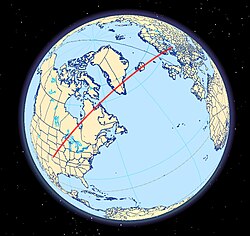
However, the timing of these events remains a subject of scientific debate. While some suggest a link, other studies indicate that the proposed Ordovician meteor event (occurring at 467.5±0.28 Ma) may not have been directly related to the primary biodiversification process.
Biological Impact and Ecosystem Evolution
The GOBE fundamentally changed the structure of marine food webs. The proliferation of plankton in the early Ordovician likely influenced the evolution of giant filter feeders. One notable example is Aegirocassis benmoulai, a giant radiodont reaching over 2 meters (6.6 feet) in length, which used baleen-like spines to feed.
![Reconstruction of the Fezouata Biota, featuring roughly 50 different species. The largest animal, Aegirocassis benmoulai (just over 2 metres — 6.6 feet — in length), is depicted in a pair swimming just above the seafloor.[43] This giant radiodont is one of the earliest "giant" filter feeders, with frontal appendages bearing baleen-like spines. These adaptations were likely influenced by the proliferation of plankton in the early Ordovician.](/images/a7/f2/a7f23355a5a65459782a0bf77bd5564859f992c457d9cc2077ae00a6018fce44.jpg)
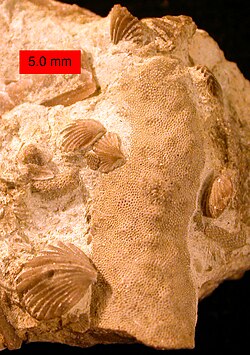
Other organisms, such as brachiopods (shelled marine animals), also flourished. Fossils from the Cincinnatian period show Zygospira modesta preserved in their original positions on bryozoans, illustrating the complex communal structures of the time.
| Feature | Details |
|---|---|
| Time Period | 497.05 Ma to 467.33 Ma |
| Primary Fauna | Suspension feeders and pelagic animals |
| Key Isotope Evidence | Helium-3 (suggesting cosmic ray bombardment) |
| Major Biological Shift | Replacement of Cambrian fauna with Paleozoic fauna |
| Duration | ~29.72 Million Years |
Frequently Asked Questions
How does GOBE differ from the Cambrian Explosion?
While the Cambrian explosion established the basic body plans of most major animal phyla, the GOBE was a later radiation that increased the diversity and abundance of those groups, specifically favoring filter feeders and open-ocean species.
What is the significance of helium-3 in this context?
High levels of helium-3 in ocean sediments suggest that Earth was bombarded by extraterrestrial material, as this isotope is formed by cosmic rays hitting lithium in space.
Was the GOBE a single, sudden event?
No. Evidence shows it was a gradual process lasting nearly 30 million years, with different species diversifying at different times and in different geographic locations.
What caused the GOBE to eventually end?
The diversification slowed down during the late Ordovician due to increased endemism and changes in how species dispersed between different ocean basins.
Which animals were most successful during the GOBE?
Suspension feeders (like certain brachiopods and bryozoans) and pelagic animals (including early cephalopods and large filter-feeding radiodonts) were among the most successful.