Graphics History and Evolution: From Cave Paintings to Digital Art
Graphics serve as a fundamental bridge between human thought and visual communication. From the earliest prehistoric markings to the complex algorithms of modern 3D rendering, the act of creating visual representations has allowed humanity to record history, explain scientific theories, and express artistic vision. At its core, graphics encompass any visual image—whether a simple line or a complex digital scene—that conveys information or emotion.
Key Facts
- Prehistoric Origins: The earliest known graphics date back to the Upper Palaeolithic period (40,000 to 10,000 B.C.).
- Printmaking Milestones: Woodblock printing originated in China around A.D. 105; etching was later pioneered by Daniel Hopfer.
- Digital Divide: Computer graphics are split into raster (pixel-based) and vector (mathematically defined) formats.
- 3D Evolution: The first full-length computer-generated film, Toy Story, was released in 1995.
- Technical Utility: Graphics are essential for engineering, navigation (maps), and data analysis (graphs and diagrams).
The Ancient Roots of Visual Communication
Anthropologists have traced the earliest graphics to cave paintings and markings on bone, ivory, antlers, and boulders during the Upper Palaeolithic period. These early works often served as records for chronological, seasonal, and astronomical data. As civilizations advanced, graphics became tools for administration; approximately 6,000 years ago, engraved stone tablets and ceramic cylinder seals were used for accounting and inventory.
In ancient Egypt, papyrus, limestone, and wood were utilized to plan the construction of the pyramids. Later, between 600 and 250 B.C., the Greeks utilized graphics to visualize mathematical theories, including the Pythagorean theorem and the Circle Theorem.
Traditional Artistic Graphics
In the realm of fine art, graphics are often distinguished from painting by their reliance on monotone lines rather than color gradients. Drawing is the foundational process of applying pressure with a tool across a surface to create marks.
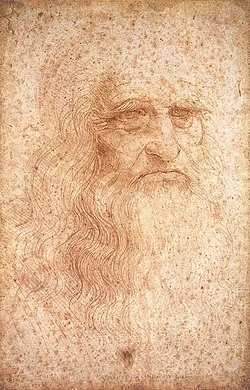
Printmaking and Etching
Printmaking allows for the reproduction of images. Woodblock printing first appeared in China around A.D. 105. In Western art, techniques such as woodcut, engraving, and etching became prominent. Etching is an intaglio method—a process where an image is incised into a metal plate using acid. This technique, believed to be invented by Daniel Hopfer (c. 1470–1536) for decorating armor, is now also used in the production of semiconductor devices and printed circuit boards.
Line Art and Illustration
Line art refers to images composed of distinct straight or curved lines against a plain background, devoid of shading or hue gradations. While usually monochromatic, line art can utilize different colors to represent 2D or 3D objects.

Illustration differs from pure art by prioritizing the subject over the form. Its primary goal is to elucidate or decorate text, such as in newspaper articles, poems, or technical manuals. This includes editorial cartoons, which convey social or political messages.
Functional and Technical Graphics
Beyond art, graphics are indispensable for organizing information and navigating the physical world.
- Graphs and Charts: Visual representations of numeric or tabular data used to clarify relationships between data points.
- Diagrams: Simplified visual structures used to clarify concepts, relations, or statistical data.
- Symbols: Token artifacts that represent a concept, quality, or quantity.
- Maps: Two-dimensional, geometrically accurate representations of three-dimensional spaces. One of the first modern maps was created by Waldseemüller.
Engineering Drawings
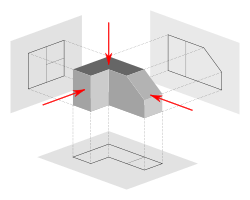
Engineering drawings are highly technical graphics used to define the requirements for engineered items. These follow strict standardized conventions regarding nomenclature, line styles, and layout to ensure precision.
The Evolution of Photography
Photography is unique because it records a single moment in reality. While it may seem objective, the photographer interprets the scene through the choice of angle, field of view, and the use of filters or lenses. This interpretive nature has historically led to controversies, particularly in war photography where scenes were sometimes enacted.

The Digital Revolution: Computer Graphics
Computer graphics began in 1950 with MIT's Whirlwind I. The field advanced rapidly with the invention of Sketchpad by Ivan Sutherland in 1962 and subsequent research at Bell Labs, General Motors, and Lockheed Corporation. By 1968, Arthur Appel described ray tracing, a method for rendering realistic light and shadow.
Raster vs. Vector Graphics
Modern digital imagery is divided into two primary types:
- Raster Graphics: Images where every pixel is separately defined, such as digital photographs.
- Vector Graphics: Images based on mathematical formulas. These remain infinitely sharp regardless of size and often result in smaller file sizes, though complex vectors can take longer to render.
The Rise of 3D and GUIs
3D graphics entered the mainstream via video games, starting with Spasim (1974) and Battlezone (1980). By the 1990s, texture-mapped polygons became common, leading to the release of Toy Story in 1995. Simultaneously, the Graphical User Interface (GUI) replaced text-heavy systems with icons and symbols to make computing more intuitive.
Web Graphics and Modern Tools
The release of the Mosaic browser in the 1990s enabled the use of images on the web. Early sites relied on GIF format for banners and buttons, while modern browsers support JPEG, PNG, and SVG (Scalable Vector Graphics). SVG is particularly valuable as it allows vector graphics to remain clear at any scale.

Today, professional graphics are created using software like Adobe Photoshop, GIMP, or Corel Paint Shop Pro. While basic tools like MS Paint exist, they are categorized as drawing packages rather than full graphics packages due to their limited feature sets.
| Type | Primary Characteristic | Common Use Case |
|---|---|---|
| Raster | Pixel-based | Digital Photography |
| Vector | Math-based | Logos and Icons |
| Line Art | Monotone lines | Technical sketches |
| Illustration | Subject-focused | Storytelling/Editorial |
| Engineering | Standardized | Manufacturing specs |
Frequently Asked Questions
What is the difference between raster and vector graphics?
Raster graphics are composed of individual pixels, meaning they can lose quality when enlarged. Vector graphics use mathematical formulas to define shapes, allowing them to be scaled to any size without losing sharpness.
How does etching differ from other printmaking methods?
Etching is an intaglio process that uses acid to eat into a metal plate, creating roughened areas or lines that hold ink, whereas woodblock printing involves carving away the areas that should not be inked.
What is the primary purpose of an illustration?
The primary aim of an illustration is to elucidate or decorate a piece of text, such as a story or a technical manual, by providing a visual representation of the subject matter.
Why are engineering drawings standardized?
They are standardized to ensure that requirements for engineered items are defined clearly and universally, preventing errors in interpretation during the manufacturing process.
What was the original purpose of computer screensavers?
Screensavers were originally designed to prevent the layout of a GUI from "burning into" the computer screen, though this is no longer a technical issue for modern displays.